Reserve des Cleons, Muscadet Sevre et Maine, Sur Lie, AOP, Val de Loire, France, 2013, 12% abv, purchased from Trader Joe’s, Bellingham

Next time you are in the US, run to Trader Joe’s and pick up several of these.

Deemed perfect for a seafood platter including some oysters and cheap as can be – only about C$8 – this is a perfectly acceptable, dare I say ‘good’, straightforward, clean and tasty white wine.

Meant to drink young (we opened this one in January 2014), it was pale lemon with legs and medium minus aromas of green melon, lemon zest citrus and a minerality like that of freshly washed rocks.  Dry with high acidity, medium alcohol, medium body (from resting over the winter on its lees), the flavours consisted of medium lemon balm, honeydew melon, white peach, bergamot lime and rocks.

This wine had only a medium finish, but it was crisp and clean.

WSET ‘Good’ and a great deal.

Posted in France, Muscadet, WHITE | Tagged , , , , | Leave a comment

Simi, Chardonnay, Russian River Valley, California, 2005, 15.5% abv.

photoStart with two wine geeks – one with a broken finger suffered on a recent trip at the Simi winery and one with extreme WSET pre-exam stress.

Throw in a Friday evening and three bottles of Simi Russian River Valley Chardonnay from 2011, 2010 and 2005 and all of a sudden you have two very relaxed wine geeks and a small party.

Three bottles?  Well, we started out with honourable intentions, only intending to open one.  Okay, maybe two.  Marta had acquired these bottles because she had been at Simi with a group but someone had inadvertently closed the van door on her finger thwarting her in the parking lot from attending the master tasting.

Not to worry though as not only was the local emergency room incredibly efficient, Simi kindly donated the three bottles to her recuperation plan.

The Simi winery has been around in Sonoma County since 1876 when it was established by two brothers who’d immigrated from Tuscany.  They stopped producing everything except sacramental wines during Prohibition, but are considered to be the longest running winery in California.  They have a solid reputation for good quality wines; you always know you are getting something of value for your dollar when you open a bottle of Simi.

The first bottle (2011 and 14.5% abv) was medium lemon with legs and the nose, clean and youthful with medium plus intense aromas of lemon drop, pomelo and yellow grapefruit with minerals.  The palate was dry with good acidity and high, but integrated alcohol, pomelo and yellow apple flavours.  Youthful, fruity and the lightest of the bunch, we were intrigued.  On to bottle two.

Number two (a 2010 Reserve and 14.5% abv) was a deeper medium gold with heavier legs.  The nose was clean and youthful with medium intense aromas of minerals, more pomelo but with white grapefruit rind and lemon drop. Hints of caramel and vanilla with yellow apple augmented the aromas.  Dry with medium plus acidity and high but integrated alcohol, the body was full with intense flavors of salted caramel, yellow apple, white grapefruit and pomelo with vanilla and a long finish.  WSET Very Good with lovely integration and some complexity.

But bottle number three really hit home.  This was the 2005 with a very high 15.5% abv and aged in oak for 6 months prior to bottling.  With its deep gold colour and viscous legs, it was clean and developing with medium plus intensity and aromas of ripe yellow and red apple, deep baking spice, clove, vanilla, hazelnuts, caramel and toast.  The palate was dry with juicy acidity and high alcohol with full body.  Flavours echoed the nose with more apples, baking spices, clove and vanilla, nutmeg, toast and a yeasty-sherry flavour complete with a salty toffee kick.

There were 19,260 bottles of this beauty created in 2005.  It has proven its longevity with its acidity, fruit, development and integration.  Complex and concentrated with a long finish, it’s WSET Very Good.

Posted in California, Chardonnay, OTHER, WHITE | Tagged , , , , , , , , , | 6 Comments

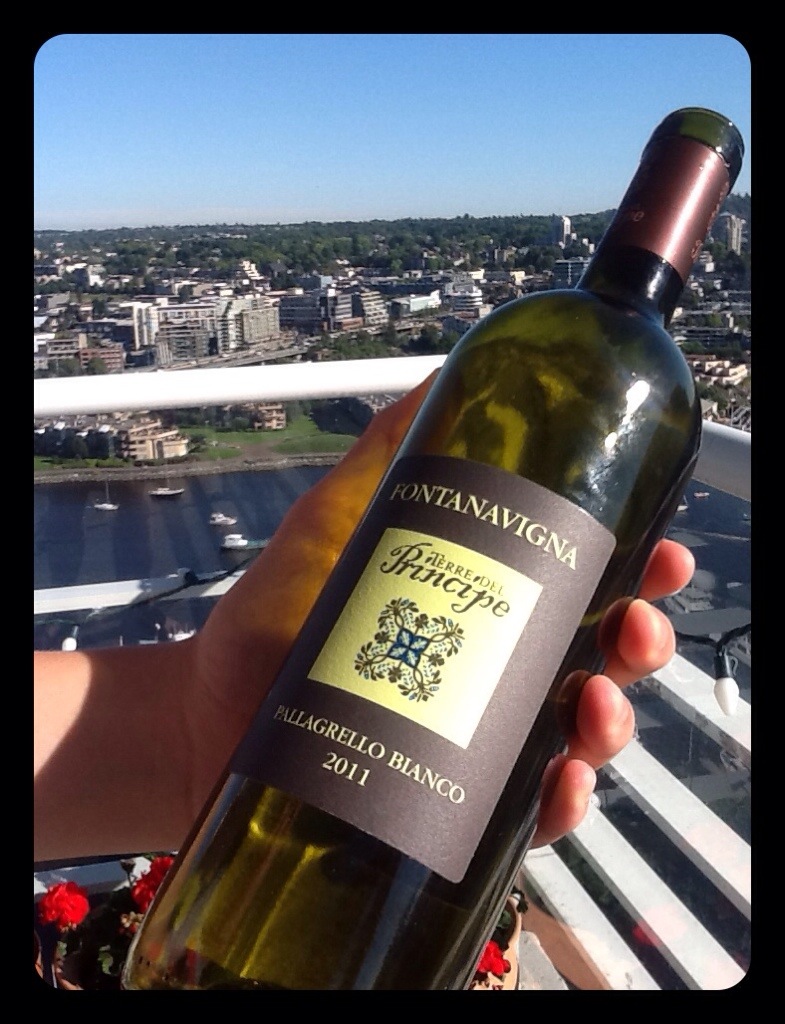
Fontanavigna, Pallagrello Bianco, Terre del Principe, Terre del Volturno, Castel Campagnano, Campania, IGT, Italy, 2011, 13.5% abv.

Italy has hundreds of indigenous grapes, many of which go by several names that depend on where they’re grown. This fact alone can terrorize even the most capable wine geek, let alone the average consumer thinking about buying something at the store.

Here is one you have not likely heard of – Pallagrello Bianco. It was thought to be extinct, but DNA testing in the 1990s revealed some plots growing unattended in Campania.

The grapes that went into this wine were grown near the Volturno River in a small village called Castel Campagnano located a couple of hours northeast of Naples.

And here’s a fun fact – the grape’s name comes from the Italian word Paliarello which is the original name for the straw mat these grapes would have been sun dried on to make sweet wines with in ancient times.

This version is not sweet though – it’s dry, and is WSET Very Good.  It is absolutely tasty – not the innocuous white Italian any of us envisioned.

When it’s made into a varietal wine, it is sometimes done in stainless steel, but this one was more likely barrel fermented which accounts for the toast, nuts and creaminess.

This wine is clear and bright, medium lemon with legs. On the nose, it’s clean with medium aromas of nuts, toast, Meyer lemon, apricots and lemon oil.

The palate has medium alcohol and medium acidity with ripe apricots and more lemony goodness including lemon balm and lemongrass. A creamy mouthfeel accompanies hazelnuts and almonds and finishes with medium plus length.

Drink now or enjoy for the next 3 years.

20140729-175010-64210062.jpg

Posted in Italy, Pallagrello Bianco, WHITE | Tagged , , , , , , , , | Leave a comment

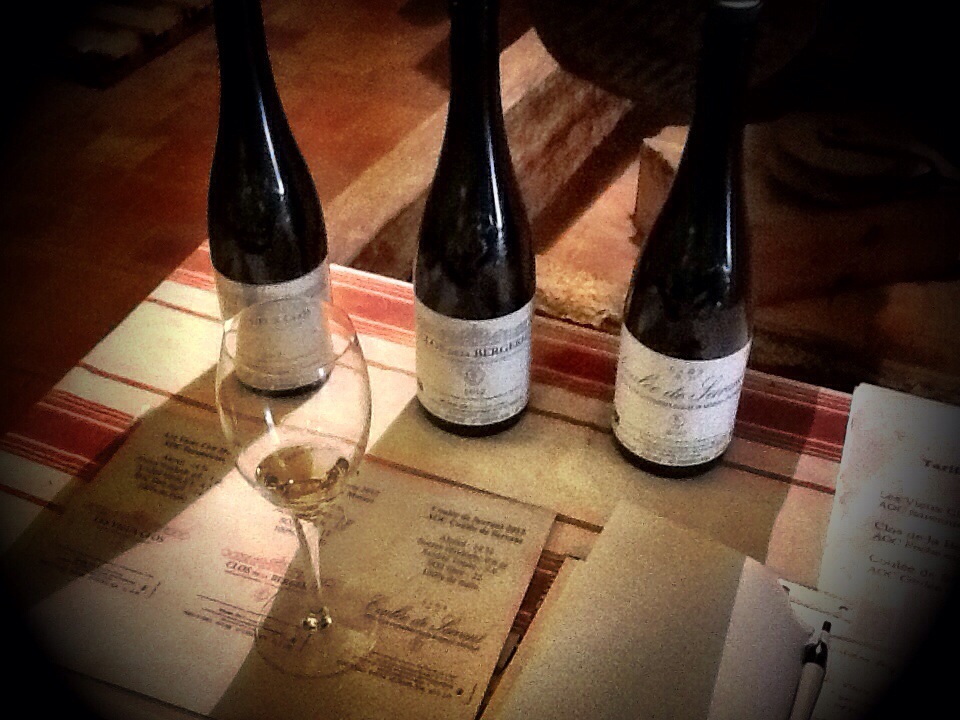
Clos de la Coulée de Serrant, Appellation Savennières – Coulée de Serrant Contrôlée, Savennières, Loire, France, 2009, 15.5% abv.

So often, the terms, ‘excellent’, ‘outstanding’ and ‘first class’ are bandied about and used with regard to less-than-stellar wines.20140728-172410-62650822.jpg

Not this time.

This is from the Clos de la Coulée de Serrant, a vineyard of only 7 ha in Savennières on the northern bank of the Loire River, originally planted by Cistercian monks in the 1100s. The remains of one of the earliest buildings is still there on the grounds.

Owned by Nicholas Joly of biodynamic revival fame and arguably the world’s premier Rudolph Steiner devotee, the wines are coaxed along these days by his daughter, Virginie.

20140728-172409-62649521.jpgI say coaxed because upon our arrival, she appeared and greeted us in the foyer where the tasting was to be. It was hard not to be awestruck – I mean, this is the winemaker of the Coulée de Serrant standing before me.

Introducing her to my husband, I stumbled over the words, ‘This is Virginie Joly – the winemaker.’

She laughed and protested modestly, ‘Oh, I simply help put something into the bottle.’

And this is one reason why the Joly wines will always be so renowned; the best 20140728-172409-62649922.jpgwinemakers are modest and recognize their role comes after what happens in the vineyard as a result of the highest of viticultural standards and the best terroir (these vines have been farmed biodynamically since 1980).

They were bottling that day and Ms. Joly had to go – there were some difficulties with the line. But we were invited to walk the grounds, enjoy the tasting (they were pouring all three of their 2009s that day) and ask as many questions as we could think of.

This five year old wine was made with 100% Chenin Blanc grapes that were harvested in 5 passes through the vineyard and at a yield of about 25 hl/ha.

20140728-172409-62649168.jpgIt is clear and bright, a shade of harvest gold with pronounced aromas of deep honey, dry hay, ripe quince and yellow apple, ginger, dusty cinnamon and fig.  The wine also shows sherry-like savoury notes and a strong earthen minerality.

The palate is dry with medium plus acidity and although the alcohol is high, there is absolutely no evidence of it on this wine. It has a medium body and the layered flavours include deep clover honey, honeysuckle and hay, more savoury schist and earth, ripe yellow and red apple, yellow plum figs, cloves and dried ginger.

The finish is very long on this deeply complex WSET Outstanding wine.  It could be kept an additional 5-7 years at the very least.

I opened this wine when it was 6 years old, but I almost wish I’d waited longer to see what would have happened over time.  If I had been patient enough, I know exactly what I would have paired it with to tease out all the complexity of this delicious drink – pork rillette with quince chutney and roasted chesnuts on crostini.

I know it would have carried me back to that magical day when we met Virginie Joly in the Loire.


Posted in Chenin Blanc, France, WHITE | Tagged , , , , , , , , , , , , | Leave a comment

Misadventures at #WBC2014’s Writer’s Workshop

Recently, I had the misfortune to have one of my wine blog pieces publicly critiqued by a print writer at the 2014 Wine Bloggers’ Conference held in Santa Barbara, California.

I had been naively looking forward to this part of the conference, but it turned out to be, quite possibly, one of the most humiliating and excruciating moments of my adult life.

And all of this for my hobby.

I’m not kidding, not even a little bit. I’m still having flashbacks. It was so bad that I haven’t actually opened a bottle of wine in well over two weeks.

Now, anyone who knows me (even a wee bit) will know that’s a looooong time for me to go between popping corks.

I’ve done a lot of thinking and talking since the conference and after quite a bit of introspective thought and many conversations, I realized that Taylor Swift said it best when she wrote, ‘All you are is mean.’

I’ve decided I really don’t care what this man had to say for two reasons. First, the piece I (shouldn’t have) submitted was atypical of what I usually do, and secondly, he exposed a lack of knowledge about wine studies and standards when he asked what the WSET is.

After he pointed me out by name and started throwing about ‘the slings and arrows of my outrageous misfortune’, he said ‘And what on earth is this medium plus and medium minus stuff?’

I responded, “It’s the WSET tasting note structure.”
“What is that? What is WSET?”

Seriously? What wine writer doesn’t know what WSET is?

With that, I rest my case.

Onward…

Posted in OTHER | 7 Comments

Il Fauno Di Arcanum, IGT, Toscana, Italia, 2008, 14% abv.

Oh happy day – a Supertuscan wine from the Castelnuovo Beradenga region of Chianti Classico that has been declassified to IGT status because it’s a blend of 62 Merlot, 23 Cab Sauvignon, 8 Cab Franc, 6 Sangiovese and 1% Petit Verdot.

This wine is clear and bright, deep ruby with legs.  The nose is clean and youthful with medium plus intensity and aromas of deep red and black fruit (plum, raspberry, cassis, blueberry and field berry), baking spice and Dutch black licorice.  There’s a little excess alcohol that does vanish with some swirling.

The palate is dry with medium plus acidity, high alcohol and some medium plus silky, ripe tannins with light grip. It has great intensity with flavours of more of the same red and black fruit (purple plums, raspberry, cassis, blackberry and blueberry), clove and nutmeg, more licorice, tar, black olives and soy sauce.

This wine is WSET Very Good.  The alcohol is slightly high and while it blows off, it is heavy initially.  The fruit and aromas are well concentrated and balanced with the tannins that are drinking perfectly but can still last for at least 5-7 years; there is enough of each and when combined with the medium plus acidity this offers plenty of time for development.

A nicely complex Bordeaux blend Supertuscan from one of the famed premier cru Chianti Classico region of Toscana.

photo

Posted in Cabernet Franc, Cabernet Sauvignon / Blends, Italy, Merlot, Petit Verdot, RED, Sangiovese | Tagged , , , , , , , , | Leave a comment

Champagne Guiborat Fils, Cramant, Champagne, France

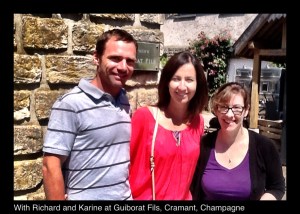
On a recent trip to Cramant in Champagne, we met with Richard and Karine Fouquet, proud growers and winemakers of Guiborat Fils.

Owners of 2.5 ha of chardonnay vines in the Côtes des Blancs lying south of Epernay, this is a grower-producer (Recolant Manipulant) couple who are carrying on a multi-generational craft. Richard’s family has been doing this for 5 generations – his grandmother still lives on the premises which were undergoing significant upgrades when we visited.a

Having returned from jobs in Paris to Cramant in 1995, Richard and Karine set about perfecting their chardonnay-based Blanc de Blancs champagnes. They a6a4refocused, sold 4 ha of Pinot Meunier in Vallée de la Marne to Laurent Perrier and redoubled efforts to ensure their wines avoid malolactic fermentation. This encourages the additional acidity necessary in the face of global warming.

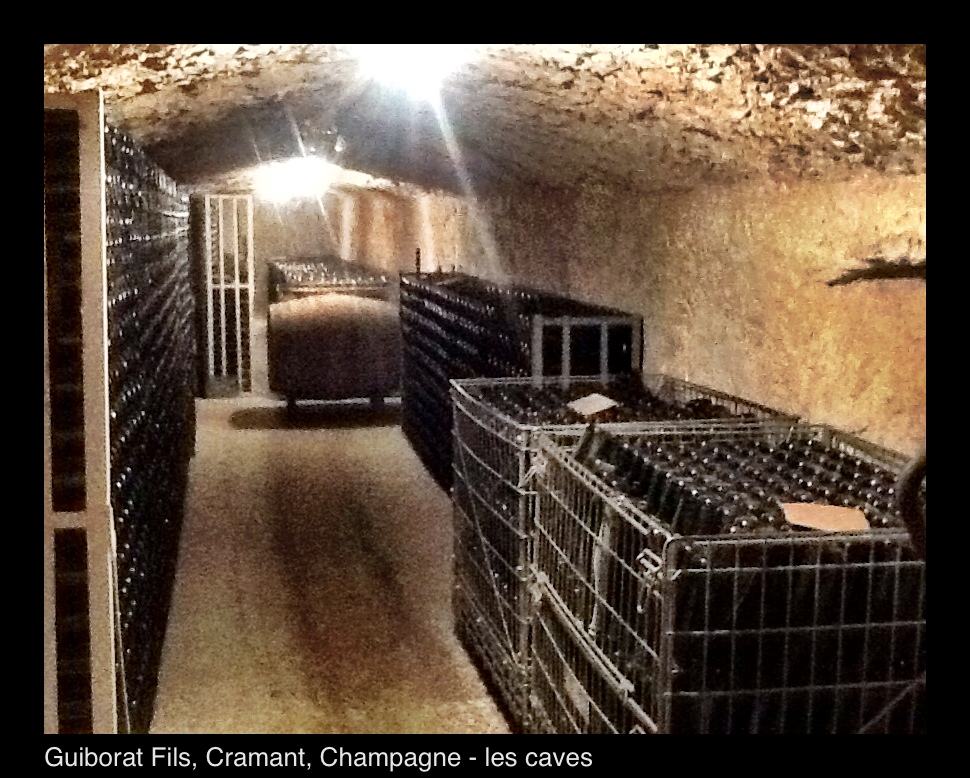
They have about 80,000 bottles in their extensive tuffeau caves located beneath the premises and produce about 22,000 bottles per year.

Karine is responsible for marketing and sales while Richard is in charge of the vines and winemaking, and he is one serious viti/viniculturalist. In 2012, he declined to make any champagne whatsoever with their yield; attacked by oidium, they sold the grapes to others who produced champagne unassociated with their brand.

Surprisingly, about 60% of sales occur outside France. For the US market, they have made bottles available to Jon Rimmerman in Seattle (Garagiste Wines) and this is how I found out about Guiborat Fils. A good friend who is also a wine geek and chef brought a bottle out at one of her legendary Table 1006 dinners which we enjoyed immensely.

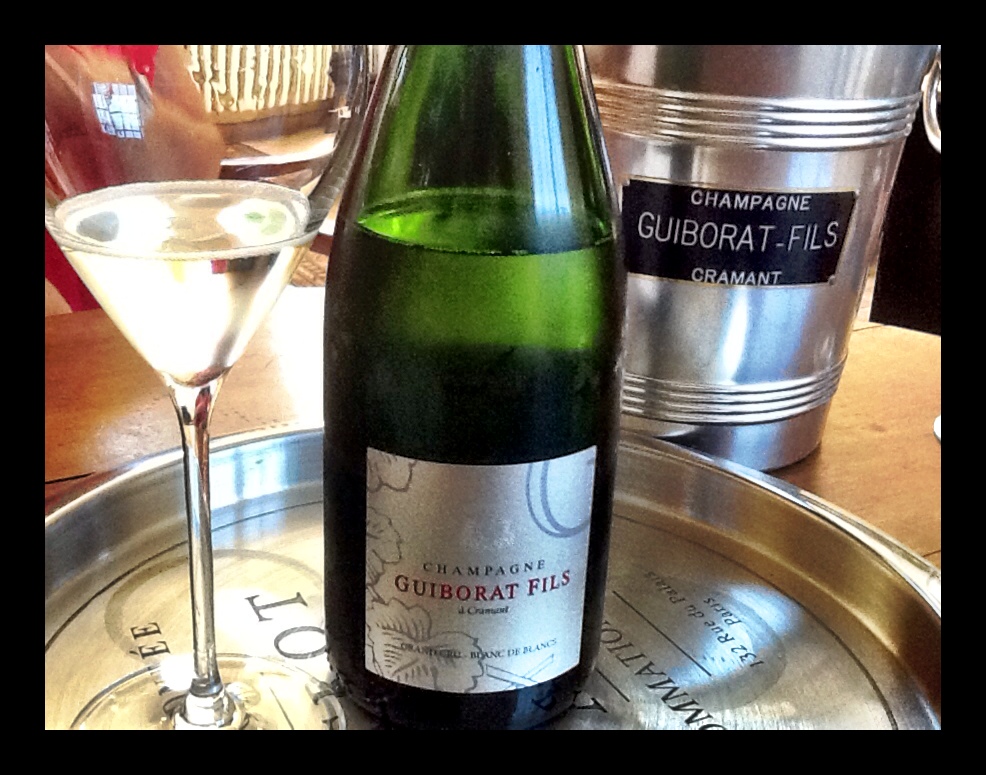
The champagne was a stunner from Richard and Karine’s Les Caures vineyard.  A brut Blanc de Blancs, Millésime 2005 Grand Cru, No. 0677/1300, Disgorged Sept. 3, 2013, US$59.80

One of the reasons the wine was so exciting was its traditional seal and tied cork. Moreover, it was a limited edition bottle number (number 677 of only 1300 produced) and its disgorgement date was marked.  Only a hundred bottles were released to the US market. It was full of light brioche with apple, lime, lemon and grapefruit on the nose with green apple, lemon curd and baked bread on the palate.

Karine and Richard were as excited that I’d tasted their handiwora5k in Canada as I was to meet them in Cramant. Said Karine, ‘We sent our small child off into the world – and someone enjoyed it on the other side of the globe.’ Richard shared with us that the Les Caures vineyard is a place where he feels he can remember, connect to and pay homage to his grandfather. In Karine’s words, ‘We are so privileged that Richard is able to make these wines. It is an honour.’

The term, ‘passionate’ is one often over-used to describe winemakers, their craft and their product. In this case, it is the one true term that fits.  No exaggeration; this is a couple committed to carrying on a trade, a history, a story told by fermenting grapes twice in bottle and sending it on a journey to eager recipients.

a3


Posted in Champagne, Chardonnay, France | Tagged , , , , , , , , , , , | 3 Comments

Champagne René Geoffroy, Aÿ, Champagne, France

bI realized three things about Champagne after arriving there and having only studied it out of books up until that point.  First, it’s not actually that big.  Second, the Montagne de Reims is a misnomer – more of a large hill than a mountain in my humble British Columbian coastal range opinion. And third, the region is simultaneously stunningly beautiful and filled with friendly people.

cIt’s very easy to get around and nothing is too far away to get to quickly. We stayed just south of Reims (pronounced as ‘Prince’ in French, but without the P) in tiny Trois Puits, spent time to the south in Epernay and Cramant, drove to Dizy and Bouzy and this stop was just east of Epernay in lovely little Aÿ.  It never took more than 20 – 30 minutes to drive anywhere.

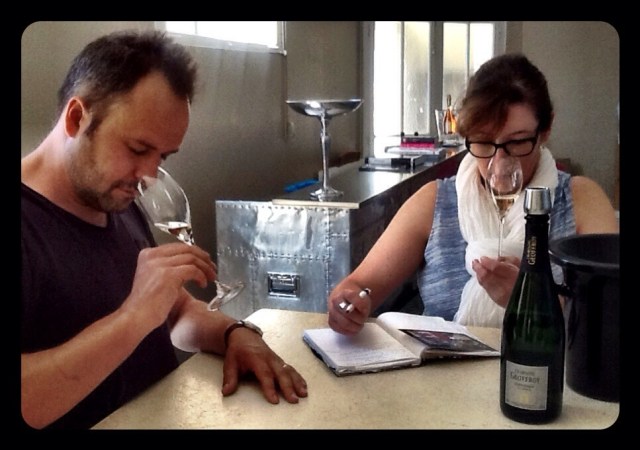
We had arranged ahead of time through a WSET Diploma colleague Jodie Estens and her company ‘That’s Life!’ to meet the grower-producer winemaker brains behind the operations at René Geoffroy, Jean-Baptiste Geoffroy.
20140708-193213-70333520.jpgA fifth-generation winemaker whose 14 ha of Premier aCru vineyards are to the west in Cumières close to Hautvillers (of Dom Perignon fame) in the Vallée de la Marne, his 120-140,000 bottles per year focus on Pinot Noir and Pinot Meunier with some Chardonnay thrown in for good measure.

His champagne house in Aÿ is gravity fed, has 100m long cool caves located far below the house carved into the tuffeau and is happily overrun with his five adorable daughters who kept popping in and out with friends to check on things with their doting dad.

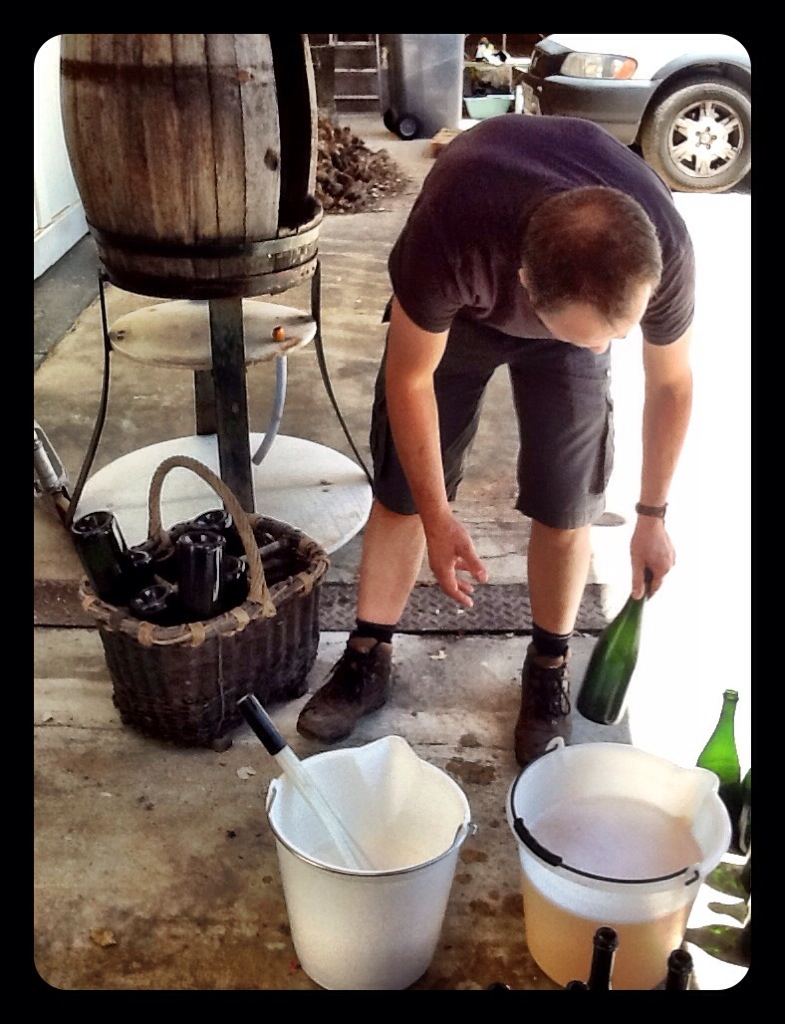
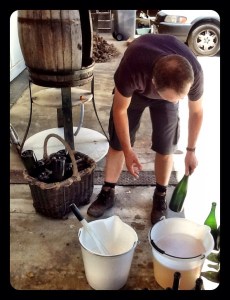
Jean-Baptiste is a man of great verve. He was extremely busy the day we arrived, hand disgorging about 40 bottles and preparing the liquor d’expédition for the batch that was being bottled on the mobile assembly line at the back entrance.

But as we proved more than happy to follow him around and observe his every move, he was willing to share glimpses into processes I’d only ever read about. We learned about traditional hand disgorgement, mixed the liquor d’expédition, watched the bottling process for the upcoming season’s New Year wines to prepare them to lie down and ‘marry’ for the next six months, and followed him deep into the labyrinth of caves below the production facilities.

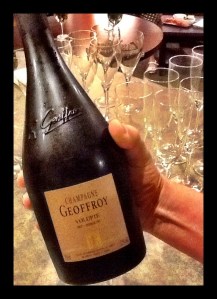
Jean-Baptiste led us through a tasting of 6 champagnes as well as the Ratafia (similar to a Pineau de Charentes but from Champagne, made with unfermented Pinot Meunier juice, blended with brandy and 18% abv). One bottle we purchased was the traditionally corked ‘Cumières Rouge’ Coteaux Champeneux, unfined and unfiltered Pinot Noir (picture below and the flagship picture for Winellama.com). 20140708-193213-70333121.jpg
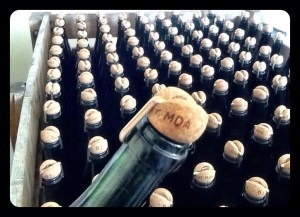
Jean-Baptiste avoids malolactic fermentation in his wines and this adds to their complexity and longevity. We tasted the NV Expression, the Pureté, the Empreinte 2007 (it’s not a vintage wine, but all the grapes are from 2007 and from Cumières ‘ chalky soil with pastry and fresh bread on the nose and palate) and the Volupté 2007 which is 80% Chardonnay and is said to be perfect with Parmesan and goat cheese (I brought a bottle back to check if this is true.  It is.).

The tasting and banter was fabulously enjoyable; Jean-Baptiste is justifiably proud of his wines. During a discussion about the merits of small grower-producer Champagnes versus large, marque houses, we agreed terroir and vintage variations add excitement to champagnes produced by small houses, “I am the first consumer of my champagne.  I taste it every day. If it was the same, it would be very boring…I don’t make coca-cola!”

There are certainly no cookie cutter wines here. Unique champagnes with pastry, citrus, and apple tones – especially with the Extra Brut V 2004 (71% Chardonnay, 29% Pinot Noir), an outstanding version of brioche, lemon drop, ripe apple and bread aged in 100% oak barrels to round its full flavours and body. g
The Rosé was a favourite – a 100% saignée (he never presses) and complex champagne with 10g RS/L (although imperceptible) and tasting of crisp watermelon, strawberry and red pepper with floral spicyness.

It’s clear serious love for grape growing and winemaking pervades Jean-Baptiste Geoffroy’s being – he signals this with each move to share a new wine, demonstrate a procedure, share some information. Combined with his generosity and patience, this renowned grower-producer is at the top of his game.

Look for Jean-Baptiste’s Recolant Manipulant wines in BC and across Canada as well as around the globe.
20140708-193212-70332752.jpg


Posted in Champagne, Chardonnay, France, Pinot Meunier, Pinot Noir, RED, ROSE, WHITE | Tagged , , , , , , , , , , , , , , , , , | Leave a comment

Tilia, Torrontés , Salta, Argentina, 2011, 13% abv, C$19.00 (Liberty Wines)

If you’ve ever suffered through any of the 6 courses required for the WSET Diploma of Wine, you’ll recognize this common study tactic.  By the third to fourth week left before the exam, you start to cull through all former exam papers you are able to find and you set up a spreadsheet of all question possibilities.

Then you proceed to study your brains out and drive all your loved ones batty in anticipation of these being on the final.

This wine was purchased because several of us really thought it was Argentina’s turn for a hugely in-depth look at the country’s future global market share possibilities. It sure helps to know what a bottle of the country’s best known white tastes like.

There are so many insipid, characterless white wines on the market – Pinot Grigios, Chardonnays and Sauvignon Blancs that have no flavour (or too much) and do little to inspire.  Argentina has a nice in though with its reasonably priced dry (for the most part) whites based on the indigenous Torrontés grape.

A cross between the local Criolla Chica and Muscat d’Alexandria, Torrontés (this one is actually Torrontés Riojana, the most noble of the three) offers a refreshing change from the same old, same old whites when you’re looking for a salad partner.

A pretty shade of lemon, the Tilia offers a floral nose with some pink grapefruit and almond.  The palate has medium plus acidity, flowers, roses, rose hips, green vine more grapefruit and slight bitterness.  It’s refreshing, juicy and tasty.

WSET Very Good, drink now (not suitable for ageing).  It pairs perfectly with fresh market greens and grilled white fish.

Oh, and if you’re wondering, nope, nada, nyet. There were no exam questions at all on Argentina.

Don’t say I didn’t warn you, future Unit 3 candidates!

20140706-151942-55182013.jpg

Posted in Argentina, Torrontes, WHITE | Tagged , , , , | Leave a comment

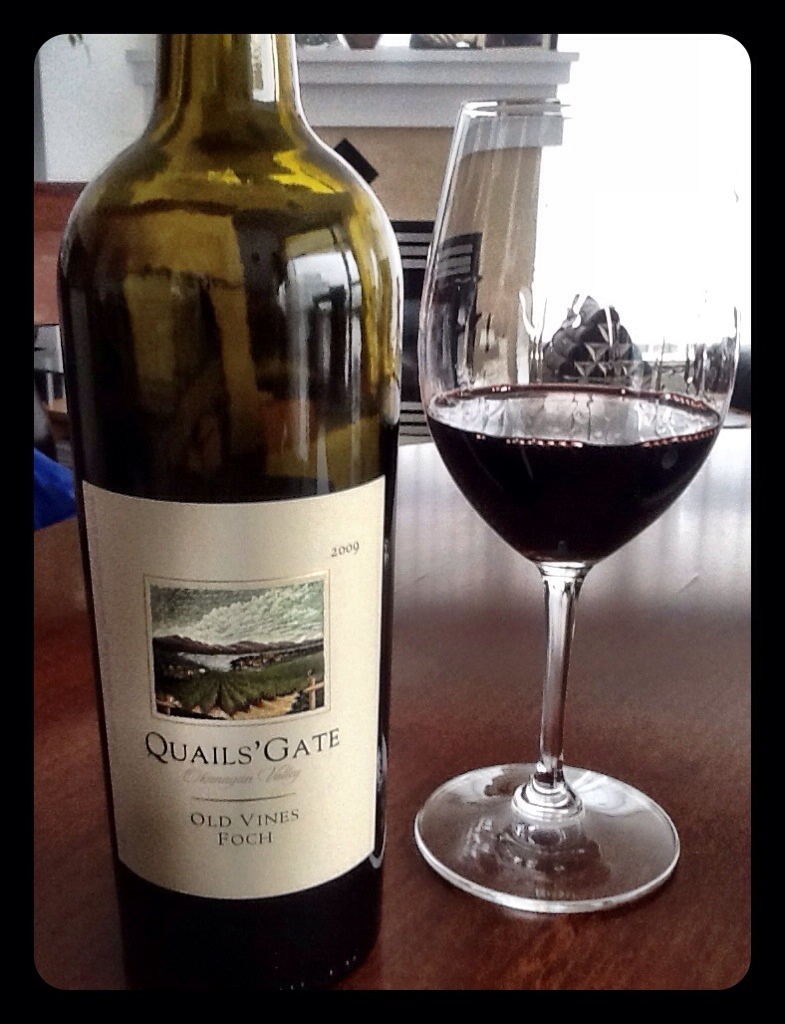
Quails’ Gate, Old Vines Foch, Okanagan Valley, British Columbia, 2009, 15% abv.

It’s Sunday morning and I stumble sleepily into the living room, fire up the iPad and think, “What a perfect time to catch up on a few posts.”

I pull out the bottle and a glass so I can take the picture of last night’s wine and my 16 year old helpfully pipes up with, “You’re not drinking this early, are you!?”

Turgid and dense – this wine’s colour is an intensely deep ruby turning garnet with bricking on the edges. But the first sniff had me concerned I’d kept it too long or that something was definitely wrong.

For sure, there is brett on this wine – but I generally don’t mind having a little of that gamey, barnyard character in a deep and rich red. And having a little complexity makes up for the ‘foch’ factor – the non-noble nature of the hybrid grape used.

The nose is a bouquet of blackberry, cassis and salami with espresso and mocha. Echoed on the palate, add in a medium plus acidity with extra gameyness and sweaty leather saddle.  There was so much initially I left it to sit open and just breathe (me and the wine). It took about an hour to blow off.

The wine is WSET Good and would be more if the alcohol was not so high as to make it slightly hot and unbalanced. Lots of swirling required, but a medium plus bodied, fully barnyard concoction with black fruit and coffee.

Drink now if you have a bottle; not suitable for further ageing after this point.

I guess I’ll wait until at least noon to have the last glass.

20140706-143203-52323051.jpg

Posted in BC, Marechal Foch, RED | Tagged , , , , , , , | Leave a comment