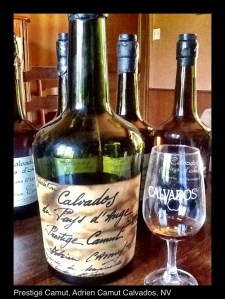
Adrien Camut, Calvados, Pays d’Auge, Normandy, France, NV, 40% abv

If you go:
-arm yourself with a GPS with European maps,
-the basics of French (you’ll need it when you get lost), and
-make an appointment ahead of time with the Camut brothers, Emmanuel, Jean-Michel and Jean-Gabriel
.

When we began planning our recent vacation to France, the first problem was not insignificant; how could we decide which wine regions to visit? France offers the ultimate in choice for the wine and spirits geek.IMG_3917.JPG
Eventually we decided to visit the Loire, Brittany, Normandy and Champagne – which meant it would be possible to find some Calvados along the route.

But if we were going all the way to Pays d’Auge, a commercial Calvados distillery was not going to cut it. We needed to find the best recolant possible.

We did.

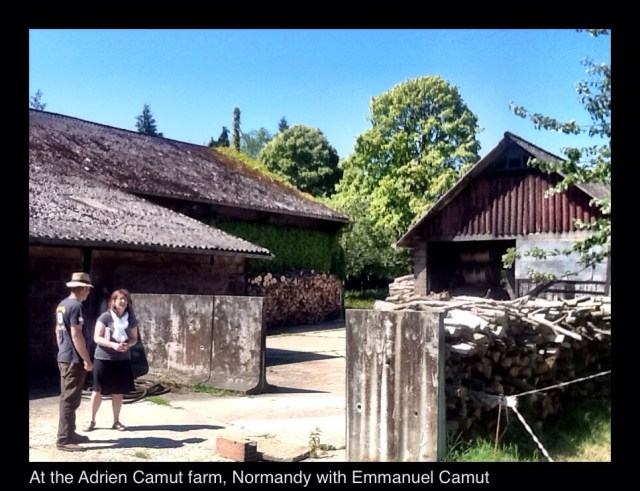
Meet Emmanuel Camut – one of the three engaging brother-owners of the Adrien Camut Calvados Distillery at Domaine de Semainville, La-Lande-Saint-Leger in Pays d’Auge, Normandy.a
The homestead and distillery were a challenge to find – despite our GPS we relied on a friendly local (‘Suivez-moi!’) – but it was well worth the effort.

The Camut brothers are proud 6th generation owners and producers of about 20,000 bottles of Calvados per year from 26 different varieties of bitter and sweet apples. They export extremely small amounts to the US and about one case per year to Canada. Most is sold at the finest restaurants in France and the EU.IMG_3919.JPG
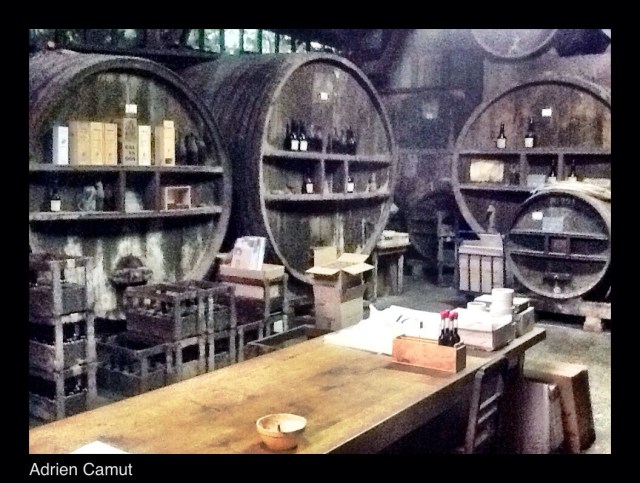
Emmanuel Camut greeted and showed us the organic orchards, an impressive collection of foudres, clay pots and barrels, the two alambic stills (specially patented by his grandfather), the ‘new’ 25 year old press and had hands-on exposure to several of the important production steps including ‘pumping over’ to oxidize the cider and rid it of excess volatile alcohol.IMG_3924.JPG

Emmanuel also shared a tour of his personal project – aged basalmic vinegar made from cider in a custom-built shed beside the centuries-old family farmhouse once occupied by his grandparents.

Appley, lightly sweet and delicious with cheese, it has been distilled over the course of 3 months by wood fire and aged for 12 years in a variety of different barrels including acacia and oak, some ordered from Modena, Italy. He intends to market it starting next year and is just waiting for it to become slightly more viscous.IMG_3921.JPG
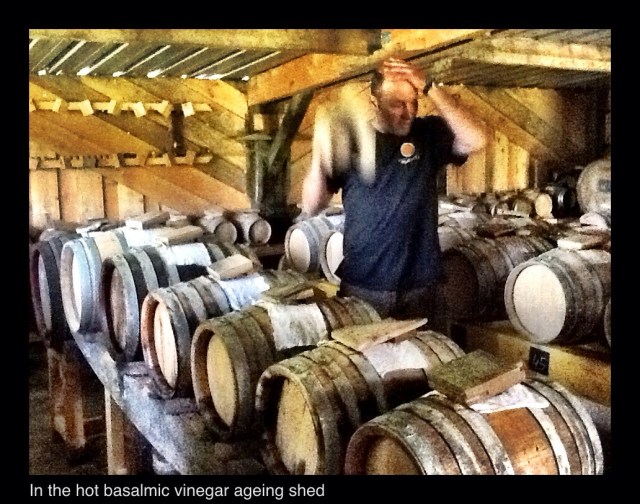
Take a moment to pause and think about the time and effort taken – a gentle and constant wood fire for 3 months to distill 10,000 litres of cider into about 1,000 litres of balsamic vinegar – and then barrel-aged for years… Barrel tasting the Camut basalmic vinegar is a treat not to be missed.IMG_3920.JPG

The same love and attention has gone into the Calvados; no filtering, no added sugar, no added caramel for colour – no short cuts. And to top it off, approximately 5% is lost to the angels annually.

This, explains Emmanuel, is good for concentration. He also rightly points out that the commercial distilleries do not age as extensively; they add caramel for colour instead of relying on the oak and time – to maximize profits and sell as quickly as possible.

Not so at Adrien Camut where passion, integrity and patience are of greatest importance.

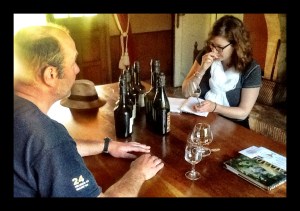
The tasting was extensive and generous – we were offered everything from the 6, 12 and 18 year olds to the Reserves de Semainville and de Adrien and the Prestige. The pièce de resistance though was the Rarete – a medium amber, smooth, viscous, complex and fresh, ripe red apple, vanilla, hazelnut and beurre sale concoction with 39-40% abv aged in the family Solera since 1898.

Kind, thoughtful and exceedingly generous with his time, Emmanuel repeatedly expressed his desire to ensure we ‘…have the best possible experience in Normandy’. He showed such genuine interest in us – and in learning about Canadian icewine. We will be sure to send him some.

Simply outstanding.
b


Posted in Calvados, France, SPIRITS | Tagged , , , , , , | Leave a comment

Domaine Huet, Le Haut Lieu, Demi-Sec, Vouvray AC, France, 2003, 12.5% abv.

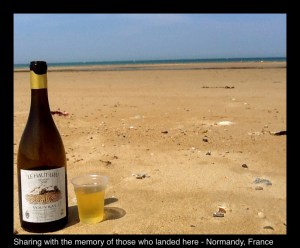
Inspired by our visit to Huet in Vouvray, Loire Valley, France and the friendly and informative tasting and tour led by Johan Le Calonnec, we bought two bottles, one of which was the 2003 Haut Lieu.huet 1

Medium gold with a nose and palate of hay, ripe red and yellow apples, honey and lemony citrus, this moelleux wine has medium high acidity to balance the residual sugar perfectly, it’s at its height and drinking perfectly. If you have a bottle, drink now and do not hold.

WSET Outstanding, it was the best accompaniment to the strawberries, Comté cheese and fresh bread we found at the local markets.

When we got to the beaches of Normandy, this 11 year old wine was the one we opened in memory of the fallen Canadian soldiers who died at Juno Beach in June 1944.

These grapes can be grown, the wine produced and enjoyed – all because these men gave their lives.

“They walk with you.”huet 2 huet 3 huet 4


Posted in Chenin Blanc, France, WHITE | Tagged , , , , , , , , , , | 2 Comments

Lillet Rouge, Podensac, Gironde, Bordeaux, France, NV

Imagine you’re at the Le Mans 24 Hour Race in France. Oh look – here I am!

What to drink? A little apéritif served by a handsome bartender will do nicely.

Meet Lillet Rouge – a blend of Merlot and Cabernet Sauvignon, macerated citrus liqueurs from Spanish oranges and the peels of bitter green oranges from Haiti, plus Cinchona bark liqueur from Peru with quinine.

Pale pink and served on the rocks, it’s got medium acidity and body with flavours and aromas of rose water, petals and lychee. There is almost something soapy about it, but it’s not displeasing. WSET Good, refreshingly tasty and off dry.

Vroom…

20140615-000647-407278.jpg

Posted in Cabernet Sauvignon / Blends, France, Merlot, RED, Tonic Wine / Aperatif Wine | Tagged , , , , , , | 1 Comment

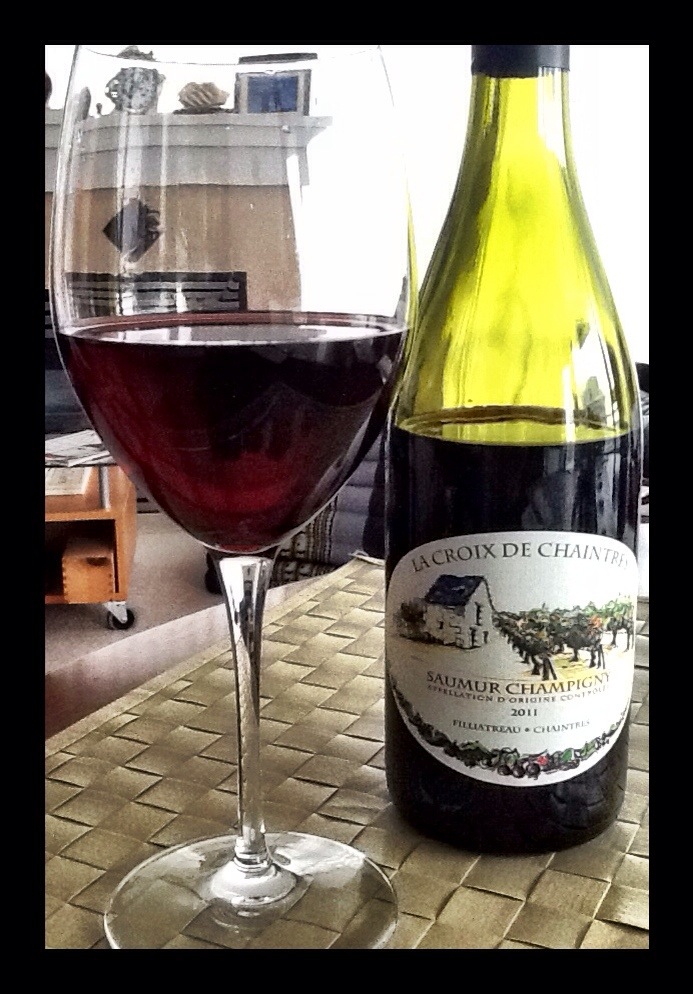
La Croix de Chaintres, Domaine Filliatreau, Chaintres, Saumur-Champigny AOC, Loire, France, 2011, 13% abv.

Saumur-Champigny makes some great red wines from Cabernet Sauvignon and Pineau d’Aunis, but this wine is produced from the more prevalent Cabernet Franc grape.

Cabernet Franc is a parent to Cabernet Sauvignon, Sauvignon Blanc and even Merlot, so it’s not surprising to realize it shares a lot of similarities with them – a tendency to herbaceousness, solid acidity and crunchy red fruit.

It loves the yellow tuffeau (limestone) soils the Loire is famous for.  They are porous and allow the vines to root very deeply, finding water and nutrients in this region that is heavily affected by the Atlantic maritime weather patterns.

Gosh, this is solid wine. I picked it up in England in July 2013. It’s clear and bright, medium ruby and has legs. On the nose it’s clean and youthful with medium plus intensity and aromas of pomegranate, red currants, red plum and raspberry with vine and freshly cut grass. There’s an aura of salty tang about it as well.

The palate is dry with medium plus acidity, medium ripe tannins with light grip and average body. Flavours include crunchy red fruit – raspberry, currant, plum, pomegranate – and some very welcome fresh herbaceous grass.  There’s a wonderful minerality and a strong finish.

WSET Very Good wine – refreshing and juicy, it’s got great, ripe and concentrated fruit that’s well-balanced with the acidity and tannins.  Pity I can’t buy this in BC. Drink now; not suitable for too much ageing although there is enough acidity and tannins to support the fruit for 2-3 more years at most.

20140528-203000-73800531.jpg

Posted in Cabernet Franc, France, RED | Tagged , , , , , | Leave a comment

L.A. Cetto, Petite Sirah, Valle de Guadalupe, Baja California, Mexico, 2011, 13.5% abv, C$17

They’ve been growing vinifera vines in Mexico since the 1500s and at one point, the King of Spain decreed that each settler would have to plant 1000 vines for each 100 natives ‘granted’ to his lands.  That’s a lot of vines.  Not to mention a lot of ‘natives’.

Fast forward to 1699 when the then Spanish King changed his mind and declared Mexican wines were no longer welcome as imports back to the homeland. This effectively ‘protected’ the Mexican wine industry into oblivion.  For a long time between 1699 and the 1980s there was little in the way of quality wine produced there.  Today, most of the grapes grown are used for Domecq’s El Presidente brandy or are simply enjoyed as table grapes.

Baja California is located on the western coast, directly south of California.  It benefits from the same Mediterranean climate with warm, arid summers and mild winters as well as some of those infamous Pacific mist fogs. Irrigation is a necessity here and sometimes it’s over done.

The Baja focuses on a few varieties, including Colombard and Italian grapes such as Sangiovese and Bonarda, but this example is the most popular Petite Sirah, aka Durif.

The wine is purple with a youthful nose showing aromas of red fruit (raspberries, red currants and pomegranate), some green grass and vanilla.

The palate is dry with medium plus acidity, medium plus ripe and grippy tannins, and alcohol that is a little high. Flavours include more raspberry, green strawberry and pomegranate with clove spice, white pepper and vanilla. The finish is less than expected.

This wine is WSET Acceptable. There is a lot of alcohol on the nose initially and the flavours are very green; perhaps this vintage was a little wet, or it was picked early, or maybe there was a little too much agua used… The tannins are astringent and young as well. The fruit is concentrated, but not balanced with the alcohol or the rest of the components.  Meh…

A simple wine that went better with lasagna than it fared on its own.
Drink now if you have to; not suitable for ageing.

20140527-190929-68969636.jpg

Posted in Mexico, Petite Sirah, RED | Tagged , , , , , , | Leave a comment

Chateau Maison Blanche, Médoc, Cru Bourgeois, France, 2009, 14% abv, C$29

There’s no two ways about it.  Bordeaux is confusing.  What does Cru Bourgeois mean?

You’ve probably heard about the Premier through Cinquième Crus – the famous First through Fifth Growths. The Premier level includes renowned chateaux Lafite, Latour and Margaux, Mouton-Rothschild and Haut Brion.

This classification system was set in 1855 but there were many more estates than were included in it. There was nowhere for the remaining Médoc-based chateaux to go to ‘classify’ their wines.

And there were a LOT of them.

Following WWI, the Cru Bourgeois classification was established for these 444 remaining chateaux. Everything continued happily for a while, but by the 1960s, over 300 of those estates were no longer even making wine or had been absorbed by other properties.

Fast forward to 2003 when a new system was established whereby three sub-levels were set; Cru Bourgeois Exceptionel, Cru Bourgeois Superieur and Cru Bourgeois. The wines were assessed for these categories based on their 1994-99 vintages. This new stipulation immediately caused 76 of them to complain about unfairness and lay claims.

One property in particular (Chateau Preuillac) had recently been purchased by new owners who felt it was wrong to judge their estate against what the former owners had produced. Courts found in their favour and as a result, the rules were changed.

It was decided that the Cru Bourgeois classification would be ‘a label of quality’ only and available annually based upon a tasting. Then, in 2008 it was agreed that some production criteria would be included too (like ageing for 18 months in oak). The Exceptionel and Superieur labels are no longer used.

This wine from Maison Blanche is clear and bright, deep ruby with legs. On the nose it’s clean and developing with medium plus intensity and aromas of deep black and blue fruit (plums, blueberries, blackberries, cassis), some green pepper, black pepper, a comfy leather chair and some clove.

The palate is dry and has medium plus acidity with high alcohol and medium plus dusty tannins with slight grip. The body is medium plus and it has medium plus intensity with flavours of more blue and black fruit (blueberries, damson plums, blackberries, black currants), slight herbaceousness, baking spices (clove and nutmeg), black pepper, tar and kid glove leather. The finish is a solid medium plus.

This Cru Bourgeois wine is WSET Very Good. It over delivers for the cost and has good concentration and complexity that will continue to grow for about 3-5 years; the tannins and acidity are strong enough to support the fruit. Plush and full bodied, this wine will be perfect with steak or meat-based dishes. We enjoyed thoroughly with spicy Italian sausages.

20140522-203716-74236013.jpg

Posted in Cabernet Franc, Cabernet Sauvignon / Blends, France, Merlot, RED | Tagged , , , , , , , , , , | Leave a comment

Thornhaven Estates, Gewürztraminer, Summerland, Okanagan Valley, BC, Canada, 2012, 13.5% abv.

Did you know? Gewürztraminer shares the same genetic footprint as several other white grapes including Savagnin, Paien (Switzerland), Traminer (Germany) and Traminer Aromatico (Trentino-Alto Adige, Italy).

It’s an aromatic grape that is thought to be a mutation of the Savagnin Rose (grown mostly in Alsace). The first part of its name – Gewürz- means spice and it has interesting grapes that are a pure pink colour by the time harvest rolls around.

Classic Gewürztraminer are full bodied, deeply golden and even have a little copper to them. These wines can be as high as 14% abv but also have low acidity and aromas and flavours of lychee, rose petals and sometimes a bit of a soapy character. Bitter when picked a little early, late picked wines can even develop secondary flavours similar to bacon.

There are about 261 ha planted in BC and this one comes from Thornhaven Estates in Summerland. It is clear and bright, pale gold with legs. The nose is clean and youthful with pronounced intensity with aromas of roses and blossoms, honey, lychee, grapes and pear.

The palate is dry with medium acidity and medium body, medium plus alcohol and medium plus intensity with the same flavours of roses and flowers, clover honey, pear, lychee and stone fruit. The finish is medium.

This is WSET Good; it’s got low acidity and higher than average alcohol, but the flavours and aromas are nicely concentrated and typical of this variety. A perfect wine for sushi and a westcoast Canadian summer evening.

20140513-205619.jpg

Posted in BC, British Columbia, Gewurztraminer, WHITE | Tagged , , , , , , , , , | Leave a comment

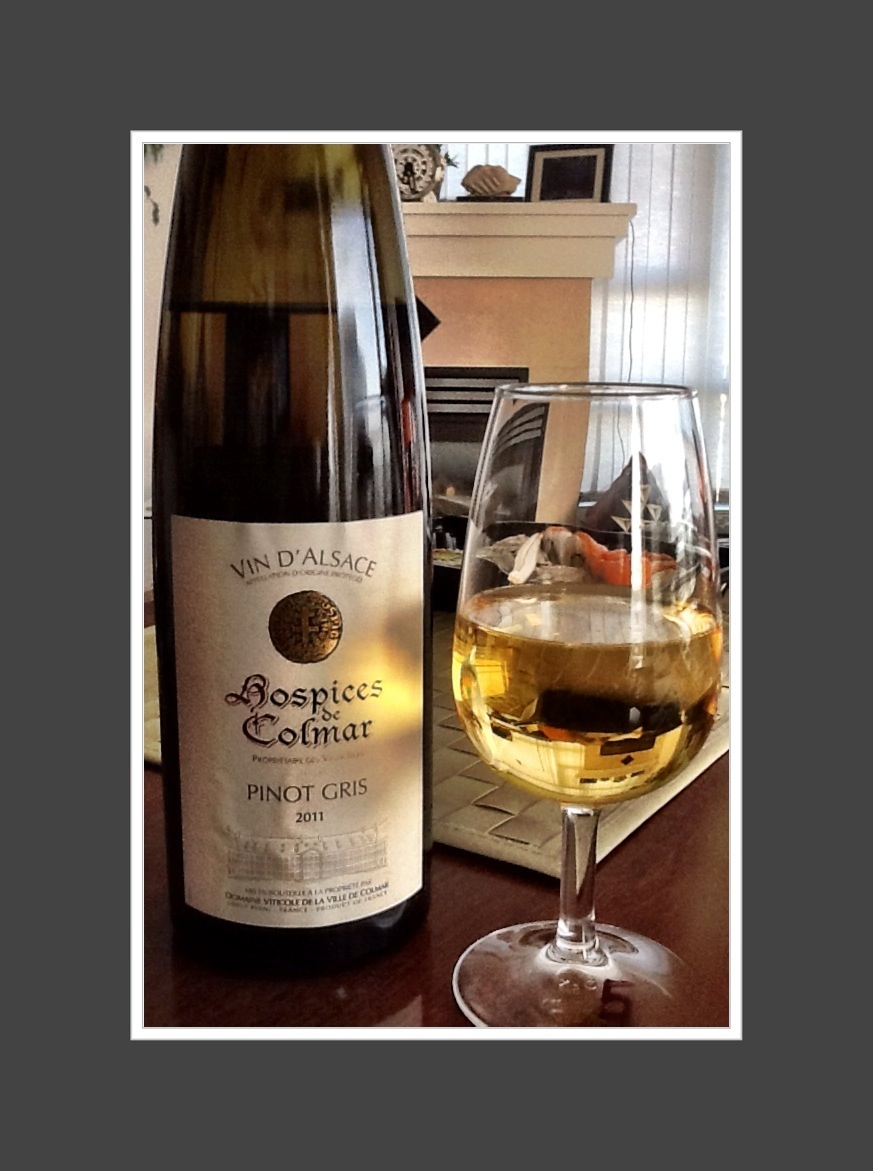
Hospices de Colmar, Pinot Gris, Vin d’Alsace DOP, France, 2011, 15% abv, C$35

Alsace is located in the northeastern corner of France cut off from the rest of the country by a string of mountains running north to south called the Vosges. Sitting there in the rain shadow that the Vosges offer the vineyards, Alsace produces many different styles of wine – from dry, austere Riesling all the way to full sweet and nobly rotted SGN wines (Selection des Grains Nobles made from grapes affected by botyris rot).

This wine is neither of those, but is an off dry Pinot Gris. One of the four noble white grapes of Alsace (Gewurztraminer, Muscat and Riesling are the others), Pinot Gris is known by many names the world over – Pinot Grigio, Grauburgunder, Rulander and Malvoisie just to name a few.

It’s a mutant clone of the Pinot Noir grape and is believed to have spontaneously mutated (‘poof’) several centuries ago in the vineyard. Its leaves look remarkably like Pinot Noir’s and the grape bunches are also shaped the same – as cones – or pinots.

Pinot Gris is a very popular grape, beloved by consumers and producers alike all over the world.  It’s easy to grow and has popped up almost everywhere; there are immense quantities of it in Italy’s Veneto from Emilia-Romagna up to Alto Adige/Trentino and over to the Slovenian border in Friuli.  There are oceans of it in Germany, loads in Alsace and in the New World, it’s grown in California, Oregon, Washington, the Okanagan Valley, Chile, Argentina, Australia and it’s the new up-and-coming grape of New Zealand.

It can reach high yields (so it’s profitable), is easily made in stainless steel with screw caps, doesn’t require oaking or any ageing (so no barrels or time spent in storage is required) and it’s versatile and can be made into different styles (dry through to sweet).  For many producers in some countries (like for example Italy’s Veneto), it is the volume leader for sales and aimed specifically at novice and especially female drinkers.

Consumers love it because it’s easy to say, easy to find (everyone sells it), relatively cheap (especially those ubiquitous and neutral Italian products), and pairs easily with most food. It’s easily quaffable and loves summer days and patios just as much as salads and fish dishes.  How bad can that be?  (Well, sometimes pretty bad…)

So, we know it’s a popular grape and available just about anywhere around the world at entry level pricing. This version though is a little different. For starters it’s hardly entry level priced at C$35. A DOP level wine from Colmar where the temperatures exceed the rest of Alsace by about 1c (it doesn’t sound like much but it affects the grapes and ripening times immensely), this one is clear and bright, deep lemon and has viscous legs.

It’s clean and youthful with medium plus intense aromas of honey, orange zest, honeysuckle and marmalade. There’s a lot of alcohol on the nose and that plays into the palate which is off dry with medium minus acidity, high alcohol and medium plus body. The medium intensity is augmented by flavours of more orange peel and marmalade, yellow grapefruit, a honeyed character and a medium finish.

This wine is WSET Good; the low acidity and very high alcohol (it must be chaptalised as there’s no way the grapes could have that much sugar in them and still make off dry wine) leave it unbalanced. The nose is so inviting and the viscous legs look great but that promise isn’t borne out on the palate in terms of acidity or length.

That said, this wine came alive with sushi, soy sauce and wasabi – its profile did a full 360 when the wasabi hit the residual sugar. A great sushi wine and worth a try for that.

20140513-200018.jpg

Posted in France, Pinot Gris | Tagged , , , , , , , , , , , | Leave a comment

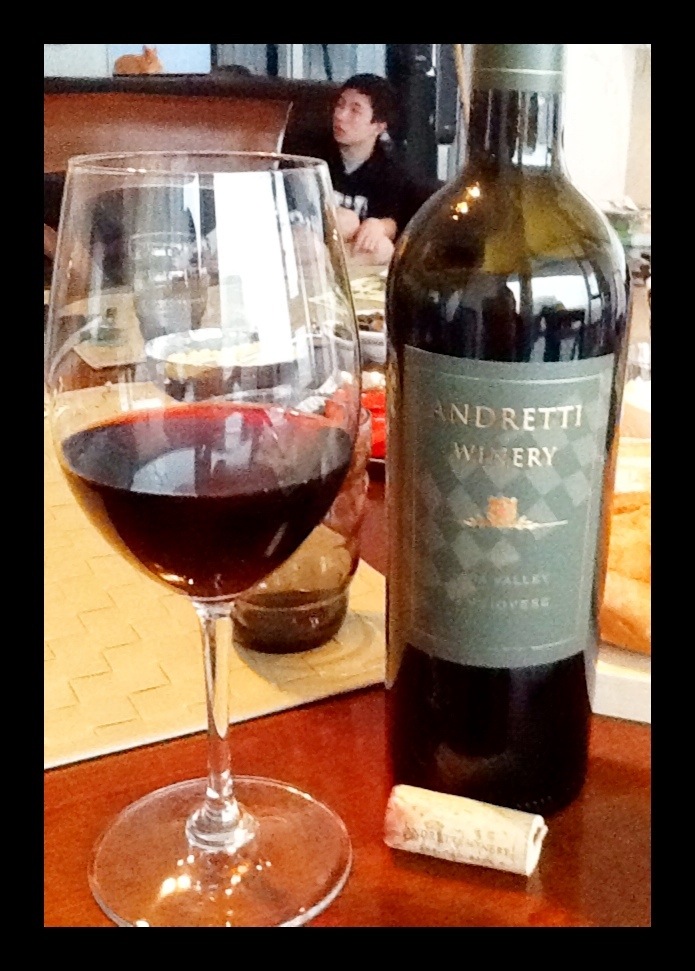
Andretti Winery, Sangiovese, Napa Valley, California, 2009, 14.9% abv.

Sangiovese is a black grape native to Central Italy and primarily Toscana whose name literally means ‘Blood of Jove’, the Italian name for Jupiter.

It’s Italy’s most planted variety, is the only grape allowed in Brunello di Montalcino and is the base for blends that make Chianti, Vino Nobile di Montepulciano and the Supertuscans of the western Maremma coast.  Sangiovese has several variations and names – Prugnolo Gentile, Brunello, Morellino and Niellucio.

Prior to 1700 the most common grapes grown and used in Tuscan wines were actually white – Trebbiano and Malvasia – and most wine scholars seem to think Sangiovese was the result of a spontaneous cross between two obscure grapes (Ciliegiolo and Calabrese Montenuovo).

Early wines made of Sangiovese were quite hard and acidic, so it was often blended with other grapes to soften and sweeten the end product. Usually Canaiolo is used and it has become the basis of most modern Chianti and Vino Nobile di Montepulciano wines. Bettino Ricasoli is widely agreed upon as being the inventor of that ‘recipe’.

Toscana is very hilly and the weather can vary tremendously from hilltop to hilltop. Sangiovese does not do well when planted much higher than 500m. It’s very slow to ripen and the harvests are almost always late, starting after Sept. 29 and lasting into October.

If the yields are too high, the grapes produce wines that are too acidic and lightly coloured. Sangiovese grapes are thin-skinned and susceptible to rot, so having rains at harvest is dangerous to the ultimate quality of one’s Sangiovese!  Today’s wines are oak treated using French oak barrels.

Sangiovese is also an important grape in blends with Cabernet Sauvignon in Carmignano DOC and in Umbria. In the New World, it has been exported to Argentina and lots is grown in Mendoza but better examples exist in California’s Napa and Sonoma Valleys, Santa Barbara and San Luis Obispo near Los Angeles.

This wine is from Mario Andretti’s Napa Valley winery.  It is clear and bright, medium ruby and has solid legs. The nose is clean and developing with medium plus intensity and offers aromas of strawberry, cherry, red plum, roses, tar and as it opens, leather and tobacco.

The palate is dry with medium plus acidity and beautifully medium dusty tannins with admittedly high alcohol. It’s got flavours of more ripe strawberry, cherry, red plum, fragrant rose petals and tar with kid glove and sweet tobacco and vanilla.  The finish is medium plus.

This wine is WSET Very Good; the alcohol is a little heavy and affects the initial balance but does blow off. Other than that it’s nicely concentrated and complex with secondary leather, tobacco and tar complementing the ripe red fruit.  The finish lingers. Went perfectly with spaghetti and fresh meat sauce.

20140510-155559.jpg

Posted in California, RED, Sangiovese | Tagged , , , , , , , , , | Leave a comment

Brokenwood, Sémillon , Hunter Valley, Australia, 2012, 10.5% abv, C$30

I’ll bet you know what White Bordeaux is – but have you ever heard of the Sémillon grape? White Bordeaux is always a blend of Sauvignon Blanc and Sémillon added to build out the body.  Sauvignon Blanc has a following the world over, but alas, the lonely Sémillon grape suffers in some oblivion.

Cue Australia’s Hunter Valley – this version has a real following in Sydney (located only 130 km to the south and out on the coast), but elsewhere few have heard of this special wine.  But now you have, so there are no more excuses.

The best examples of Sémillon are made in the Hunter Valley, are of high quality, are much more interesting than an innocuous Pinot Grigio or a pedestrian Sauvignon Blanc, are unoaked and have delightfully low alcohol levels.  Other examples exist around the world and they may be oaked and will almost always have a higher level of alcohol.

Hunter Valley is Australia’s most populated state and this wine it produces is internationally known, although it only comprises about 3% of their annual crush. The ironic thing about this growing region is that it’s incredibly hot – odd for a place that has built its reputation on the back of a premium white wine.  Humidity and cloud offset the heat.

The Sémillon from the Hunter Valley produces wines that can live for 10-20 years and develop rich tones of butter, honey and nuts. All of these flavours and aromas normally indicate that wood of some sort has been used – but that’s the second cool thing.

No trees were killed during the maturation of this wine.

This Sémillon is clear and bright and pale lemon with a developing nose of medium plus intensity and aromas of lemon drop, toast, honeysuckle, jalapeno pepper and minerals.

The palate is dry with medium plus acidity, medium body, low alcohol, medium plus intensity and flavours of lemon, pomelo, grapefruit, light leaf, lime rind and more toastiness.  The finish is medium plus.

This wine is WSET Very Good; the flavours and aromas are nicely balanced by the strong acidity and although the alcohol is low, the wine has solid structure. It’s got a nice complexity, is deliciously refreshing and the toasty flavours are intriguing.

20140506-190626.jpg

Posted in Australia, Semillon, WHITE | Tagged , , , , , | Leave a comment