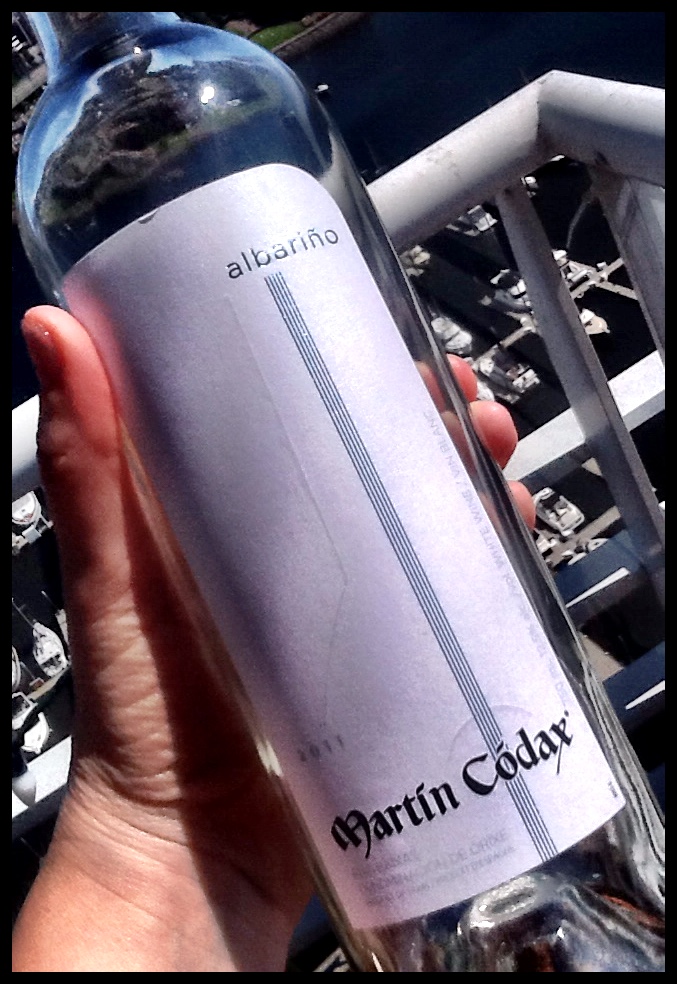
Albariño, Martin Códax, Rias Baixas DO, Spain, 2011, 12.5% abv. C$22.90

Go out and get a bottle of this – bypass the Sauvignon Blanc, the Chardonnay and the Pinot Grigio.  Here is a fabulous little Spanish white that not only tastes great, but punches well above its weight and is a great deal. Martin Codax

A full 90% of all the grapes planted in Rias Baixas are Albariño (or Alvarinho as it’s called in nearby Portugal) – it flourishes there.

This version  is a shade of lemon with light legs and a seascape of aromas including crushed seashells, rocks wet with brine, lemon and lime rind and lightly honeyed stone fruit.

The dry palate is striking with white peach and apricot, bergamot lime, herbal lemongrass and a relatively long finish.

Intricate and fresh, it’s fabulous with seafood (we matched it with just-bought spot prawns sautéed with garlic and shallots).

Refreshing, unique, a WSET Very Good choice – drink now; not meant for ageing.

Posted in Albarino / Alvarinho, OTHER, Spain, WHITE | Tagged , , , | Leave a comment

Génération Dix-Neuf, Sauvignon Blanc, Alphonse Mellot, Sancerre AC, Loire Valley, France, 2012, 13% abv.

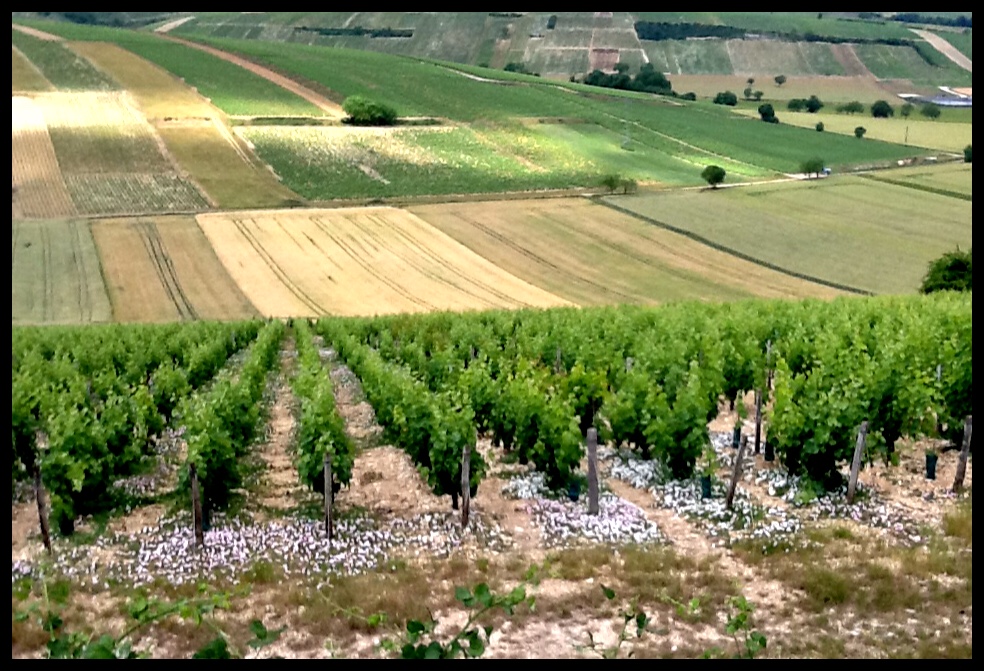
dix neuf 2We visited this tasting room in the heart of Sancerre in June, 2014.  Although I’d booked a personal appointment well in advance, no tour was offered and we simply did the regular tasting with their store employee – who was Portuguese and spoke no English.  Now that was interesting.. dix neuf 3Thankfully she spoke French so between the two of us and my third language, we got through it.

This bottle traveled home to Canada with us.  A classic Loire Valley Sauvignon Blanc, it is pale lemon with a nose of crushed rocks, quince, Asian pear, lemon balm and flint.

The palate is dry with juicy, high acidity and flavours of lemongrass and wet rocks with pear and more quince on top of silex.

The electric minerality of this complex, delicious wine makes it WSET Very Good.  We paired it with fresh spot prawns.  alphonse mellot

Posted in France, Loire, OTHER, Sauvignon Blanc, WHITE | Tagged , , , , , , | Leave a comment

Saignée, Culmina, Okanagan Valley VQA, BC, 2013, 14% abv.

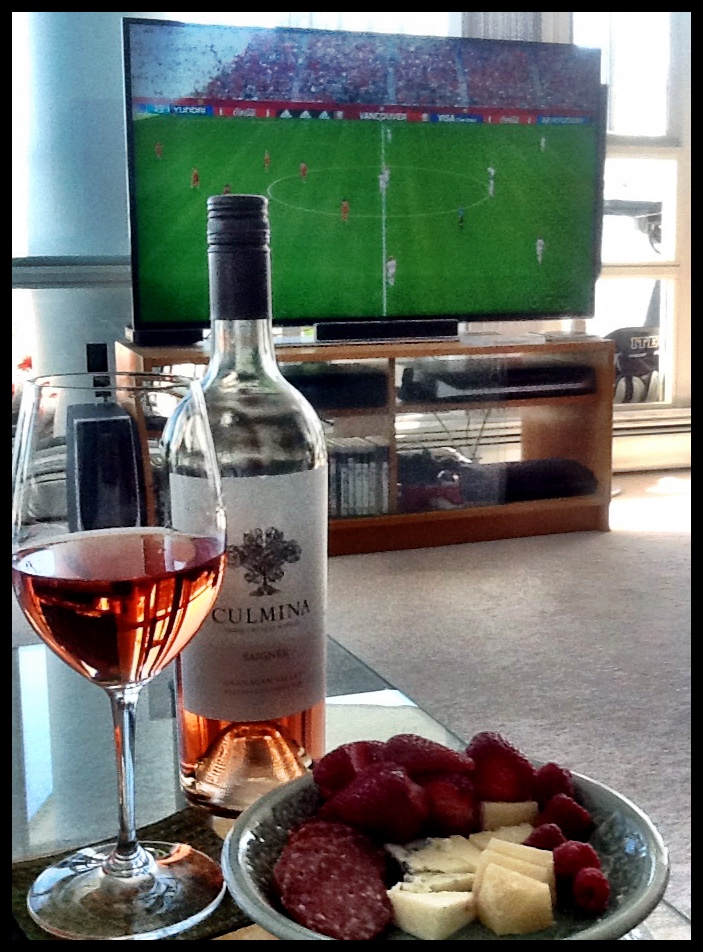
It’s a beautiful, sunny, June afternoon and Canada’s women’s soccer team is getting ready to play in nearby BC Place stadium.  What better time than to enjoy a rosé that has been sitting in the wine fridge, just waiting for such an excuse.Culmina rose

This is produced at the Culmina Family Estate Winery, located on the Golden Mile Bench in Oliver, BC and owned by the Triggs family.  The Triggs are half of the famous former Jackson-Triggs / Vincor conglomerate that was bought in 2005 by US company, Constellation.

Produced from their Bordeaux varietal grapes (Cabernet Sauvignon, Merlot and Cabernet Franc) and in the saignée style, this wine sports a pretty shade of orange-toned salmon and relatively heavy legs.

The nose shows slightly heavy alcohol with light field berry, red pepper and herbs on a palate that’s fully dry.  Tannins are unobtrusive and the flavours mimic the nose with additional strawberry, light jalapeno and rhubarb.

Ever-so-slightly unbalanced because of heavy alcohol and with its mild nose, the palate and strong finish are the best parts about this rosé.  Allow yours to warm a little to taste the full benefits.

WSET Good plus.

Posted in British Columbia, Cabernet Franc, Cabernet Sauvignon / Blends, Merlot, OTHER, ROSE | Tagged , , , , , , , , | Leave a comment

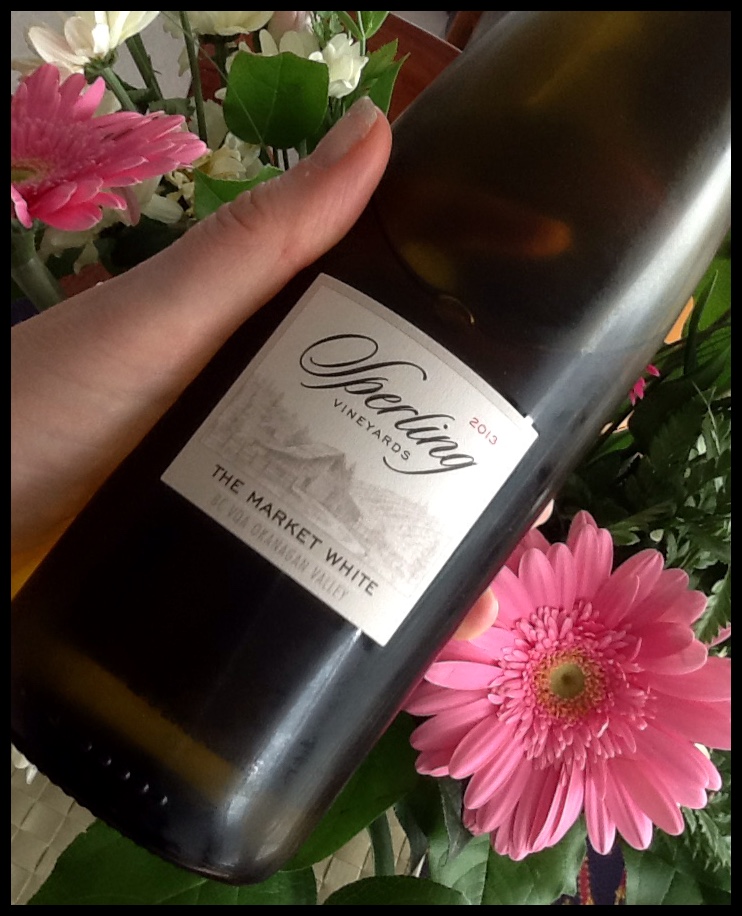
The Market White, Sperling Vineyards, Okanagan Valley, BC, 2013, 11.6% abv, C$17

sperline 3Sign me up for more of this pleasing white made from Bacchus, Pinot Blanc and Gewürztraminer grown on the Sperling vineyards located in East Kelowna.

The colour is a medium lemon with aromas of springtime flowers, lychee, peach, nectarine, apricot and honeysuckle.    The palate gives an impression of being ever-so-lightly off dry with juicy acidity and more honeyed flavours of fresh stone fruit and a bit of pink grapefruit citrus and almond.

This is WSET Good plus – and a great deal at only $17 (at the winery).  Deliciously refreshing, its fruit is well balanced with the low alcohol, making it great to pair with just about anything, including brunch.  It’s also lovely to drink on its own.  Must buy more.

Available at stores and on lots of local wine menus throughout the BC Lower Mainland.  Try it next time you’re out at dinner or looking for something new.

Posted in Bacchus, British Columbia, Gewurztraminer, OTHER, Pinot Blanc, WHITE | Tagged , , , , , , , , , | Leave a comment

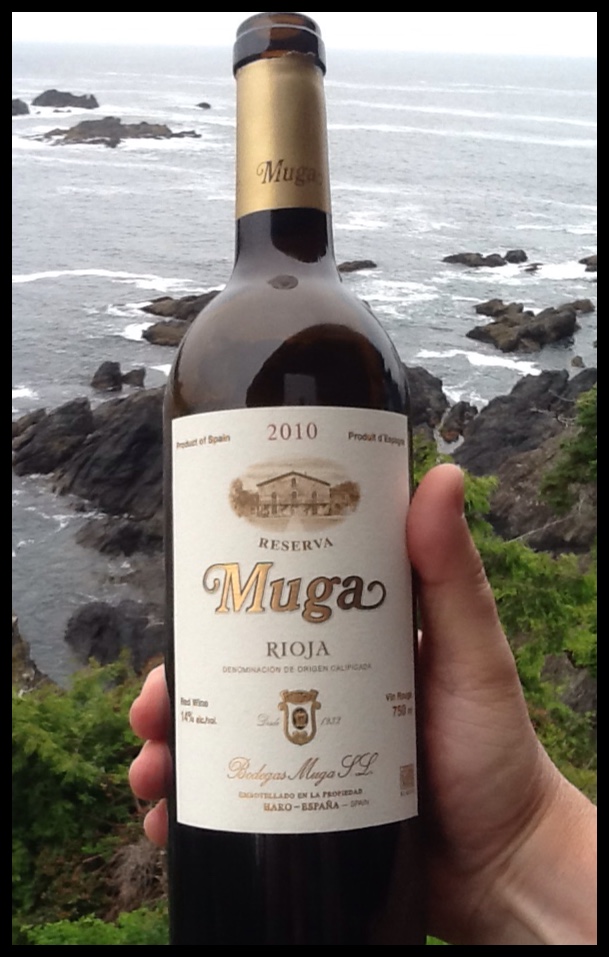
Muga, Reserva, Rioja DOC, Spain, 2010, 14% abv, C$26

This bottle of Muga Reserva 2010 travelled all the way around the world from Rioja Alta to a patio off the far west coast of Canada in Ucluelet, BC.

One day, I will visit Rioja DOC and the Bodegas Muga in Haro, but for now, this is as good as it gets.  And this is pretty good – WSET Good plus.  muga reserva1

The Muga Reserva is 70% Tempranillo, but with 20% Garnacha, 7% Mazuelo and the remainder Graciano.  It’s a medium garnet and has better than average intensity with aromas of boysenberries, raspberries and ripe cherries with vanilla, cedar and mint.  After a little unwinding, it sports leather and sweet tobacco.

On the palate it’s dry with some gorgeously silky tannins.  They’re a little green until the food shows up, but then become unobtrusive with the addition of hors d’oeuvres.  The flavours mimic more of the nose with the addition of strawberry compote, a little black pepper and dried tobacco leaf.

Long and layered, delicious and tangled.  Great with food or on its own.


Posted in Graciano, Grenache / Garnacha, Mazuelo, OTHER, RED, Spain, Tempranillo | Tagged , , , , | 2 Comments

Notre Histoire, Bourgueil AC, Domaine de L’Oubliée, Loire, France, 13% abv, 2011

This is a wine made by Xavier Courrant who used to work in Paris as a wine retailer.  In 2009 he purchased 6 ha of vines (five Cabernet Franc and one Chenin Blanc) in Bourgueil near Saint-Patrice and went to work making wine.Bourgeuil

Lucky us to have one of these to share with friends and enjoy with mint-laced lamb burgers.  The Notre Histoire vineyard has a terroir of calcareous clay and lies to the north of the Loire River, east of Saumur and just north of Chinon.  When he purchased the land, Courrant started to wean it off the sprays that had been used and he’s now moving toward an organic label and a fully biodynamic profile.

This wine is a deep ruby with fresh pine needle, raspberry and red currant on the nose.  It’s exactly as I’d hoped it would be when I purchased it in all its natural yeast fermentation, unfined, unfiltered glory.

The palate is dry with medium plus acidity and ripe tannins with fresh, green vine, raspberry, crunchy pomegranate and cranberry, more currants, rosemary and savoury garrigue.

WSET Very Good plus, the Notre Histoire is gasp worthy – tight and pleasantly tart.  Pure Cabernet Franc, it fairly screams ‘Loire‘.


Posted in Cabernet Franc, France, Loire, OTHER, RED | Tagged , , , , , , , , , | Leave a comment

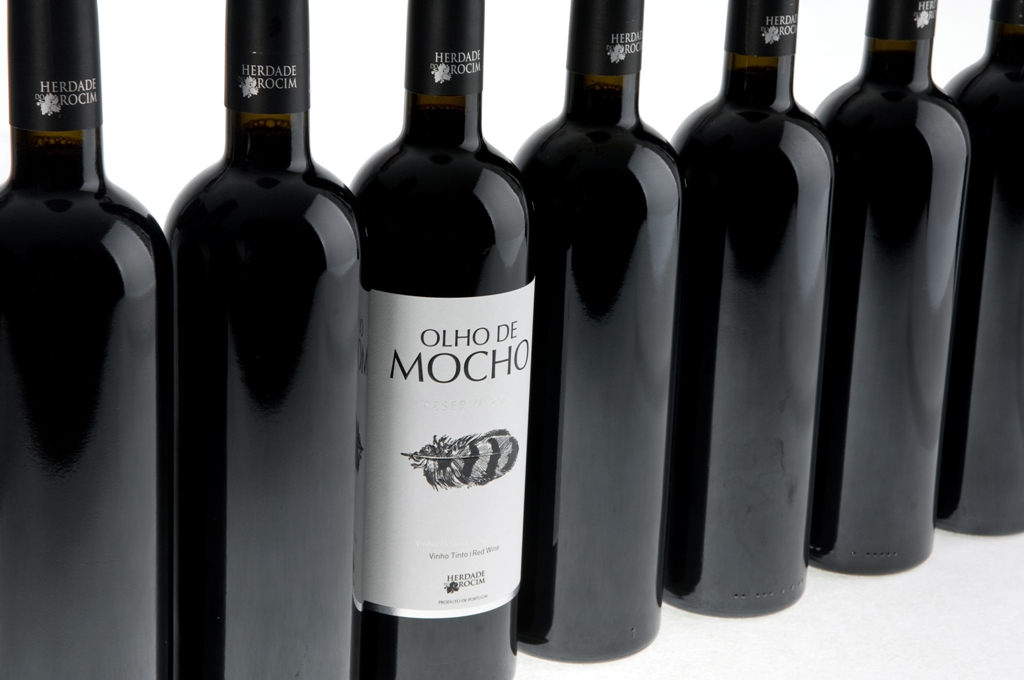
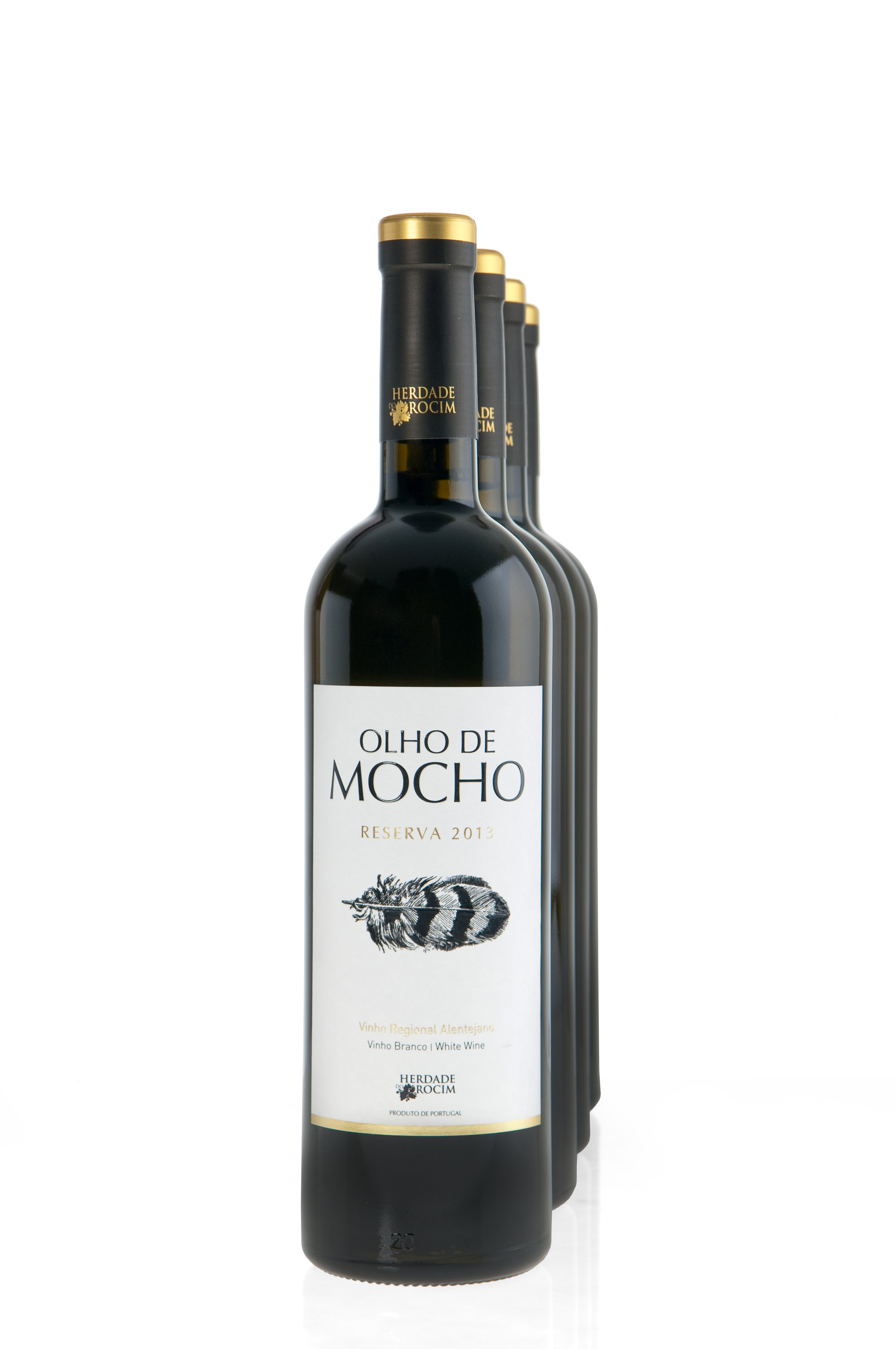
Olho de Mocho, Reserva, Herdade do Rocim, Vinho Regional Alentejano, Portugal, 2011, 14% abv.

Why, oh why, are we not all drinking Portuguese wines in copious quantities.  The price is right, they taste delicious, everything – from lightly effervescent Vinho Verde to sparkling, white, red and fortified wines – is available, and the quality is there. Olho Mocho red5

With any luck,  the recent Wines of Portugal tasting in Vancouver will change all that very soon and interested wineries will find local importers willing to bring in more of their wares.

I spent a considerable amount of time at the Rocim table talking with Ricardo Botelho Lopes, Export Manager for the estate purchased in 2000 by a company called Movicortes.

About 70 ha are planted at Herdade do Rocim with everything from the red fruited Alicante Bouschet, to Touriga Nacional, Syrah, Aragonês (aka Tempranillo) as well as whites Antão Vaz, Arinto and Alvarinho.

This is, perhaps, the unique thing about Portuguese wines and the one that makes them so special – the indigenous grapes.  Having developed in virtual isolation on the west coast of Europe for decades and decades, untouched by so many of the fads that came and went through the rest of the wine world, Portugal has finally realized that their distinct lack of international varietals, those ubiquitous and pedestrian Sauvignon Blancs, Chardonnays, Cabernets and Merlots, spells delight in jaded markets where discerning drinkers yearn for unique and interesting options.

Bring it on!  The reds started with a juicy onion skin coloured Rosé and the fresh and fruity entry-level Mariana (Touriga Nacional, Alicante Bouschet, Trincadeiro and Aragonês).  This was followed by the Herdade Do Rocim Vinho Tinto (Syrah, Touriga Nacional, Aragonês and Alicante Bouschet), the tannic but fruity 100% Touriga Nacional Rocim, and the Reserva Rocim that had spent 8 months in French oak.

Olho Mocho red6The pièce de résistance however was the Olho do Mocho Reserva, 2011.  A blend of Alicante Bouschet and Touriga Nacional with Petit Verdot for extra tannin, colour and perfume, it is a deep tone of teeth-staining ruby.

The nose shows complex blackberry and boysenberry with purple flowers, serious herb and minerals.  The palate is dry with dusty and ripe tannins.  There is an amount of grip that can lend the wine 3-5 more years of time.  Flavours mimic the nose with ripe plum, more violets, garrigue, anise seed and a little leather.

To earn the Reserva label in Portugal, a wine must spend at least 3 years ageing in cask and bottle and at least one of those years must be in cask.  This wine was aged in French oak barrels for 16 months and an additional 6 months in bottle prior to release.

A WSET Very Good wine I’m looking forward to being able to buy in BC soon.


Posted in Alicante Bouschet, Aragonez, Petit Verdot, Portugal, RED, Touriga Nacional | Tagged , , , , , , , , , | Leave a comment

Domaine Jules Desjourneys, Moulin-à-Vent, Cru Beaujolais, France, 2009, 13.5% abv.

Moulin a ventaMoulin-à-Vent is one of the most special of the Beaujolais crus and the wine can most closely resemble fine Burgundy when aged.  In fact, this bottle doesn’t even mention Beaujolais on the label but instead, refers to red ‘Burgundy’.

Make no mistake, this is not a light hearted BJ Nouveau – here we have a deeper, age-worthy version that at 6 years, is drinking perfectly.

Deep ruby with intense raspberry and boysenberry, this wine shows garrigue and forest floor as well on the nose.

On the palate, it’s dry with medium acidity and light, ripe tannins.  Flavours include raspberry vine, field berry and some blackberry with light leather, peppercorn and as one guest put it, ‘finely dried, dusty leaf and morning dew’.

Unfined and unfiltered, this is a WSET Very Good wine and highly recommended.

Posted in Beaujolais, France, Gamay, OTHER, RED | Tagged , , , , , , | Leave a comment

Cachaça Engenhosa, Santa Terezinha, #181/250, Dourada, Brazil, 42% abv. 700 ml, C$80

cachaca 3The vast majority of Brazilian cachaça is unaged and ubiquitous – available everywhere and enjoyed constantly.  There are aged versions as well that are equally wonderful, for different reasons.

This is one of those versions, and as bottle 181 of only 250 made in an alembic (pot) still and aged in European oak barrels, there are many reasons to want to drink this one. Think of it as reminiscent of a fine tequila crossed with a elegantly aged sipping rum.

A beautiful shade of medium amber with tiny, even legs, the   Engenhosa Dourada offers intense aromas of vine and sugar cane layered with honeycomb, vanillin and toasted Demerara sugar.

The alcohol is warming and flavours mimic the nose with more leaf, maple sugar and a honeyed effect.

With its strong finish, this intricate spirit is WSET Very Good.

Posted in Brazil, Cachaça | Tagged , , , , | Leave a comment

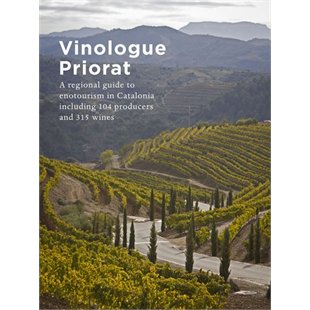
Going to Priorat DOQ, Spain? Trust me, you need ‘Vinologue Priorat.’

Vinologue Priorat
By Miquel Hudin and Èlia Varela Serra
Leavenworth Press, c 2014Vinologue

When I plan a trip to a wine region, I look for the unusual, the unique, the outlier – whether they be grapes, terroir, winemakers or the regions themselves.  I search out wine experiences the average drinker doesn’t think of, or know to look for.  I pay close attention to details, and I notice when others do too.  I aim to maximize my time and, of course, good food and great people are always a necessity.

Bearing these goals in mind, when planning a trip in January 2015 to Spain’s other top wine region, Priorat DOQ, I got down to business about 3 months ahead of time.

‘Why Priorat,’ you ask?  Or perhaps you ask ‘What is Priorat?’  One of only two top level DOs (Denominación de Origen) in Spain – the other being Rioja DOCa, which virtually all wine drinkers have heard of – Priorat DOQ has been producing wines since the 12th century.  The Q is Catalan for Qualificada instead of Rioja’s DOCa, Calificada.  And just to make it more confusing, it’s called Priorat DOCa in Castilian.

But even before the Carthusian monks were busy pressing and fermenting grapes, the Romans were active there.  Winemaking in Priorat has a looong history.  These wines experienced a rebirth of sorts in the 1980s after Scala Dei’s Cartoixa 1974 attracted several enterprising winemakers to the region.  With extra attention paid to the unique llicorella terroir and modern vinification and ageing practices, the wines soon became world famous.

I learned about llicorella and Priorat when studying for a wine exam and decided to visit after attending my graduation ceremony in London. I started by tracking down wineries mostly via the internet, but on occasion I struck out; not all are the hot-tweeting-instagramming-facebooking social media messes we’d like to think they are.  And let’s be honest, it’s the invisible ones you often really want to track down and visit.

So, Priorat fits the criteria – the unusual, the unique, the underdog.  Wanting to maximize celler visits during our whirlwind three days,we figured after driving was factored in, we could probably manage seven.  But when finding contact points became more difficult, my husband googled ‘Priorat wineries guidebooks’ and up popped Vinologue Priorat by Miquel Hudin and Èlia Varela Serra.  When we realized we could order via Amazon.com and get a copy in a week, the deal was done.

A Catalan-speaking, transplanted American living near Barcelona who has written a few of these helpful books on hard-to-research wine regions (including close by DO Montsant), Miquel is a respected wine writer who definitely knows his stuff.  I tracked him down before and after our return and asked him some questions.

How did Vinologue get started?
Being originally from the West Coast of the US and after several trips to Europe, I was constantly frustrated at the lack of wine coverage in travel guides.  There was generally a page or two at most, even in destinations with decently notable wine regions.  I saw a niche need for wine lovers such as myself and set out to create the first books in 2007 which were for Dalmatia, Croatia and Bosnia–two regions with surprisingly good wines that are oft overlooked.

What took you to Priorat and made you decide to write about those wines in the first place?
Like many, I’d tasted the wines of Priorat while still living in the US and found them to be too over-the-top and I had little interest to taste more.  These were the late 1990s and early 2000s vintages.  I was invited to visit the region in 2012 just after publishing the book for Empordà (more popularly known as Costa Brava) and was very impressed by what I saw.  Many people visit Priorat but find it hard to contact cellars or find their way around to what’s open.  There was definitely a need for a full, proper book for this remarkable region.

How much time does it take you to prepare those detailed tasting notes on each wine for each celler?
The raw time of tasting took us about two weeks in total for the latest edition of Vinologue Priorat with nearly 400 wines.  We could, in theory, do it in four tastings as is often done when critics taste an entire region, but it doesn’t do the wines justice and we try to taste as slowly as we can.

How are you able to maintain your objectivity between cellers and wines?Everything is tasted blind which goes a very long way to eliminating any partiality and has let to some surprising results, such as a 12€ wine from the cooperative in Gratallops being rating as one of the top wines in the region.

I was happily surprised by the white wines we tasted there.  What style changes have you seen occurring with the wines and the winemakers in Priorat DOQ?
Much fresher and lighter wines, but still very much Priorat.  While at 15% alcohol for many of them, they’re much lighter on the palate these days.  The oak profiles have been massively reduced which is allowing more of the actual wine and in turn, the region, to come through.  Since the first edition of the guide there have even been some cellars that have eliminated oak altogether from their wines.  Also, the generally under-appreciated whites continue to be an evolution and are in an excellent state currently.

What was your biggest surprise when compiling the book?
The typical model in Spain (and other regions to varying extents) is for someone to create a guide that the cellars have to pay to be included in.  As we strive to create objective, independent guides, the cellars don’t pay a cent for inclusion in the Vinologue books and this was a tremendous surprise.  Some were even concerned if they didn’t pay that it would adversely affect their scores–another unfortunate practice in Spain.  Now that they’re aware of how we function and that we strive to be as neutral and open minded as possible to the wines, everyone was much, much happier to hear from us.

Your section on suggested drives and sightseeing stops is excellent.  What other value-added opportunities to you offer to interested wine tourists and which do you recommend as being most important?
Priorat is quite small and so everything worth seeing in the DOQ is included in there.  Naturally I very much recommend the Vinologue Montsant book as well given that they truly cover the full scope of wines coming from the region.  But beyond the Priorat comarca, I highly recommend that people take a trip to Miravet to see the castle and ceramics and, if up for more driving, the wines of Terra Alta or the very south of Baix Penedès are worth tasting as well.

What changes can we look forward to in the second version?
More!  There are 10 new producer profiles for 114 in total, 60 new wines, and in total, 48 pages more material that cover new restaurants and hotels that have opened.  When we started the research for the first edition in 2012, a lot of changes were still happening due to the financial collapse of 2008.  In the last three years these have leveled out and the second edition was really needed to have everything up-to-date.

I’m already planning my next wine vacation.  What other wine regions do you have plans to conquer?
I never truly know.  We’re always interested to hear suggestions.  Possibly one in the south of France and we have an author who’s been working on Istria, Croatia.

This guide made our Priorat wine touring more informed, better prepared and easier to navigate.  As we don’t speak Catalan or Spanish, the explanations provided substantially helped our greater knowledge and contributed to an outstanding vacation in this off-the-beaten-path wine region.  It enabled us to hit the ground running, visit a blend of famous as well as relative newcomer cellers and alerted us to points of interest and restaurants we wouldn’t have otherwise known about.

‘Outstanding’ and highly recommended.

Posted in Spain | Tagged , , , , , , , , | Leave a comment