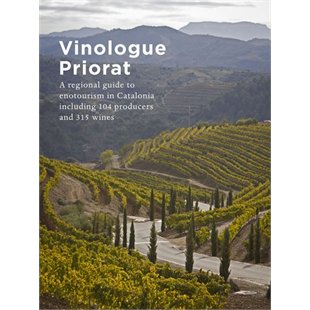
Going to Priorat DOQ, Spain? Trust me, you need ‘Vinologue Priorat.’

Vinologue Priorat
By Miquel Hudin and Èlia Varela Serra
Leavenworth Press, c 2014Vinologue

When I plan a trip to a wine region, I look for the unusual, the unique, the outlier – whether they be grapes, terroir, winemakers or the regions themselves.  I search out wine experiences the average drinker doesn’t think of, or know to look for.  I pay close attention to details, and I notice when others do too.  I aim to maximize my time and, of course, good food and great people are always a necessity.

Bearing these goals in mind, when planning a trip in January 2015 to Spain’s other top wine region, Priorat DOQ, I got down to business about 3 months ahead of time.

‘Why Priorat,’ you ask?  Or perhaps you ask ‘What is Priorat?’  One of only two top level DOs (Denominación de Origen) in Spain – the other being Rioja DOCa, which virtually all wine drinkers have heard of – Priorat DOQ has been producing wines since the 12th century.  The Q is Catalan for Qualificada instead of Rioja’s DOCa, Calificada.  And just to make it more confusing, it’s called Priorat DOCa in Castilian.

But even before the Carthusian monks were busy pressing and fermenting grapes, the Romans were active there.  Winemaking in Priorat has a looong history.  These wines experienced a rebirth of sorts in the 1980s after Scala Dei’s Cartoixa 1974 attracted several enterprising winemakers to the region.  With extra attention paid to the unique llicorella terroir and modern vinification and ageing practices, the wines soon became world famous.

I learned about llicorella and Priorat when studying for a wine exam and decided to visit after attending my graduation ceremony in London. I started by tracking down wineries mostly via the internet, but on occasion I struck out; not all are the hot-tweeting-instagramming-facebooking social media messes we’d like to think they are.  And let’s be honest, it’s the invisible ones you often really want to track down and visit.

So, Priorat fits the criteria – the unusual, the unique, the underdog.  Wanting to maximize celler visits during our whirlwind three days,we figured after driving was factored in, we could probably manage seven.  But when finding contact points became more difficult, my husband googled ‘Priorat wineries guidebooks’ and up popped Vinologue Priorat by Miquel Hudin and Èlia Varela Serra.  When we realized we could order via Amazon.com and get a copy in a week, the deal was done.

A Catalan-speaking, transplanted American living near Barcelona who has written a few of these helpful books on hard-to-research wine regions (including close by DO Montsant), Miquel is a respected wine writer who definitely knows his stuff.  I tracked him down before and after our return and asked him some questions.

How did Vinologue get started?
Being originally from the West Coast of the US and after several trips to Europe, I was constantly frustrated at the lack of wine coverage in travel guides.  There was generally a page or two at most, even in destinations with decently notable wine regions.  I saw a niche need for wine lovers such as myself and set out to create the first books in 2007 which were for Dalmatia, Croatia and Bosnia–two regions with surprisingly good wines that are oft overlooked.

What took you to Priorat and made you decide to write about those wines in the first place?
Like many, I’d tasted the wines of Priorat while still living in the US and found them to be too over-the-top and I had little interest to taste more.  These were the late 1990s and early 2000s vintages.  I was invited to visit the region in 2012 just after publishing the book for Empordà (more popularly known as Costa Brava) and was very impressed by what I saw.  Many people visit Priorat but find it hard to contact cellars or find their way around to what’s open.  There was definitely a need for a full, proper book for this remarkable region.

How much time does it take you to prepare those detailed tasting notes on each wine for each celler?
The raw time of tasting took us about two weeks in total for the latest edition of Vinologue Priorat with nearly 400 wines.  We could, in theory, do it in four tastings as is often done when critics taste an entire region, but it doesn’t do the wines justice and we try to taste as slowly as we can.

How are you able to maintain your objectivity between cellers and wines?Everything is tasted blind which goes a very long way to eliminating any partiality and has let to some surprising results, such as a 12€ wine from the cooperative in Gratallops being rating as one of the top wines in the region.

I was happily surprised by the white wines we tasted there.  What style changes have you seen occurring with the wines and the winemakers in Priorat DOQ?
Much fresher and lighter wines, but still very much Priorat.  While at 15% alcohol for many of them, they’re much lighter on the palate these days.  The oak profiles have been massively reduced which is allowing more of the actual wine and in turn, the region, to come through.  Since the first edition of the guide there have even been some cellars that have eliminated oak altogether from their wines.  Also, the generally under-appreciated whites continue to be an evolution and are in an excellent state currently.

What was your biggest surprise when compiling the book?
The typical model in Spain (and other regions to varying extents) is for someone to create a guide that the cellars have to pay to be included in.  As we strive to create objective, independent guides, the cellars don’t pay a cent for inclusion in the Vinologue books and this was a tremendous surprise.  Some were even concerned if they didn’t pay that it would adversely affect their scores–another unfortunate practice in Spain.  Now that they’re aware of how we function and that we strive to be as neutral and open minded as possible to the wines, everyone was much, much happier to hear from us.

Your section on suggested drives and sightseeing stops is excellent.  What other value-added opportunities to you offer to interested wine tourists and which do you recommend as being most important?
Priorat is quite small and so everything worth seeing in the DOQ is included in there.  Naturally I very much recommend the Vinologue Montsant book as well given that they truly cover the full scope of wines coming from the region.  But beyond the Priorat comarca, I highly recommend that people take a trip to Miravet to see the castle and ceramics and, if up for more driving, the wines of Terra Alta or the very south of Baix Penedès are worth tasting as well.

What changes can we look forward to in the second version?
More!  There are 10 new producer profiles for 114 in total, 60 new wines, and in total, 48 pages more material that cover new restaurants and hotels that have opened.  When we started the research for the first edition in 2012, a lot of changes were still happening due to the financial collapse of 2008.  In the last three years these have leveled out and the second edition was really needed to have everything up-to-date.

I’m already planning my next wine vacation.  What other wine regions do you have plans to conquer?
I never truly know.  We’re always interested to hear suggestions.  Possibly one in the south of France and we have an author who’s been working on Istria, Croatia.

This guide made our Priorat wine touring more informed, better prepared and easier to navigate.  As we don’t speak Catalan or Spanish, the explanations provided substantially helped our greater knowledge and contributed to an outstanding vacation in this off-the-beaten-path wine region.  It enabled us to hit the ground running, visit a blend of famous as well as relative newcomer cellers and alerted us to points of interest and restaurants we wouldn’t have otherwise known about.

‘Outstanding’ and highly recommended.

Posted in Spain | Tagged , , , , , , , , | Leave a comment

Gaston Chiquet, Tradition Brut, Premier Cru, Dizy, Champagne, France, RM, 12.5% abv, NV (Magnum) @ Marquis Wine Cellars

Gaston 2 A grower-producer from the cool named, Dizy located just north of Épernay, the Chiquet family has been growing vines and making Champagne for generations.  The current crop of Chiquets include brothers Antoine and Nicolas with Antoine’s daughter Marion.

Their 23 ha of Pinot Meunier, Chardonnay and Pinot Noir extend throughout Dizy, Maureil-sur-Aÿ and west to Hautvillers.

This is their stalwart, Tradition Brut made from a blend of wines from different vintages including 45% Pinot Meunier, 35% Chardonnay and 20% Pinot Noir.

Pale lemon with a persistent and soft mousse, the nose shows crushed rocks with fresh bread, lemon drop, green apple and pomelo rind.

The palate is dry with juicy acidity, lemon butter and pomelo, softer yellow apple, Bergamot lime and unmistakable French bread followed by a long finish.

Classic, succulent and delicious, WSET Very Good and available at Marquis Wine Cellars.Gaston

Posted in Champagne, Chardonnay, France, Pinot Meunier, Pinot Noir | Tagged , , , , , , , , , , , , , | Leave a comment

Pietradolce, Nerello Mascalese, Etna Rosso DOC, Sicilia, Italia, 2012, 14.5% abv.

Here is a stunner straight from the north facing slopes of Sicily’s Mount Etna.

Grown on bush trained vines at 600m above sea level, the name of the winery is a direct acknowledgment of the volcanic soil the vines are rooted in – ‘sweet stone’.Pietradolce

Owned by two brothers who founded Pietradolce in 2005 but whose family experience runs deeper than that, the winery is organic and tries hard to use the least amount of intervention possible in both the vineyard and during production.

A beautiful shade of medium minus starbright ruby red, this wine looks just like cherry juice.  If a wine can be called pretty, this one certainly is.

It’s an especially aromatic and flavourful wine showing cherry, raspberry, strawberry and cranberry, ripe tannins with some grip, some green herbs and medicinal vine, all complimented by a medium plus finish.

WSET Very Good – drink now or hold onto this for 1-2 more.

Posted in Italy, RED | Tagged , , , , , , , , , , | Leave a comment

Da Mata, Cachaça, Santa Teresa, Brazil, 48% abv.

Meet cachaça, the most popular distilled alcoholic drink available in Brazil.  Seriously everyone drinks it and it’s available just about everywhere in either a water white, unaged version (like this one) or an aged, golden toned drink.da mata

This example is a gift from my wine.com.br friend Gabriel. Based in Brazil, Wine.com.br is the third largest e-commerce wine store in the world.  Their cool 200,000 active customers helped propel its annual sales of US$58 million in 2013.

Today, the company maintains ClubeW, the largest wine club in Latin America, and has expanded operations to include a specialty craft beer club, WBeer.com.br (Brazil is the world’s third largest beer producer).  The online coffee bean market should be on the look out as they have plans to conquer that as well.

The Da Mata distillery is located in Santa Teresa outside of Vitoria on the eastern coast of Brazil, a few hours flight north of Rio de Janeiro.  This is in a state aptly named Espirito Santo, which is also where the headquarters of Wine.com.br are.

Water white with tiny, uneven legs and a nose strongly reminiscent of mezcal, the Da Mata has pronounced aromas of green cane and burnt salt water taffy with light smoke and deeply vegetal undergrowth.  Flavours show more cane with vine and intense star anise.

The alcohol is strong on this simple but pleasing cachaça spirit with a medium finish.

WSET Good.  Obrigada, Gabriel!

Posted in Brazil, Cachaça, SPIRITS | Tagged , , , , , | Leave a comment

Cachaça Envelhecida, Reserva do Gerente, Brazil, 42% abv, C$18

cachaca 4Here is a drink you don’t see every day.  In fact, in our market on Canada’s west coast, there is only one cachaça available – and it’s not this one.

What exactly is cachaça?   Is it rum?  Well, not exactly, although it is very similar and is imported into the US and sold there as rum.  Technically rum is usually made from molasses, but cachaça is produced from fermented and distilled sugarcane juice.  Cachaca 2

It’s got a long and chequered history in Brazil (since 1532 when sugar cane arrived from Madeira via Portuguese settlers) and billions of litres are distilled each year with only very small amounts being exported – most of which goes to Germany.

It is literally enjoyed everywhere in Brazil – and is either unaged and water white, or envelhecida (aged) as is this version is in carvalho (oak).

The Reserva do Gerente is clear, pale gold and has very tiny legs.  The intense aromas show saline and a vegetal cane with light caramel.  The alcohol is warming and flavours include toffee, dark coffee and more vine.  The finish is medium on this top 3 Brazilian seller.  Think a mezcal-tequila hybrid crossed with a cane-heavy sipping rum.

WSET Good Plus and it makes great caipirinhas to boot.

Posted in Brazil, Cachaça, OTHER, SPIRITS | Tagged , , | 2 Comments

Lammershoek, Lam, White, Paardeberg, WO Swartland, South Africa, 2012, 10.5% abv.

This was an awesome South African addition to The Drinking Group‘s afternoon get together.Lam

The bottle got us all excited just for starters being a Lillet lookalike.  Lammershoek dry farms some 40+ year old bush-trained vines on granitic soils.  The 2012 vintage was drier than usual, so the vines were especially stressed and the fruit concentrated.

The grapes were 100% whole bunch pressed and no fining was carried out on this wine that was aged in concrete.

A beautiful shade of pale gold, the Lam White has serious aromas of ripe Macintosh apples, apples and apples.  The Chenin Blanc (38%) comes shining through, followed by some peachy Viognier (33%) notes with lemon drop and honey (Chardonnay 24%).TDG

A WSET Good plus wine, this is a great wine for light lunches and brunches – or just general imbibing.  The alcohol is only 10.5% abv making it super addictive and lovely to drink.

Thanks, Peter…


Posted in Chardonnay, Chenin Blanc, OTHER, South Africa, Viognier, WHITE | Tagged , , , , , , , , | Leave a comment

Nelin, Clos Mogador, Gratallops, Priorat DOQ, Spain, 2012, 15% abv, 30€

I made the arrangement for a tour and tasting at world renowned Clos Mogador several months prior to our January 2015 arrival in tiny Gratallops, clos mog 5population a mere 260.

As we walked through the gate, I wondered aloud, “Do you think René Barbier might actually be around today when we’re here?” I immediately answered myself, “No…I’m sure he has people to do that for him…”

He was more than just there – he and wife Isabelle Meyer were in the office, giving tours in Catalan and Spanish and good naturedly posing for pictures with wine geeks.  clos mog 4

Two other visitors who arrived too late to take part in our vineyard tour with Katja-I-came-for-wine-but-stayed-for-love Simon, went in the van on a wildly precipitous, heart palpitating ride led by Barbier himself (apparently his driving skills are, umm, suspect).  I’m not sure they benefited from arriving late or paid for it.  Either way, they looked a little pale when they finally got back to the bodega.

So many have written at great length about René Barbier, about how he, along clos mog 2with colleagues including Alvaro Palacios and Daphne Glorian resurrected Priorat’s traditional wines and took them to the world.  We visited Daphne Glorian’s home a few days later and heard similar stories.

Others have written about their infamous tours.  Their own website is a treasure trove of information.  I can’t offer any tidbits that aren’t already common knowledge.

clos mog 3But during our three hour stay, the stories abounded – the side-splitting tales of Barbier Sr’s harrowing driving ‘skills,’ playing chicken on the dangerously narrow roads with René Barbier, Jr, the continued use of the old Basque 1890s era press, and hearing how with one mule, it takes one and a half months to harvest their vineyards.  We also went out to the hills to see the llicorella soils in action where rosemary, fennel and thyme grow in between the vines, some with roots extending down 20m, alongside wheat and 30 species of wildflowers.

All the wines we tasted were delicious, but we were struck immensely by Mogador’s white.  The Nelin is named for their daughter, Céline, and was aptly referred to as, “A white wine from black soil.”clos mog 8

Interestingly, it was poured last – after the structured, star anise, soy sauce and tar in the Manyetes 2011, and the classic, blackcurrant, berry, thyme, sage and violet-tinged Mogador 2012 – because “We like to show it stands up to the reds.”  And that is saying something, because it is strong, structured, and does stand up – yet it also exudes a softness through the White Garnaxa base with Macabeu and Escanyavelles.

The Nelin 2012 is a medium shade of lemon with a nose that shows Chenin Blanc-like minerals and apples with soft Meyer lemon, orange blossom, and an aromatic fennel and dill.  There’s more of the same on the palate along with a honeyed expression and although the alcohol is 15%, it’s not hot.clos mog 1

It’s a striking wine – creamy and waxy with the fruit, slate and herbs all layered atop each other – standing, proudly, on its own.

WSET Very Good Plus


Posted in Escanyavelles, Macabeu, Spain, Viura / White Rioja, WHITE, White Grenache / Garnacha / Garnaxa | Tagged , , , , , , , , , , , , , , , , | 2 Comments

Domaine Serene, Pinot Noir, Two Barns Vineyard, Dundee Hills AVA, Willamette Valley, Oregon, 2010, 13.7% abv, US$85

The usual course of action in Oregon’s wine country has been for some of Burgundy’s most renowned winemakers to pick up and put down stakes in the (now) famous Willamette Valley.  Take for example the Drouhin family and their 1980s move to the Dundee Hills  to augment their production in Beaune which had been established in 1880.domaine serene 2

In April 2015 however, the situation was reversed when Domaine Serene owners Ken and Grace Evenstad looked to the Burgundy and picked up a neat 10 ha of vineyards, 40% of which are premiers crus in seven different villages.domaine serene 3

We visited their Dundee Hills winery in August 2012 and opened this bottle in May 2015.  I wish now we’d purchased a couple of cases.domaine serene

A lovely shade of garnet, the Two Barns Vineyard Pinot Noir has an intense nose of cherry, cooked strawberry and boysenberry with clove and pine needle herbaceousness.  There’s some mint, moss and cedar as well, alongside the dried fern-forest floor development.

The palate is dry with refreshing acidity and velvety tannins and features red plum and strawberry with pomegranate and deep black cherry.  Tobacco leaf, clove and red licorice twizzler round out the flavours with more sous bois, mint and dry leaf.
domaine serene 4

WSET Outstanding and drinking beautifully – it can also be laid down for 2-3 years more.  A balanced, complex, layered and lovely version of a New World Pinot Noir.  I can’t wait to see how their ‘new’ Old World product compares.

Posted in Oregon, OTHER, Pinot Noir, RED | Tagged , , , , , | Leave a comment

La Guita, Manzanilla, Hijos de Rainera Pérez Marín Bodega, Sanlúcar de Barrameda DO, Spain, 15% abv, C$23

la guitaThis Sherry comes with a little string draped across the neck of the bottle – apparently signifying a guitar string and hence the name, La Guita.

It’s aged under a thick layer of flor (or yeast) near the coast at the Hijos de Rainera Pérez Marín bodega in Sanlúcar de Barrameda which is located in Jerez looking out toward the Atlantic Ocean.

A medium lemon tone with uneven legs, the aromas are heavenly – sea salt, green olives, yeasty flor, and a little lemon and lime zest with toffee and honey.

The palate is completely dry with high alcohol and medium acidity.  Flavours include brine, more olive, yeast, citrus and salt water taffy.

Sherry is augmented by food.  Solera aged in 16,000 casks located in two different buildings, this Spanish beauty is WSET Very Good and went great with manchego cheese and honey, salami and herbed olives.

Next time you’re thinking about truly trying something new, get some of this or a Fino version, buy some olives, almonds and manchego and go for it!

Posted in FORTIFIED WINE, OTHER, Sherry, Spain | Tagged , , , , , , , , | Leave a comment

Graham Beck, Cabernet Sauvignon, The Game Reserve, W.O. Western Cape, South Africa, 2011, 14.5% abv, C$19

graham beckThe Western Cape is a very large geographical unit that encompasses most of the eastern wine lands of South Africa – including the Breede River Valley, the Coastal Region, Klein Karoo and Olifants River.  It’s massive.  Enormous.  And there’s a lot of wine that comes from the region.

In the past, most of it wouldn’t have had much of an international following – much of what was exported from South Africa to the rest of the world was either fortified or on a critter label and it usually arrived in foreign ports in bulk, not bottled.  But much of that is changing as today’s South African wine scene is improving rapidly.

This version (which does, admittedly have a critter on its label!) is a deep ruby with medium plus intense aromas of field berry, light, sweet tobacco, clove and minty herb.

The palate is dry with average acidity and light tannins with a small bit of grip.  The flavours are medium plus intense and show plum, cassis, more field berries, cigar box and tobacco, leather and earthy herbs.

With its medium body but light mouth feel, this is a WSET Good wine with an accessible price point that’s drinking well, but not suitable for the cellar.

We enjoyed it with a lightly spicy and rustic chorizo and veggie stew accompanied by a fresh salad and egg noodles that enlivened the light tannins.

Posted in cabernet sauvignon, Cabernet Sauvignon / Blends, OTHER, RED, South Africa | Tagged , , , , , | Leave a comment