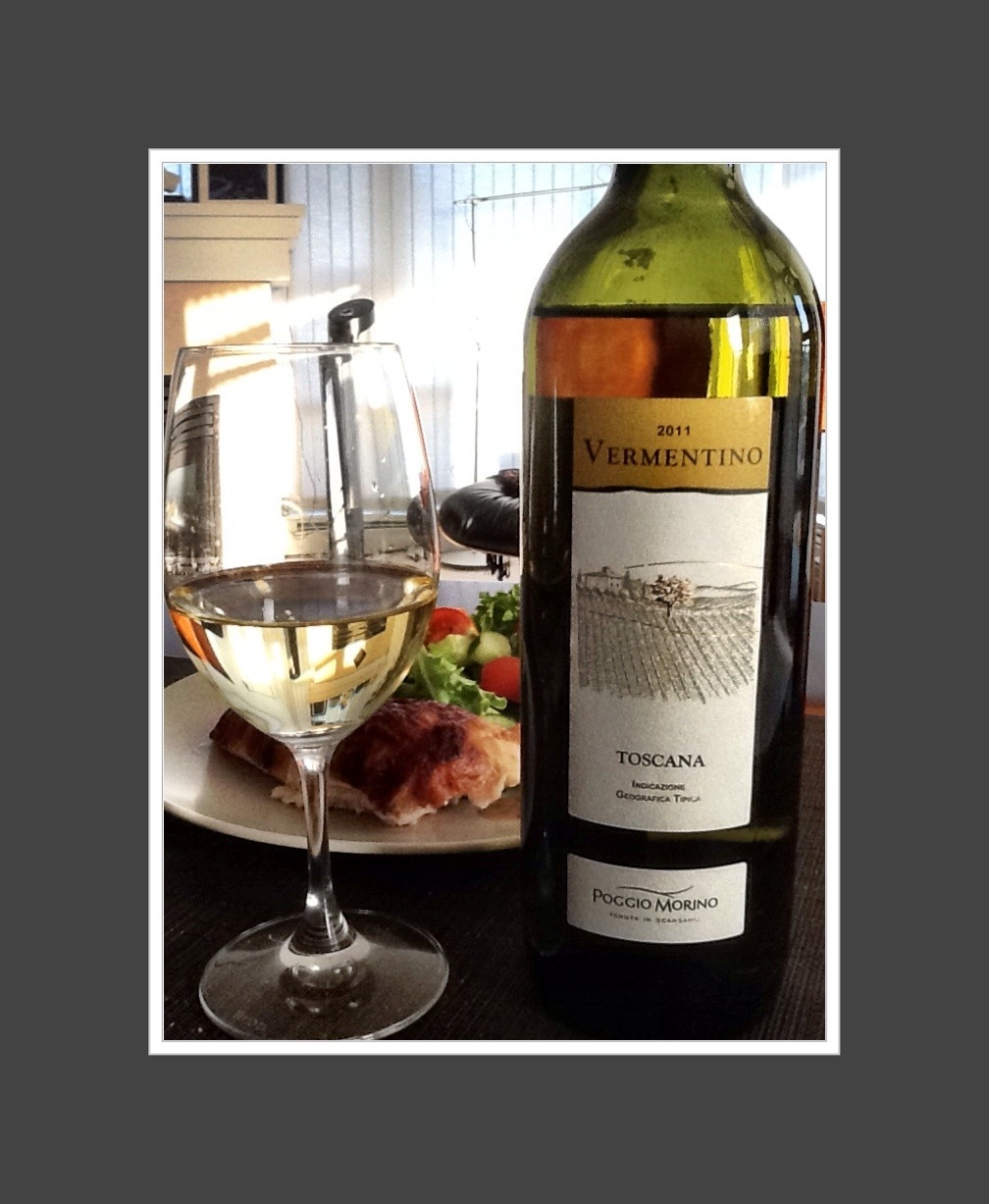
Poggio Morina Tenuta, Vermentino, Toscana IGT, Italy, 2011, 13% abv

Vermentino is an aromatic white grape grown in France’s Languedoc-Roussillon and Provence (where it’s called Rolle), and also in Italy’s Sardinia, Liguria (Pigato), Piedmonte (Favorita) as well as in Corsica.  Here in Tuscany, it is called Vermentino as per the French.

This particular version is declassified as IGT because it falls outside of the DOC and DOCG rules.

The Poggio Morina is clear and bright, a medium lemon shade and shows youthful aromas of citrus (lemon drop and pomelo), dried herb and minerals.

The palate is dry with average alcohol and acidity with flavours of lemon balm and lemongrass, dried herbs, almonds and minerals.  An average finish rounds it out.

This is WSET Good wine; the acidity is average, but the aromas and fruit concentration are solid and balanced. The wine is refreshing and unique, herbal and has a lightly bitter almond taste on the back of the palate.  It’s a great summer wine; today was 20c and we enjoyed it with fresh garden greens, Italian dressing and barbecued chicken.

20140418-162623.jpg

Posted in Italy, Rolle, Vermentino | Tagged , , , , | 2 Comments

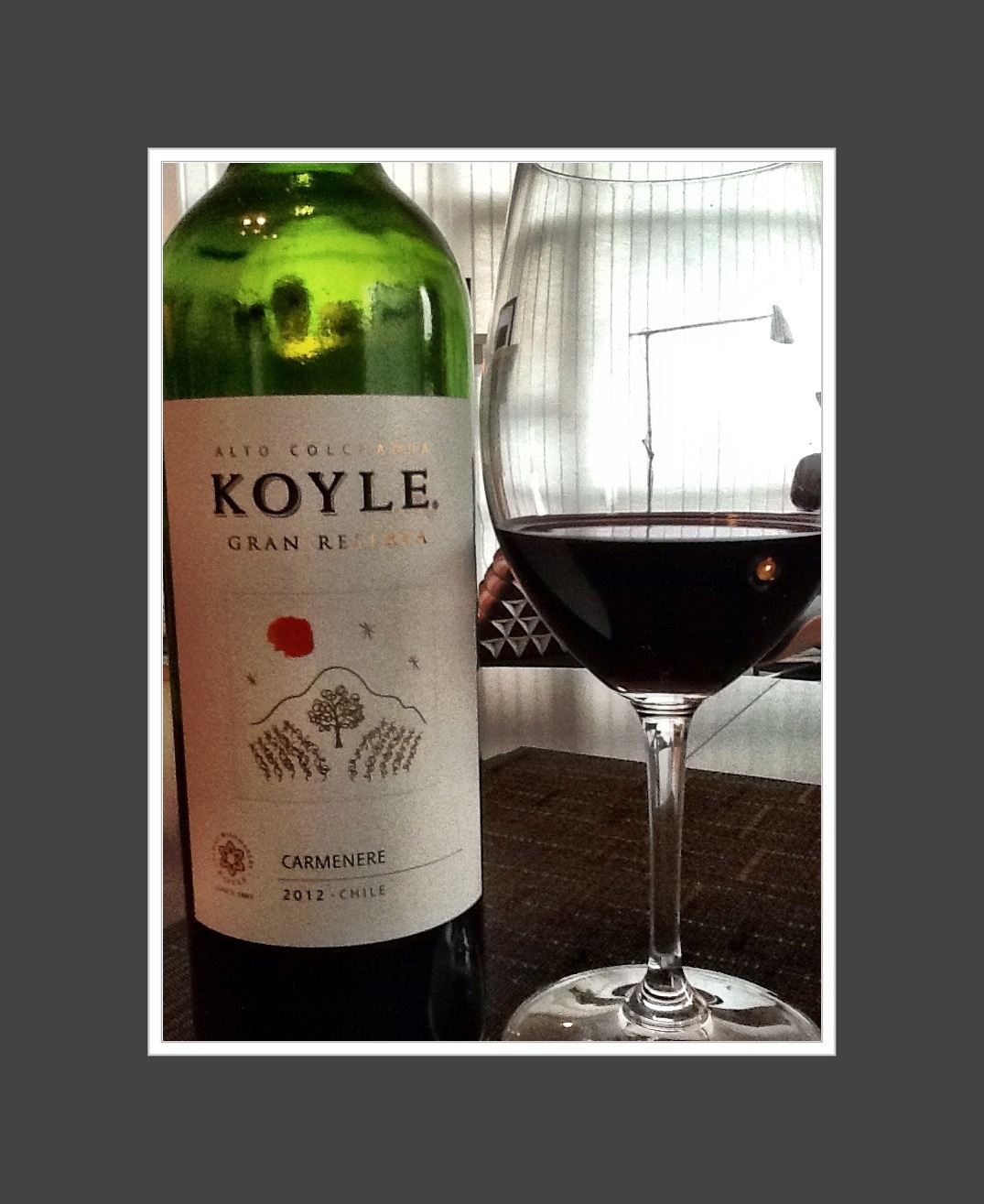
Koyle Gran Reserva, Alto Colchagua, Carménère , Chile, 2012, 14% abv, C$22

Carménère is originally from Bordeaux and Southwest France, but it was taken to the New World, specifically Chile, by French immigrants in the mid 1800s. It has proven to be far better suited to its new South American home because of the longer and warmer growing season there.

Mistaken for decades in Chile for Merlot, Carménère produces deeply coloured (often purple) wines with strong tannic structure. They can be quite herbaceous if the yields are not well managed and if they are picked before being phenolically ripe as often happens in Chile. One of its parents is Cabernet Franc and it’s also a half-sibling to Cabernet Sauvignon as well as Merlot.  It’s no wonder it’s often mistaken for one or several of these.

Growers stopped planting it in Bordeaux in the late 1870s after phylloxera because it couldn’t be counted on; it had poor fruit set and the yields were unreliable. Hardly any remains in Bordeaux – there are only 21 ha in Paulliac.

The wines produced from Carménère have a characteristic tomato vine aroma and flavour along with green pepper, red berry, black pepper and if they are fully ripe, blackberry and blueberry with chocolate, soy sauce and coffee.

This wine is from the hills of Colchagua in Chile’s Central Valley region, outside of Santiago. It’s clear and bright, opaque purple and has deep legs.

On the nose, it’s clean and developing with medium plus intensity and aromas of damson plum, cassis, blackberry, violets, light leather and vine, tobacco and clove.

The palate is dry with medium plus acidity, medium plus grippy tannins, medium plus alcohol and body.  Flavours of blackberry, cedar, plum, cocoa, purple flowers and leather show through to the medium plus finish.

This wine is WSET Very Good – fruity with concentration yet balanced with solid complexity and a strong finish.  Drink now; has potential to age because of the promise of future development supported by the tannic and acidic structure.  At only C$22, this is a good deal. We enjoyed it with barbecued ribs and salad.

20140416-201607.jpg

Posted in Carmenere, Chile, RED | Tagged , , , , , , | 2 Comments

Bucci, Verdicchio dei Castelli di Jesi DOC, Classico, Superiore, Oestra Vetere, Marche, Italy, 2011, 13.5% abv.

Verdicchio dei Castelli di Jesi is a DOC located in the Marche province of Italy on the country’s east coast. It’s located north of Abruzzo province and south of Emilia Romagna.

About 30 km inland from the town of Ancona, the Adriatic Sea’s cooling evening breezes offer the area a strong diurnal shift; the difference between day and nighttime temperatures enables the grapes to retain high acidity and the wines to be crisp and refreshing.

This wine comes from the DOC’s Classico zone. There is another Verdicchio zone – de Matelica – which is further inland, has higher altitude and offers a fuller style of wine.

The white Verdicchio grape that makes the wine used to be fermented on its skins to produce a full style that didn’t offer much delicacy. Producers used to use something called the ‘Governo’ technique which introduced a second fermentation by adding must made from dried grapes. It added some sweetness and then CO2 was also sometimes added.

Today, thankfully, the modern style follows temperature controlled cool fermentation in neutral oak barrels or stainless steel with no skin contact. This makes it ‘clean and correct’ but also a little less distinctive. That said, this example exemplifies the lemon citrus, herbal element and almonds modern Verdicchio is known for.

The Bucci is clear and bright, medium lemon with legs. On the nose, it’s clean and youthful with medium plus intensity and aromas of dried herbs, almonds, lemon drop and minerals.

The palate is dry with better than average acidity and flavours of lemon balm, lime, thyme, pine nuts and almonds, light creme brûlée, all ending in a medium plus finish.

This is WSET Very Good; strong acidity, flavour concentration and a good finish with balanced alcohol and fruit. Refreshingly tasty. Drink now, not intended for further ageing.

20140411-180859.jpg

Posted in Italy, Verdicchio, WHITE | Tagged , , , , , , , , , , , | 2 Comments

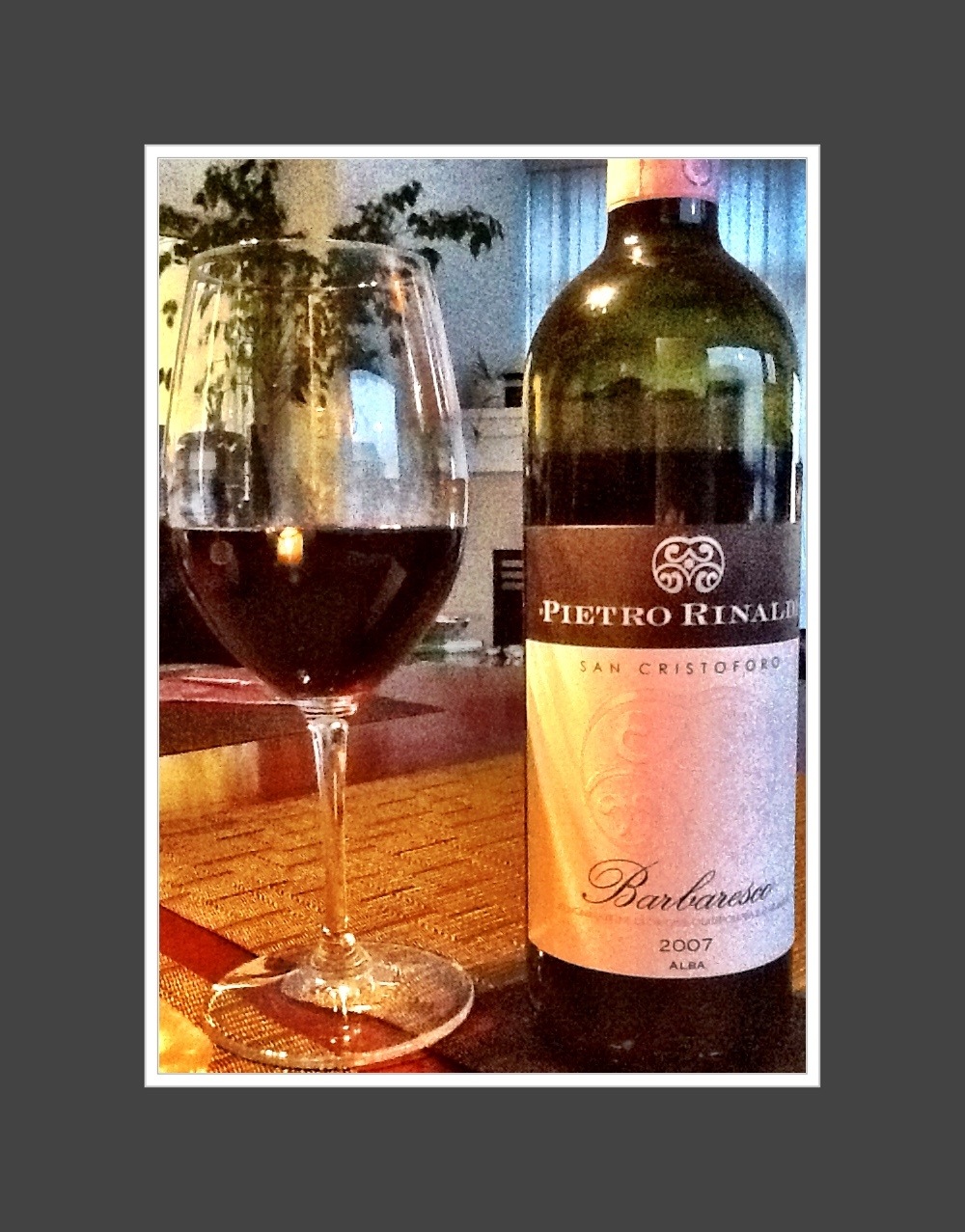
San Cristoforo, Azienda Agricola Pietro Rinaldi, Barbaresco DOCG, Alba, Piemonte, Italy, 2007, 14%, C$60

I caught this one at the height of its perfection.

Not being a frequent consumer of Italian wine, I have to admit I need to study just a little (ok, maybe a lot) before I go to buy anything.

Can you keep your Barolos and Barbarescos straight? Your Dolcettos and Doglianis? Soaves and Piaves? Your DOCs and DOCGs?  What about your Albas and your Astis, your Amarones, Ripassos and Reciotos? Valdobbiadene, Valle D’Aosta, or Valtellina?

I think you get my point.

With that in mind, think of this post as ‘Barbaresco 101’.

Often referred to as a ‘Baby Barolo’, Barbaresco has (sometimes unfairly) been called Barolo’s junior. There is nothing ‘lesser’ about this wine though – it’s simply a different version of a Nebbiolo-based wine.

The Nebbiolo grape (grown here with yields of 57 hl/ha) was usually fermented sweet until the 1890s when dry wines became de rigeur. Most production centres in Alba in Piemonte, the northwest corner of Italy. There is a small area of land planted in Barbaresco, Treiso, Neive and Alba. The Pietro Rinaldi is located at Madonna di Como in Alba’s Langhe Hills.

These areas have Tortonian soil – a calcareous marl that produces soft and fruity Barbaresco wines (like the Barolos grown in Alba and La Morra which are also grown on Tortonian soil). Helvetian soil produces more austere and structured wines (for example in Serralunga D’Alba and Monforte D’Alba).

The Tortonian soil and the fact that it’s close to the River Tanaro also enables the Nebbiolo to ripen faster here; they’re usually ready at 5-10 years. Nebbiolo is a fussy grape and requires a warm site and a long time to ripen. Barbaresco wines must be aged 2 years in oak (1 year less than Barolo) and it has a required minimum of 12.5% abv.

The Azienda Agricola (Domaine) Pietro Rinaldi is clear and bright, a deep garnet with legs. The nose is clean and developed with medium plus aromas of dried strawberry, plum, tar, kid glove and a little rose petal.  Classic.

The palate is dry with medium plus acidity, perfectly ripened and finely grained tannins, medium body, medium plus alcohol and medium plus intensity. The flavours consist of deep and dried red fruit (plum, strawberry, cherry) with leather, clove and black Dutch licorice. The finish is a strong medium plus.

This wine is WSET Very Good – it’s a great example of drink now, not intended for further ageing; it has reached its pinnacle. The tannins have resolved perfectly and have obviously been assisted over the past 7 years with the fruit and acidity which is still strong at medium plus. It’s a beautifully balanced effort with complex and concentrated flavours and aromas – the structure is strong.

Bella.

20140405-220246.jpg

Posted in Italy, Nebbiolo | Tagged , , , , , , , , , , , , , , | Leave a comment

Domaine Marcel Deiss, Riesling, Vin d’Alsace (Alsace AC), France, 2010, 13% abv, C$41

Alsace – a 120km long by 8km wide swath of land located in the far northeastern reaches of France to the east of the Vosges Mountains that cut it off from the rest of the country.

Alsace has a somewhat fractured history as it was often a pawn between France and Germany – and much of its architecture, language, culinary and viticultural heritage reflects this. It was returned to the French following WW2 in a deal brokered by Marechal Foch – for whom a grape was named. The ultimate honour for a Frenchman, I’m sure.

Resting in the rain shadow of the Vosges, Alsace is blessed with an unusual continental climate that allows for an extended, warm growing season and is very dry (only about 500mm of rain per year in parts). It has varied soils – everything from limestone, clay, marl and gneiss to volcanic basalt and calcareous soils full of fossilized shells from the Jurassic era.

The vineyards are all located along the Rhin River that runs south to north – the southern Haut-Rhin sites producing slightly fuller and fruitier styles than those in the northern Bas-Rhin.

There are four grapes generally accepted as the ‘nobles’ – Riesling, Muscat, Pinot Gris and Gewürztraminer – but others are also grown including Pinot Blanc, Auxerrois, Chasselas and Chardonnay. Pinot Noir is the only red allowed; 90% of the wines here are white, fermented in stainless steel and generally no friend of oak.

There are 51 Grand Crus in Alsace and the Alsace AC (or Vin d’Alsace) is spread throughout the region. The wines here are incredibly varied – everything is made from bone dry red and whites to dried ‘Paille’ versions, Crémant d’Alsace sparklers, late harvest Vendange Tardives and sweet botrytised SGNs (Sélection de Grains Nobles).

Domaine Marcel Deiss is biodynamic and run by Jean-Michel Deiss whose father acquired it following WW2. He owns 26 ha of land spread over 7 communes and 220 different sites. The Domaine is in the village of Bergheim and the family owns some Grand Cru holdings in Altenberg de Bergheim.

This wine is a beautiful medium gold with legs. On the nose it’s got medium plus intensity and is youthful with aromas of honeysuckle, strong minerality, pear, lemon drop, pink grapefruit, gingerbread and spicy baked apple crumble.

The palate is ever-so-slightly off dry with average alcohol and flavours of citrus (lime, lemon and grapefruit juice), stone fruit (more baked apple pie and pear), honey, ginger and a TDN effect (that petrol flavour caused by tri-methyl-di-napthalene that will develop with time).  It has a long finish.

WSET Outstanding wine; this is crisp, clean, complex and concentrated. The finish is long and interesting. Drink now and is definitely suitable for ageing with the concentrated fruit and marked acidity.

20140329-190056.jpg

Posted in France, Riesling, WHITE | Tagged , , , , , , , , , , | 2 Comments

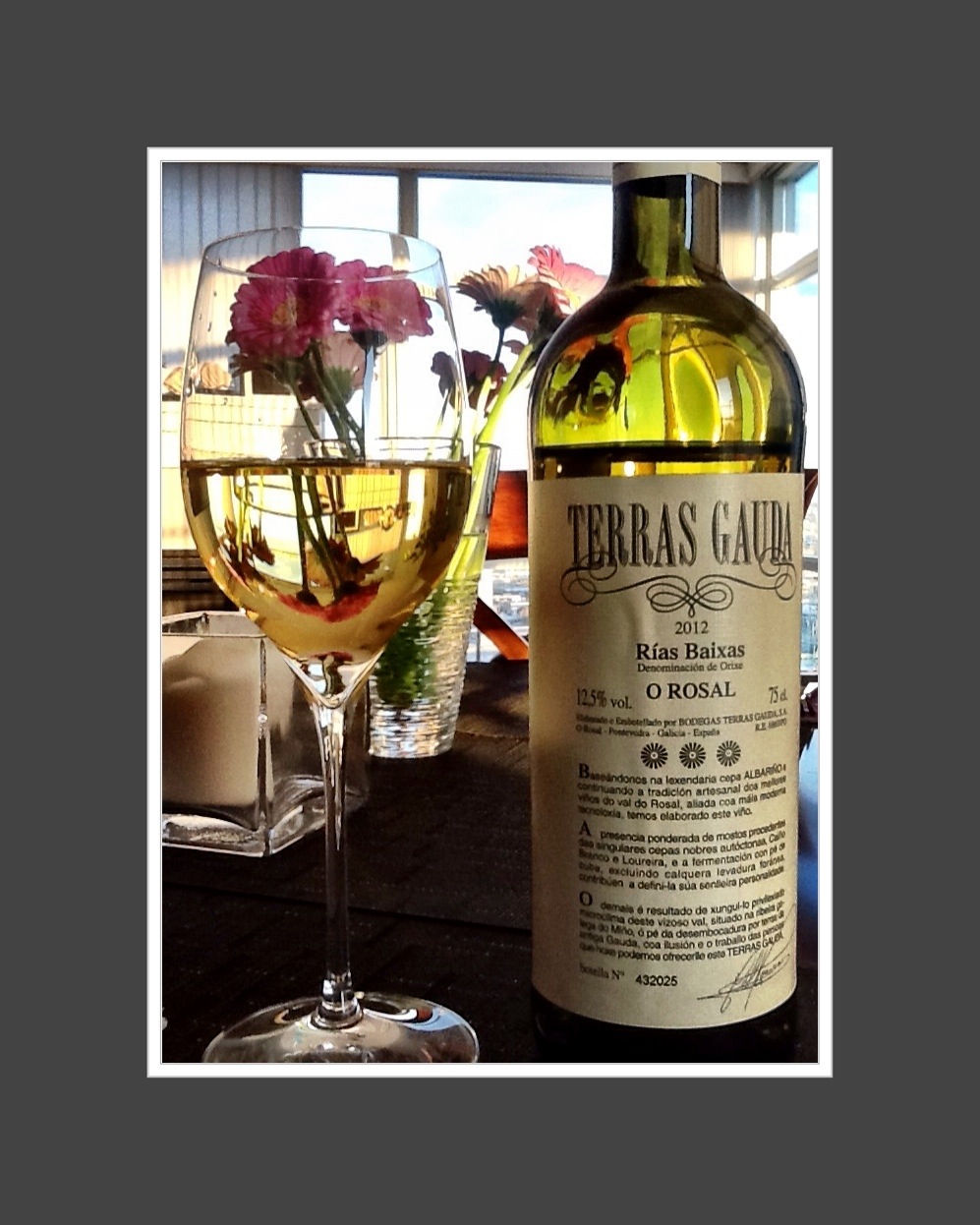
Terras Gauda, O Rosal, Albariño, Rias Baixas, Galicia, Spain, 2012, 12.5% abv, C$41

Albariño, as it’s referred to in Galicia (northwestern Spain), or Alvarinho as it’s called in Portugal’s northern Vinho Verde DOC, is a white grape enjoying a renaissance of sorts amongst those looking for something new and unusual to drink.

Galicia encompasses Rias Baixas and Ribeiro along with a few other DOs and it’s here where the Albariño grape is grown – in cool, damp vineyards affected significantly by the maritime influence of the Atlantic Ocean. It’s frequently blended with Treixadura (aka Trincadero) and Caino Blanco; the O Rosal is no exception and is a blend of 70 Albariño, 18 Loureiro and 12 Caino Blanco.

Albariño produces distinct white wines that used to be lighter but recently have been made with more body and deeper colour. They also have higher than average alcohol (usually around 13%). Both of these attributes make them popular with those tired of the ubiquitous and innocuous Pinot Grigios available. Some are oak aged as well.

Galicia has been undergoing a wine revival with the rebirth of traditional winemaking techniques combined with modern vinicultural methods. The wines are very popular with consumers and as such are able to attract strong pricing.

The Terras Gauda O Rosal is clear and bright, medium gold and has legs. On the nose it’s clean and youthful with medium intensity and aromas of minerals, stone fruit (nectarine) and citrus (lemon drop and white grapefruit).

The palate is dry with medium alcohol and great acidity. The flavours include more stone fruit (nectarine, white peach), citrus (pomelo, baked grapefruit and lemon zest) and ginger spice.

This wine is WSET Very Good – solid acidity and finish complement the fuller than average body, concentrated fruit and aromas and lovely finish.  Drink now; has potential for ageing.

20140327-190159.jpg

Posted in Albarino / Alvarinho, Blanco Caino, Spain, Treixadura / Trincadero, WHITE | Tagged , , , , , , , , , | Leave a comment

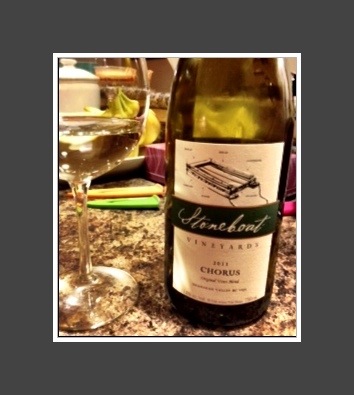
Stoneboat, Chorus, White Blend, Okanagan Valley, BC, 2011, 11.5% abv.

What a nice find – two dusty bottles on the lower shelf in the back at a small liquor store out in Whiterock, BC. Lucky me…

The Chorus is an old fave – a blend of 6 white varieties including Pinot Blanc, Muller Thurgau, Schonberger, Kerner, Pinot Gris and Viognier. There’s a heavy emphasis on Austria in this bottle, although the wine is from a small boutique winery in Canada’s Okanagan Valley.

Austria’s most planted variety is Gruner Veltliner followed by Muller Thurgau. Pinot Gris is usually called Grauburgunder (or Rulander) and Pinot Blanc is referred to as Weissburgunder. Kerner and Schonberger are also grown in Austria, but Viognier’s homeland is the France’s Southern Rhone Valley (which doesn’t preclude it from being in someone’s Austrian vineyard!).

Of the four Austrian wine law regions, Weinvertel is part of the Weinland Osterreich and is the largest and a DAC (Districtus Austria Controllatus). Widely referred to as the ‘wine quarter’ and the most dynamic region, it produces a lot of fruity, spicy, dry 12% abv Gruner Veltliner. Austria has a landlocked cool continental climate that can easily be compared to that of the Okanagan Valley.

Clear and bright, pale lemon with legs the nose on this wine is clean and youthful with medium intensity, aromas of minerals, lemon drop, Asian pear, apricot and Granny Smith apple.

The palate is ever-so-slightly off dry with medium acidity and a bigger-than-usual body.  Flavours show peach and ripe apricot, pink cooked grapefruit, ginger and the wine offers a lovely finish.

Solid WSET Good – well balanced fruit concentration and alcohol, fruity and spicy from the Gru-Vee and significant stone fruit from the Kerner and Viognier. The medium level of acidity is a little low, perhaps from the Pinot Blanc. Drink now, if you can find some – refreshing and tasty.

20140324-223749.jpg

Posted in BC, Gruner Veltliner (Gru-Ve), Kerner, Pinot Blanc, Pinot Gris, Schonberger, Viognier, WHITE | Tagged , , , , , , , , , , , , , , | Leave a comment

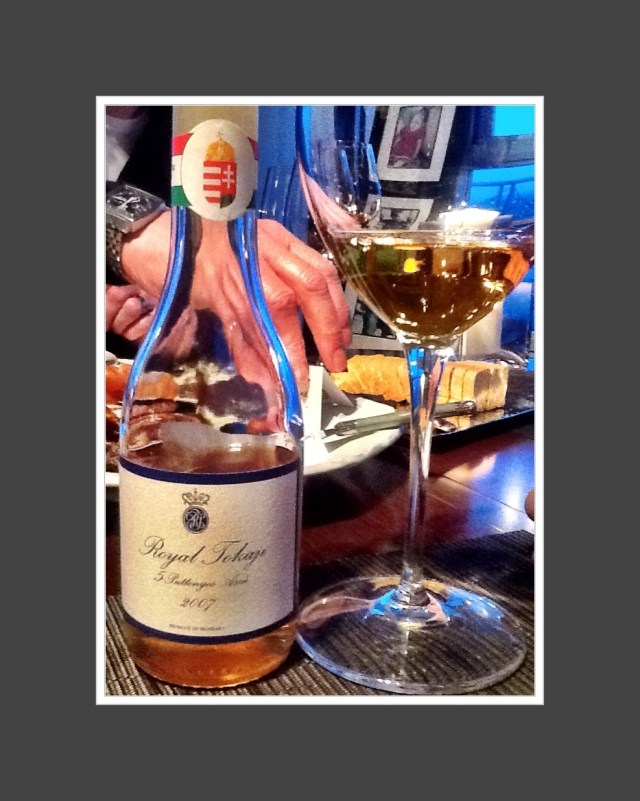
Royal Tokaji, 5 Puttonyos Aszu, Hungary, 2007, 11.5% abv, 250 ml

One of the classic sweet wines of the world, Tokaji has been produced in Hungary since the 1600s (pronounced ‘Toe-kai’). The vineyards where the Furmint, Harslevelu and Muscat de Lunel (aka Muskatoly) grapes central to this wine style are grown were the first to be classified in Europe in 1700.

Today Hungary is poised to be one of the world’s ‘new’ (to consumers) producers of some of the best wines around, but the irony is that grapes have been grown and wines have been made there since Roman times.

Tokaji was mentioned in records dating back to the 1400s and there was recognition of Tokaji Aszu and rules were written down about botrytis and hoeing of the vineyards in the late 1500s and early 1600s. Tokaji is so famous, it’s actually mentioned in the Hungarian national anthem.

Since 1989 when Hungary started opening up to the West, the country has undergone a complete renaissance in terms of wine. There’s been a great deal of interest in its wines as well from Western winemakers and companies – this one being a perfect case in point.

The Royal Tokaji Wine Company is 107 ha of vineyards often referred to as one of the country’s defining wineries for this particular style of wine. It’s owned by Britain’s Hugh Johnson, famous wine writer known by cork dorks the world over for his prolific masterpieces – and especially for The World Atlas of Wine.

Located north east of Budapest, Royal Tokaji is located in Tokaj where the Carpathian Mountains shield the area and the Tisza and Bodrog Rivers meet. This creates a perfect mesoclimate for the botrytis cinerea fungus that affects the grapes central to this wine. The cool and foggy mornings followed by long and warm afternoons allow the ‘aszu’ berries to become infected with the ‘noble rot’ and for the acids and sugars to become concentrated.

The soils here are primarily volcanic clays on the slopes and loess/clay on the foothills. There is some sand as well. The volcanic soils are called ‘tuff’ and give the wines great minerality.

There are many styles of sweet wines made around the world that use botrytised grapes, but Tokaji is different because of the vinification style. A base wine is made with the Furmint grapes and then the carefully hand harvested aszu berries are measured by ‘hods’ or ‘puttonyos’ into a ‘gonc’ (barrel). One ‘hod’ is 27 litres of aszu berries and a ‘gonc’ is a 136 litre barrel.

The berries are macerated into the base wine which has to be of the same vintage as the aszu berries. After 24-36 hours the wine is pressed off and left to ferment for a very long time. The wines must age at least 2 years in oak and one in bottle. This wine is 5 puttonyos on a scale of 6 which means it has 120 g/l of residual sugar.

There’s an even sweeter version of this wine called Aszu Essencia which is made of the free run juice of handpicked pure botrytised berries. It’s extremely rare and can have over 450 g/l of residual sugar. It must be aged a minimum of 5 years in cask and take years to ferment to a 4-5% abv level.

This wine is clear and bright, deep gold and has viscous legs. The nose is clean and developing with medium plus intensity and aromas of honeycomb, plump yellow raisins, dried apricots, orange marmalade, mandarin and candied ginger.

The palate is sweet with juicy and high acidity, medium minus alcohol, medium plus body and medium plus intensity. The flavours include burnt orange peel, cooked lemon, orange marmalade, ripe apricots and dried mandarin slices, honey and gingerbread with a long and lingering finish.

This is WSET ‘Outstanding’ – a wine that can be kept for years with its sharp acidity and fruit concentration. It has exceptional length and intensity which when enjoyed with the Benton Brothers’ Old Amsterdam (Holland) acquires even greater complexity of flavour. Its sweet profile also matches beautifully with baclava.
20140316-171746.jpg

Posted in Furmint, Harslevelu, Hungary, Muscat Ottonel / Lunel / Muscatoly, Tokaji, WHITE | Leave a comment

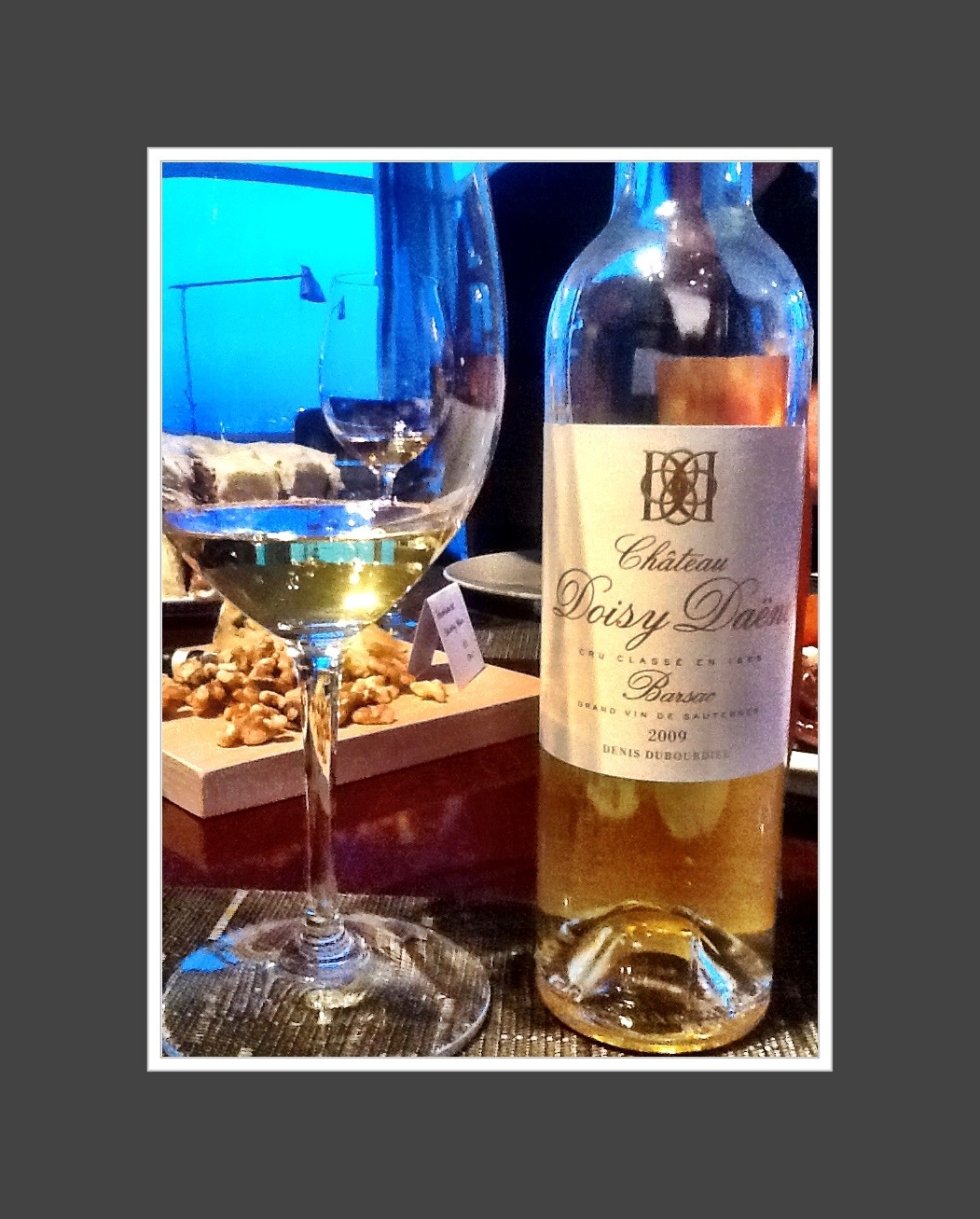
Chateau Doisy-Daene, Barsac, Grand Vin de Sauternes, France, Denis Dubourdieu, France, 2009, 13.5% abv, C$50, 375 ml

Doisy-Daene is a Deuxieme Cru property from the Barsac-Sauternes region of Bordeaux, France. The 1855 Classification was completed by the Bordeaux Board of Trade for the Paris Exhibition held that year and was the way in which the properties of that era were ranked for the Exhibition’s attendees. Many argue that the rankings are no longer as relevant as they may have been 160 years ago.

Regardless, during that era, sweet wines were accorded far greater status than were dry wines. As a result, Chateau D’Yqem was accorded Premier Cru Superieur status which was even higher than that given to the best first growth vineyards of the Medoc and Graves. A further 11 properties were called Premier Cru in Barsac-Sauternes and there were 4 called Deuxieme Cru (Second Growth), Doisy-Daene being one of them.

The current owner of Doisy-Daene is Denis Dubordieu (b 1949) who together with his father Pierre (b 1923) are two of the most pivotal characters relevant to the white wines of Bordeaux. Pierre is responsible for having made the first dry white Bordeaux wines and helped improve the quality of the Vaslin pneumatic grape presses and Denis is both a scientist at the University of Bordeaux as well as owner and winemaker at Doisy-Daene as well as a host of other properties (Ch Chantegril/Barsac, Clos Floridene and Ch Haura/Graves and Ch Reynon in the Premier Cotes de Bordeaux).

Denis is most famous though for his research into botrytis cinerea (noble rot) as well as the intricacies of winemaking and viticulture for the whites of Bordeaux (ie: earlier picking to enhance aromas, selection of yeasts, fermenting temperatures and their influence, the importance of matching soils and vines, batonnage, etc).

Doisy-Daene is located east of Ch Climens (a Premier Cru property) in Barsac and just north of the Ciron River where it flows south of the Garonne. This is ‘botrytis central’; the noble rot thrives in climatic conditions created by the confluence of these two rivers. The cool foggy mornings followed by long, warm afternoons allow the fungus to infect the thin-skinned Semillon and Sauvignon Blanc grapes (usually the Bordeaux blend is about 75-25% in that order).

This wine is clear and bright, medium gold and has heavy legs. The nose is clean and developing with medium plus intensity and aromas of lemon and orange marmalade, dried citrus peel, honeycomb, botrytis and orange blossom.

The palate is sweet (it has about 150g/l of residual sugar) with high acidity, medium body, medium alcohol with medium plus intensity and flavours of orange marmalade with ginger, blossom, honey, apricot and kumquat. The finish is long.

This wine is WSET ‘Outstanding’. Rich and sweet but not at all cloying due to the high acidity, it has intense flavours and aromas that are enhanced by Chef Parker’s Orange Marmalade cake and the exceedingly classic pairing with the Benton Brothers‘ Rocquefort Papillon Noire cheese.

20140316-152924.jpg

Posted in France, Sauternes-Barsac, Sauvignon Blanc, Semillon | Leave a comment

Beerenauslese Riesling, Dr. Loosen, Bernkastel, Mosel, Germany, 2006, 7% abv, 187 ml

Hand harvested on the steeply inclined slopes that rise directly out of the river in the Mosel, these special wines are a serious treat.

‘Beeren’ means ‘berries’ and ‘auslese’ stands for ‘selected harvest’. Rotted by the botrytis cinerea fungus that makes them look shrivelled and as if they’re covered with ash (where the ‘cinerea‘ comes from), one really has to wonder about the mental acuity of the first person who decided to try and produce wine from grapes that would have looked as these did.

If you don’t believe me, check this link out. As most are aware, the Germans are incredible sticklers for the rules. So when one year the declared harvest date was pushed far into the autumn, by the time pickers were able to harvest the grapes, they had been affected by the noble rot.

For some reason, they thankfully decided to persevere and the rest is literally history. This error evolved into one of the most intricate ladders of wine distinctions. In Germany, the Pradikat wines are part of the QMP wine category (Qualitatswein mit Pradikat – quality wines with distinction).

There are 6 levels assessed according to their must weight and ripeness progressing from the lightest and most delicate Kabinett to Spatlese and Auslese, then Beerenauslese (BA), Eiswein and Trockenbeerenauslese (TBA).

The BA and TBA wines are always affected by noble rot. The BAs are rich and deep and used to be rare, but with improved harvesting techniques, growers are able to produce them in most vintages. And not to be trite about it, but global warming helps by ensuring those long, warm autumn afternoons follow cool and foggy mornings so the botrytis can infect the grapes and spread without simply becoming grey rot (that’s the ‘bad’ kind).

The botrytised grapes (try saying that 10x in a row) are hand-picked in very careful ‘tries’ or passes through the vineyard because the fungus doesn’t affect all the grapes at the same time. They really are some of the very best world class wines around, they take much time and care to pick and vinify and can’t be made in every vintage. The best ones are made from Riesling grapes, that fabulous ‘can-make-any-kind-of-wine-there-is’ grape.

This wine is clear and bright, pale gold with legs. The nose is clean and youthful with medium plus intensity and aromas of botrytis with apple and lemony citrus, orange blossom and mandarin slice.

On the palate, it’s sweet with high mouthwatering acidity, medium body, low alcohol with medium plus intensity and flavours of stone fruit – green, red and yellow apple and pear with apricot – mandarin blossom, fresh marmalade, honey and the distinctive botrytis. It has a lovely medium plus finish.

WSET ‘Very Good +’, this wine is sweet but not cloying with a refreshing and juicy acidity balanced by the residual sweetness. It’s drinking beautifully and can last for a long time yet with that acidity and the fruit concentration. When paired with the Benton Brothers’ Challerhocker Swiss cheese, it becomes simply Outstanding.

20140316-105058.jpg

Posted in Beerenauslese (BA), Germany, Riesling, WHITE | Leave a comment