
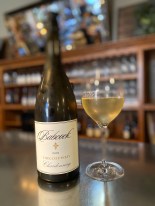
 I have visited tasting rooms in seven countries, but this one nestled in the Santa Rita Hills is the most intriguing and relaxing I’ve ever been to.
Take a seat outside at one of the trendy, weather-worn tables decorated with beautifully potted succulents, and enjoy a glass or more. The Babcock tasting experience has happiness and class imprinted all over it.
The main area is a huge 5,000 square foot former barrel storage building with a beautiful selection of what seems like never-ending, high quality options for purchase, carefully curated by Lisa Babcock. As their website puts it, “It’s really a fusion of creativity that  encompasses more than just wine.” (see video below)
There’s something for everyone here – from vintage motorcycle jackets and concert posters, to gourmet snacks, jewelry, no end of accessories, and of course, plenty of award-winning wine.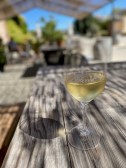
In 1995, winemaker Bryan Babcock was honoured by the James Beard Foundation as the only American on a list of ‘Top Ten Small Production Winemakers in the World’. His wines are serious, coveted, and quite famous. He has worked tirelessly for the Sta. Rita AVA.
 Although he produces Pinots and a myriad unusual grapes that people come from miles
 away to taste, it was approaching 90F, so I opted for some Chardonnay. Relaxing outside at the crush pad, I was ecstatic.
There was no one to tell me how the wine should taste, and no one to hover over me and move me out within the allotted hour. Just Chris, the really great, laid back, yet superbly professional and knowledgeable tasting room manager who clearly knows his stuff, some exquisite wine, and a fabulous soundtrack of classic and alt rock. It’s an absolutely refreshing atmosphere to find at a winery.
Eyes – medium gold
Nose – yellow apple, lemon curd, a light sea salted caramel, and wet stone
Palate – lemon zest and lemon meringue, pineapple, with more salted caramel and minerality, dried stalks of lemongrass, and an ever-so-light touch of oak. Medium plus acidity keeps you wanting more. A completely integrated beginning and end tells the whole story
Hands down – if I lived anywhere within a decent drive of this place, I’d be a member in an instant and make weekly visits. I finally found what I’ve been looking for.
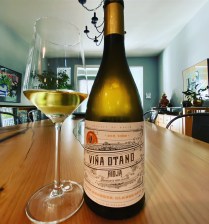
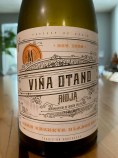 Deep gold in colour, the nose has tones of sherry, sea salt, coconut, super ripe Barlett pear and bergamot. The palate is delicious with almond, pear and ginger blossom, dried mandarin peel, and more Oloroso.
 about so many reviews is the fawning, oh-my-god-this-wine-is-amazing accolades that
  many churn out.
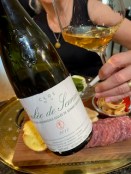
 This is a stunning example of a benchmark white wine, from a famous piece of schist dominated
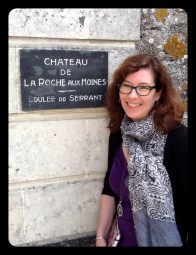
 dirt (planted since 1130 AD, see picture) which is now its own appellation, even though it’s only 13 hectares in size. Nicholas Joly is the owner and winemaker, and his daughter Virginie whom I met in 2014 works alongside him in this capacity (see picture).
 We opened it at 14 years old and did not decant it – we wanted to see how it would open up in the bottle over the evening. We were unable to save any for the next few days to observe changes – we couldn’t stop ourselves and drank it in one sitting, even though Mr. Joly himself recommends enjoying his bottles over three days. How anyone could wait so long to finish it is completely beyond me.

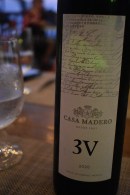 Anyone who follows me on social media will know I was in Mexico recently with my family to celebrate 20 years of togetherness. What better way to toast our family’s union than to enjoy a Mexican wine from the oldest winery in the Americas (est. 1597) with the anniversary dinner.
 maintain an open mind -and I’m glad I did, because the 3V was a lovely accompaniment to our celebratory dinner.
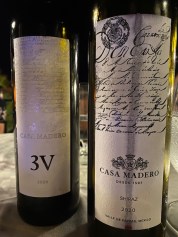 (‘parras’ means ‘vines’ in Spanish), is grown at 1,525m. This is the only reason wines of any measure of quality can be produced this far south – the altitude offers an air conditioning effect on the vines. The Val de Parras is a microclimate oasis in the middle of what is otherwise mountain ranges and semi-desert.
 Deep purple with aromas of strawberry, blueberry, plum and boysenberry, the palate shows the same fresh fruit, augmented with dried tobacco leaf, marvelous body, and good acidity. It has spent 12 months ageing in American, European and French oak.
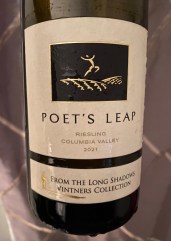
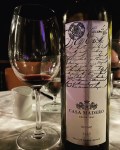 denomination systems.
 Classic, classic, classic – it doesn’t get much better than this developed, yet still bright, mostly Tempranillo wine from benchmark Rioja winery, Lopez de Heredia.
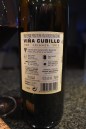 Lopez de Heredia red wines and is often enjoyed much earlier than we did this one – but it was outstanding nonetheless (we opened it at 11 years old).
 The dry palate is both soft and complex showing mocha nibs, cigar box, pastrami and walnut. There’s even still some bright fruit – black plum and cranberry. Spicy and candied, it has fabulous acidity and a lengthy
 Owners Shay and Harlee Code decided in 2016 to purchase land in Okanagan Falls on which they planted Viognier, Syrah, several clones of Pinot Noir, and Chardonnay grapes.
 In 1999, when Cristiana Tiberio’s father Riccardo discovered this property and its rare Trebbiano Abruzzese vines in the middle-of-nowhere Abruzzo, emptied his bank accounts to buy it, and replanted most of it with Montepulciano d’Abruzzo, more Trebbiano Abruzzese, Pecorino and Moscato di Castiglione grapes indigenous to the region, people said he was crazy – and worse, that no one would ever buy his wines.
 placed in her.
 “Outside Abruzzo, I haven’t had any trouble. But here, no – she’s a girl, what can she do?! Honestly, the secret of me has been our father. Since I was a child, I grew up thinking I could do whatever I wanted – it was up to me – being a girl had nothing to do with it. My father purchased this property and spent all his money. I find this a big responsibility. It’s been tough, but I carry it.”
 Riccardo has long since retired into his truffle hunting hobby (his retired dogs Quarmari and Diana are in the pictures, and all over their Instagram), but Cristiana and Antonio shepherd the 30 hectares of 20-80 year old vines with great passion, noting that “Every five minutes, there’s a new challenge. Bugs, disease, pandemics, earthquakes…whatever can happen will happen.”

 While Tiberio is neither organic nor biodynamic, Cristiana agrees it would have been much easier for them initially if they’d had those certifications. Now she asserts, “I think the organic and biodynamic route has been important, but it has been overtaken by the marketing. We don’t need a sticker or a stamp – we need to communicate the details of our land, our grapes, our process. It’s much tougher for a smaller winery like ours, because I need to invest time to communicate. But at this point, we are good and now I do it for our industry.”
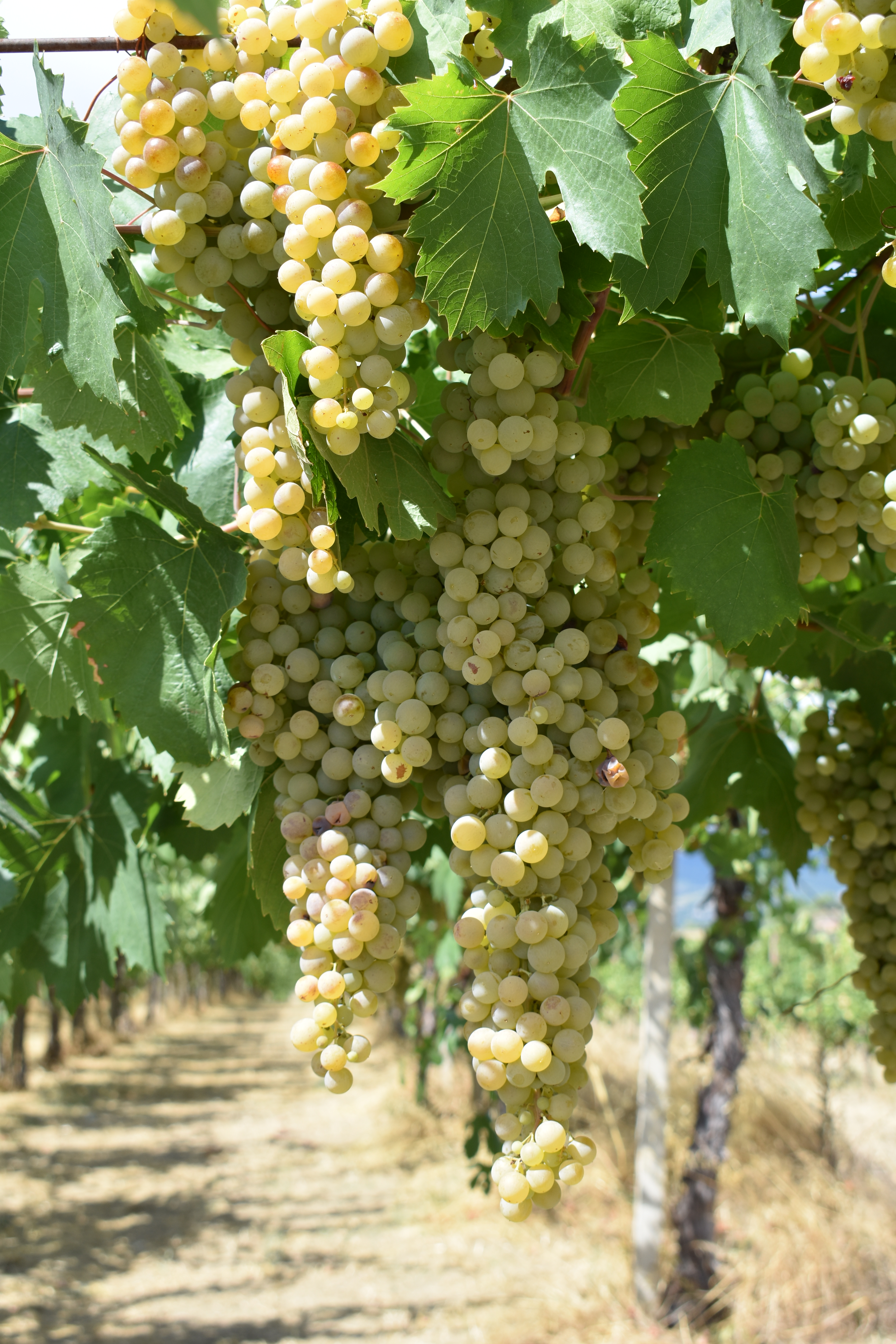
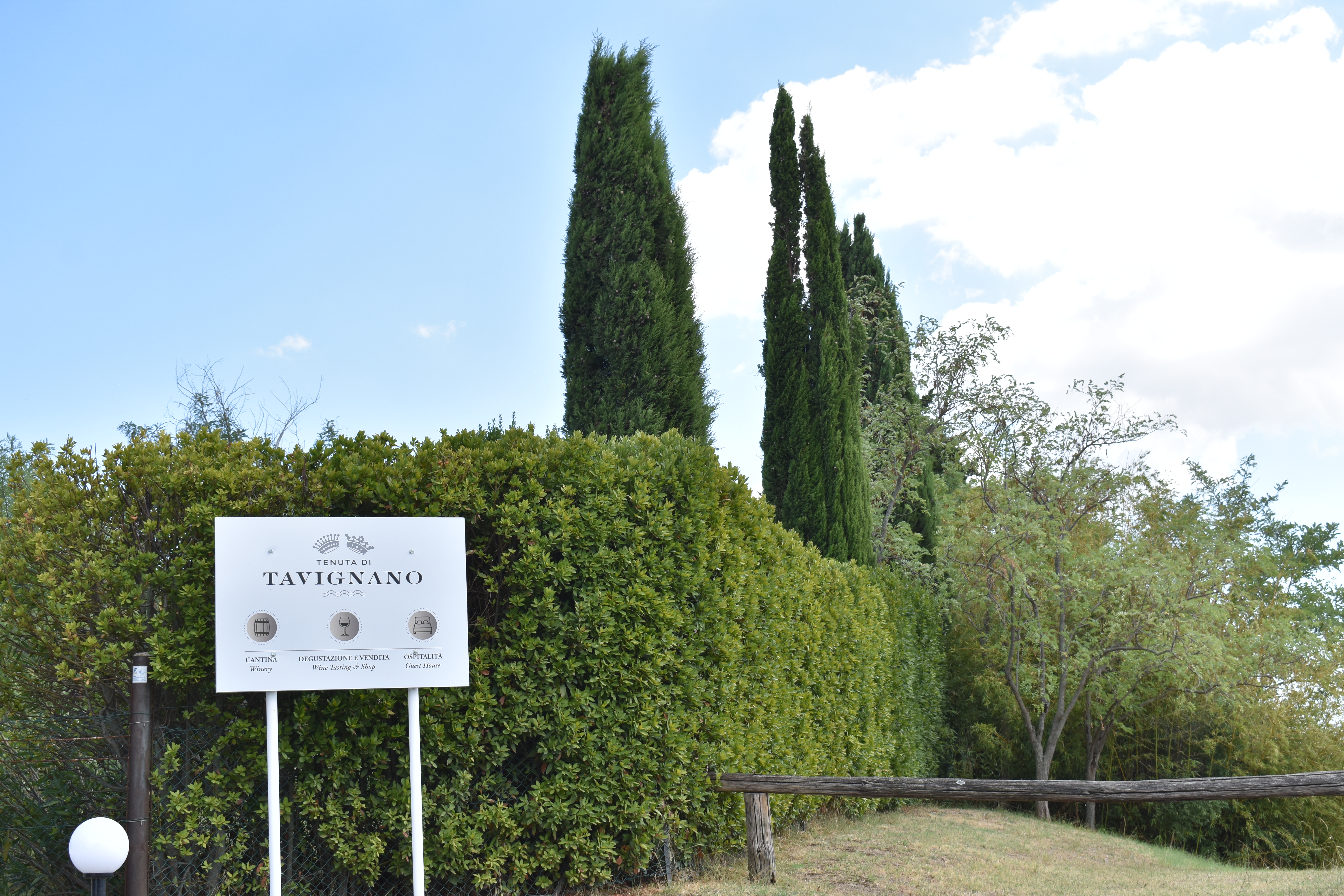
 Tenuta di Tavignano is located in a valley above the Musone River which flows between the Apiennes and the Adriatic on Italy’s hamstring.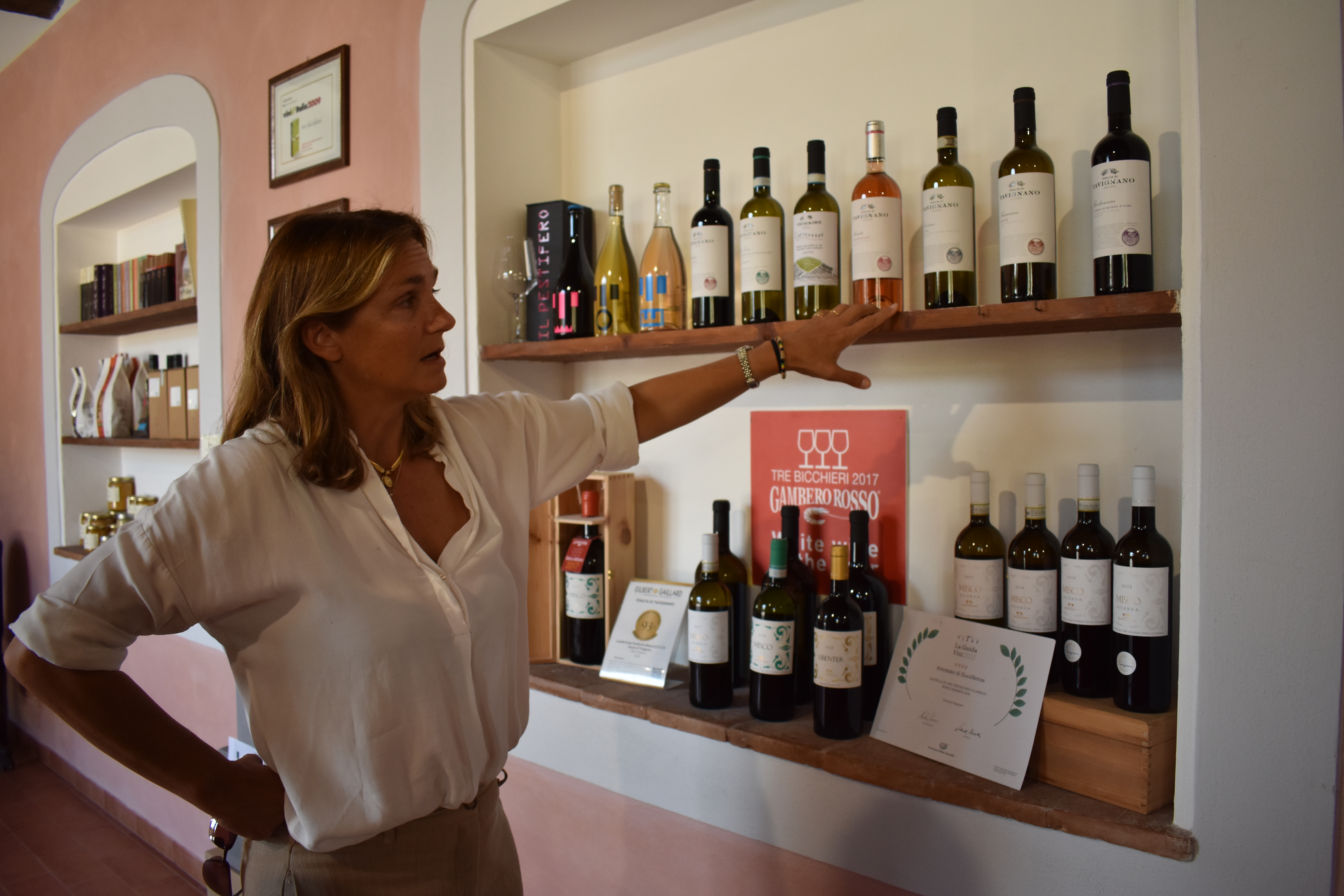
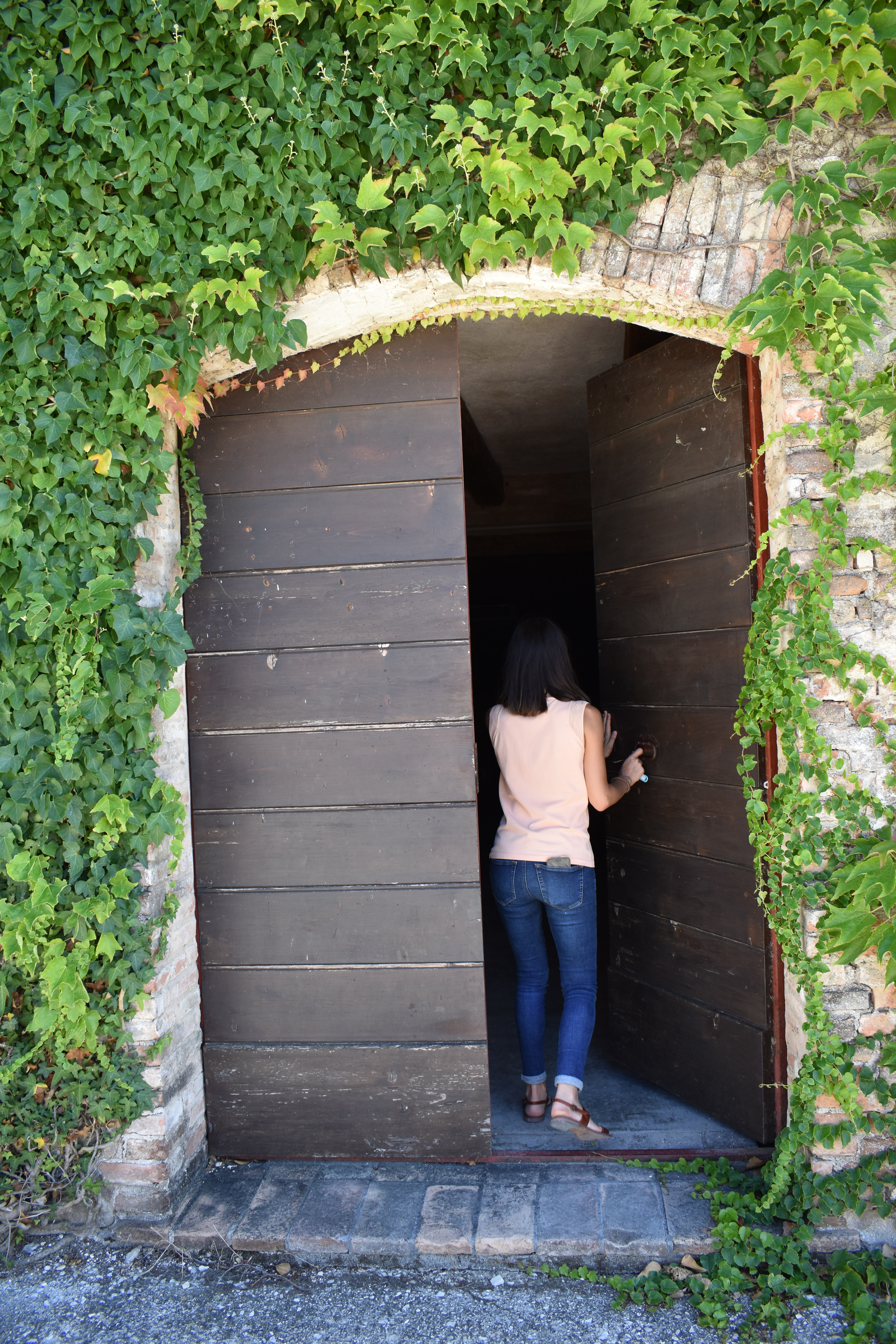 As Ondine remarks, ‘In Italy, wine is our bread. We have the wine, bread and oil at church and this is part of our Italian heritage, our life. It’s our right and we want to make it available to everyone.’
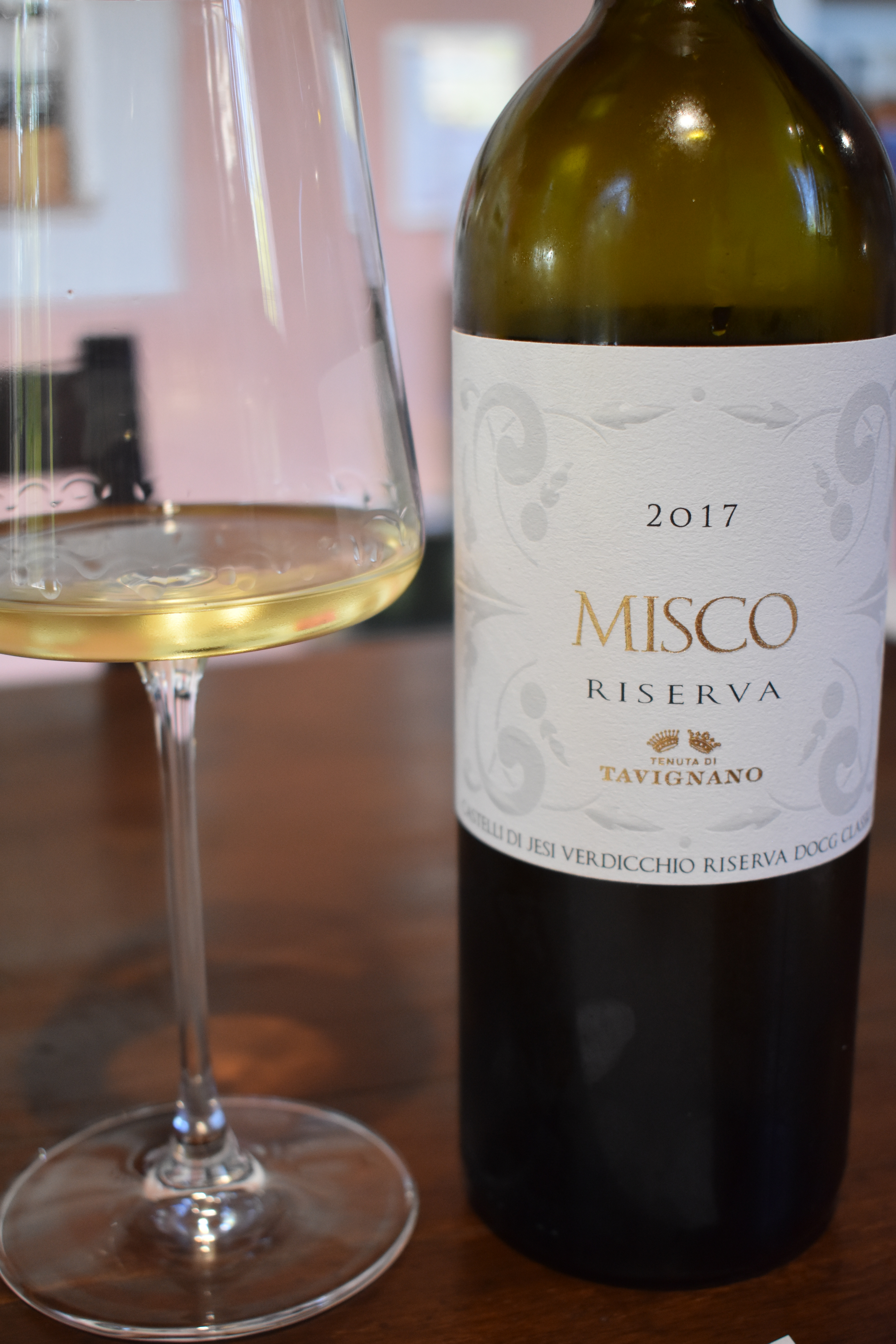
 And this is one of them. The Misco Riserva 2017 is made from handpicked passes over the last, most mature grapes of the harvest. Deep lemon, the nose and palate is all elegance – almond biscotti, white flowers, acacia and anise. The year it spent on lees has built a real beauty with a deeply mineral backbone. Two more years of aging in stainless steel gives the impression of it having spent time in wood, although it hasn’t.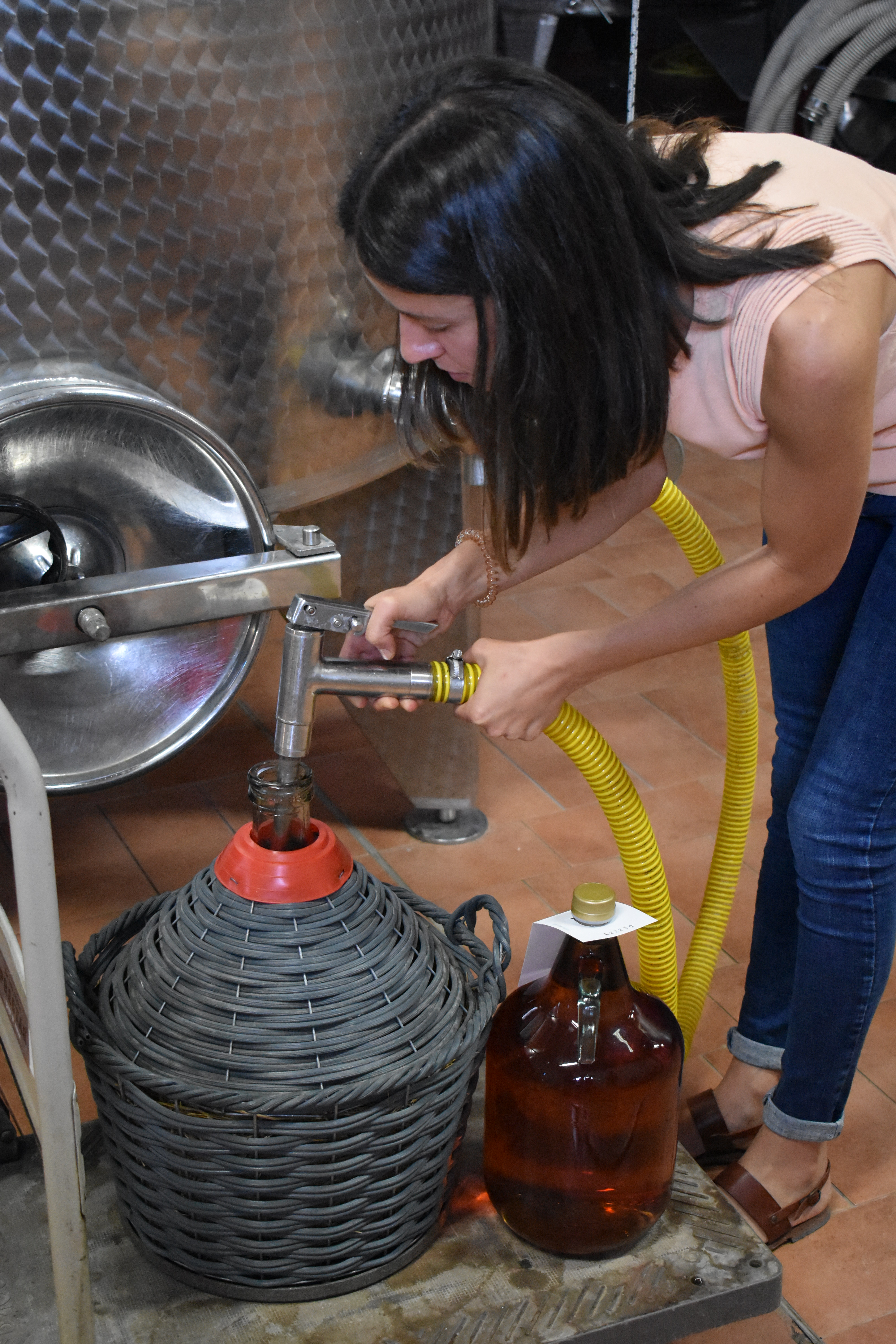
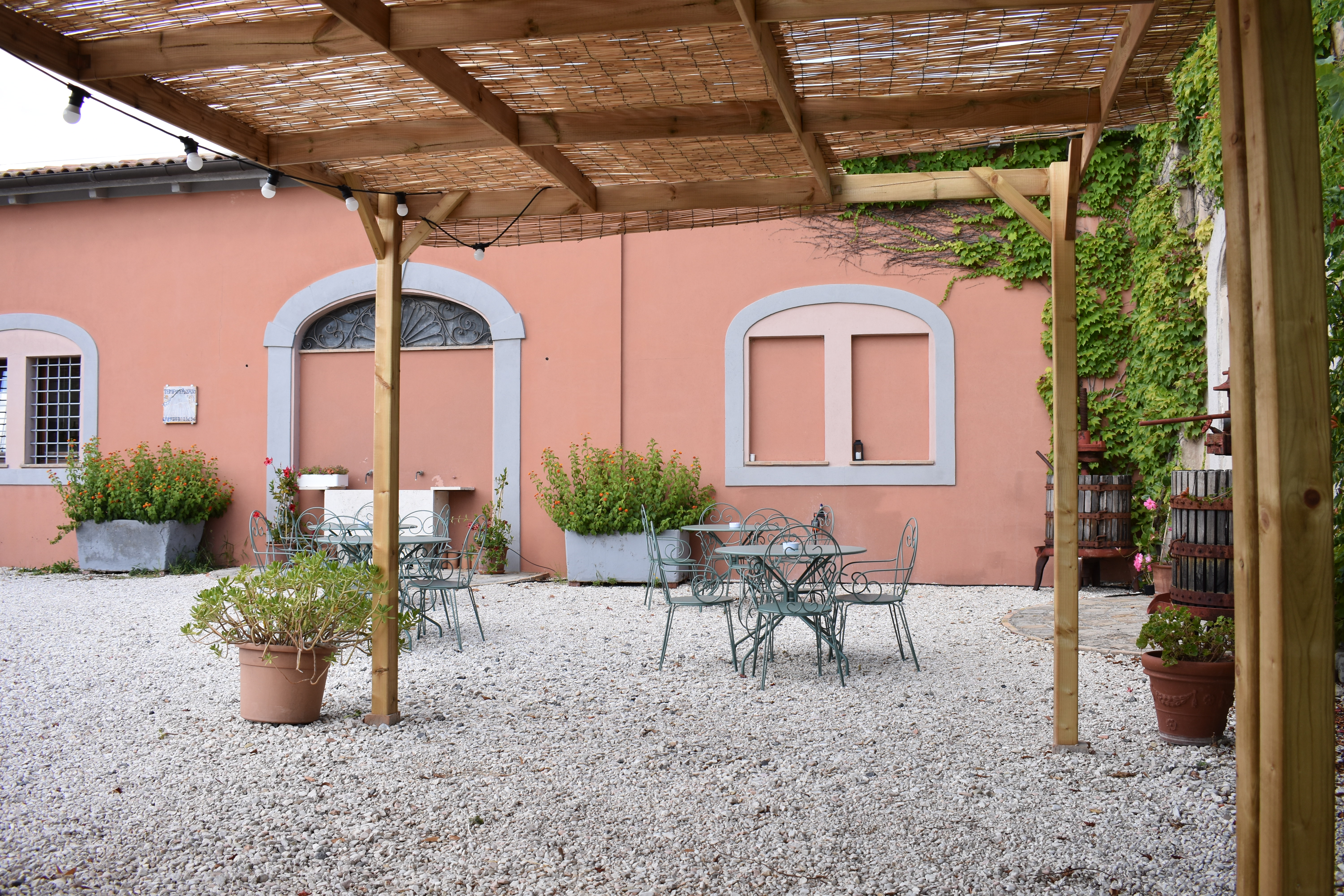 Erica (pictured right).



 winellama