Fino, Montilla-Moriles DO, Alvear SA, Spain, 15% abv, C$14.99

I’ve said it before and I’ll say it again – I love sherry. It’s so versatile and yet completely under appreciated.

We enjoyed most of this wine last night with the WSET Fortifieds study group and I finished the bottle off this evening alongside some blue cheese and jalapeño stuffed olives – perfect tapas-like food to accompany this Montilla-Moriles Fino.

This Fino sherry is a white varietal fortified wine originating not from Jerez or Manzanilla-San Lucar de Barrameda, but further inland in the Andalusian DO of Montilla-Moriles. About 95% of the grapes grown in Montilla-Moriles are Pedro Ximenez, but some are Palomino and that’s what has been used to make this Fino wine. In Montilla-Moriles, Palomino grapes are usually grown in the vara y pulgar trained style and on albariza-like soils rich in chalky limestone. Fortified to 15% abv after fermentation and marked as ‘palo’ after what’s called the ‘first classification’ (when the flor is observed and the winemaker makes a decision about what kind of wine it’s likely to end up being), they are aged biologically in a solera system under the thick layer of yeast called flor.

Fino is made in the fractional blending system from the ‘primera yema’ or first pressing of the grapes. Its characteristic aroma and taste profile is dominated by flor and this Alvear is no exception; flor is sacchromyces yeast that grows in the solera barrels and protects the wine from oxidizing. This allows it to keep its pale colour and develop the briny, aldehyde-based flavours and aromas.

This wine is clear and bright, pale lemon green with legs noted.
On the nose it’s a developing wine, clean with intense aromas of aldehyde and briny flor, green olives, salty almonds and pears with the slightest hint of yellow apples.

On the palate, it’s dry with medium acidity, fortified to a low level with low alcohol. The body is medium with medium + intense flavours of yeasty flor, salty almonds, brine and more green olives. There is the slightest taste of Anjou pear and the wine is surprisingly fruity and fresh.

I really enjoyed this wine with the olives and almonds. It would be equally fabulous with any typical Spanish tapas dish such as Iberico ham or a little sardine. The food changes and softens the wine’s profile immensely. This wine is very good; it’s a typical example of a Fino and has a great balance between the alcohol and complexity of salty flavours and aromas. Higher acidity would earn it a higher rating, but lower acidity levels are common for sherry. Completely enjoyable, affordable and great quality to boot.

20130523-231849.jpg

Posted in FORTIFIED WINE, Palomino, Sherry | Leave a comment

Banrock Station, Sparkling Shiraz, Southeastern Australia, 14% abv, C$14.99

I fancy myself an open minded sort, but even I have to admit this wine tested the limits of my esotericism. There is something weird and unsettling about tannin, oak and leather with your bubbles. I have been known to enjoy the occasional bottle of Lambrusco but I am not sure I’ll be buying another sparkling shiraz anytime soon.

This wine is clear and bright, deep medium ruby with bubbles noted. The bubbles dissipate quickly though and there is no comment on the bottle regarding the production method which makes me think it may be tank but there has to be some wood involved at some point to explain the heavy oak.

On the nose it’s heavily jammy and developed with medium plus aromas of red plums, strawberries and sweet black Damson plums. There’s some leather, tobacco and vines as well as oak and sweet clove.

The palate is demi-sec with medium acidity, light tannin and high alcohol at 14%. The mousse is aggressive but has poor sticking power and disappears quickly. Its body is medium and the flavour profile is medium plus intensity but a sickly sweet combination of black cherry kool aid, blackberry jolly ranchers, leather, tobacco and baking spice. The finish is medium.

This wine is simply ‘acceptable’. I’m sure there are much better examples out there, but I’m not going to go looking for them – unless I happen to find myself in Southeastern Australia any time soon. It’s excessively sweet and out of balance with the medium acidity and strong, jammy, leathery taste profile. The mousse is too short lived to make up for everything else.

20130520-175754.jpg

Posted in RED, Shiraz / Syrah, Sparkling Wine | 2 Comments

Rosa di Sera, Beato Bartolomeo Breganze, Vino Spumante, Italia, 11.5% abv, $15

It’s BC election night and a drink will help all of this go down. Besides, I have to keep working on those sparklings lining the shelf in anticipation of that exam in June.

So, I opened the Rosa di Sera, a sparkly 5.5 atmospheres of pressure salmon pink Spumante made in the Charmat (aka Autoclave or Tank) method in the Veneto IGT area of northeastern Italy.

This wine is clear and bright, the weirdest pale orange colour with bubbles noted.
On the nose, it’s got medium intensity and aromas of hops, dried strawberries and apricots. It’s a youthful wine; both fermentations were done in stainless steel vats.

The palate is dry with medium acidity and it has an aggressive mousse. The alcohol is medium minus with medium minus body and the medium flavours show some field berry, stone fruit including apricot and peach, some almonds and a definite hoppy bitterness. The finish is (ho hum) medium.

Despite having had quite a bit of this Spumante tonight (did I mention today is the provincial election? And after having heard the first ever Green Party winner Dr. Andrew Weaver’s acceptance speech, I went from feeling excited for the Oak Bay – Gordon Head riding to being terribly concerned in one quick gulp), I was kind of hoping it would eventually grow on me….but it hasn’t.

It’s an acceptable wine; unbalanced, tasting and smelling of hops and bitterness, the only saving grace is the bubbles, but even that is aggressive. The colour is weird too and I can’t figure out how they made it orange – when online there is mention of having used Prosecco grapes (which is wrong – they’re Glera) ‘in addition to other varietals’. Did they just keep the Glera must hanging around for too long after too much time on the skins? Or did they blend in some orange kool-aid? Love the specificity.

Well, usually you can’t go wrong with bubbles and this isn’t necessarily wrong; it’s just not great or exciting by any means. Kind of like the election results.

20130514-224415.jpg

Posted in Italy, ROSE, Sparkling Wine | Leave a comment

Freixenet, Cordon Negro, Cava, Método Tradicional, Spain, 12% abv, C$15

It’s Mother’s Day and I’m happy to sit down after a day at the winery to dinner made for me, cookies, roses – the works!  Top it off with some Cava, a bubbly for my possibly-broken-but-can’t-be-sure-about-it toe.  I saved the life of a Taylor guitar but sacrificed my foot.

This Cava is by Freixenet – founded in 1861 by Pedro Ferrer whose family owned La Freixeneda in Alt Penedes and joined later by the Salas family from San Sadurni Di Noya in Catalunya, owners of Casa Sala.

When the two families joined, it coincided with the unhappy advent of phylloxera in the 1870s. After the bug attacked Spanish vineyards, the Ferrer and Salas families decided to replant with Spanish varietals – Macabeu/Viura, Parellada and Xarello.  These have since become the backbone of the Spanish Cava industry. This version is a blend of all three with neutral and acidic Macabeu leading the way, followed by the earthy Xarello and then Parellada.

Freixenet has two well known Cavas – the Carta Nevada (1941) and this one, the Cordon Negro (1974), easily identifiable in its black matte bottle. There’s also a Cordon Rosado.  Sponsor of Spain’s MotoGP world championship and the Spanish Grand Prix motorcycle racing team, the company is well known in the Spanish-speaking world for its annual Christmas messages launched by famous actors and actresses including Antonia Banderas, Sharon Stone and Shakira.

This sparkling wine is a clear and bright, pale lemon-green with bubbles.  On the nose, it’s got light aromas of lime and lemon zest, green apple and yeast.

The palate is dry with medium acidity, an aggressive mousse and average alcohol.  The flavours are moderate and include lemon, lime, pomelo and yellow grapefruit with tart green and yellow apples and the slightest bit of toasty yeast.  The finish is medium and there is a slightly bitter element on the end from the Xarello.

WSET Good; made in the traditional method, it has an aggressive mousse and relatively short finish combined with an average fruit and aroma profile. The wine is balanced, but not complex. That said, it’s completely serviceable, is definitely doing its thing; for $15, you cannot lose.

20130512-203850.jpg

Posted in Macabeu/Viura, Parellada, Spain, Sparkling Wine, Xarel-lo | Tagged , , , , , , , , , , , | Leave a comment

Segura Viudas Brut Vintage Cava, Metode Tradicional, 2008, 12%abv, $28

So what do you do when someone you love is really sad and all you want to do is cheer her up? Moi? I treat first with food and then with alcohol. If neither of those help, we move quickly onto clothes – shoes are a last resort and usually guaranteed success.

Throw an about-to-graduate-from-high-school-and-has-been-studying-for-months daughter and two final IB Math exams into the mix on a Friday afternoon and you have a recipe for tears at the very best. Panic sessions at the other end of the spectrum. Bring on sushi and that bottle of Cava I’ve been holding onto for a while for homework practice.

Okay, so she may be a ways off yet from a legal drink, but if we were in Madrid, this wouldn’t be an issue. Plus, she is an IB student – we are simply internationalizing her curriculum. Besides, we needed something to drink with the sushi!

Save your judgement for someone else.

Cava, aka Spanish sparkling wine, hails from Rioja or Valencia but most frequently from Catalunya and specifically from San Sadurni di Noya where there is some elevation in the vineyards (200-500m which helps tremendously with acidity).

Made usually from one or a combination of three Spanish grapes – neutral and acidic Macabeu, neutral Parellada and earthy and occasionally rubbery Xarel-lo, it follows similar lees ageing laws to champagne – 9 months for non-vintage to 36 months for vintage, 15 months for Reserva and 30 months for Gran Reserva. Similar to Cremant, 150 kg of fruit per every 100 litres of wine must be pressed and for whites, the yields are a ridiculously high 80 hl/ha compared to only 53 hl/ha for black grapes.

Cava can also be made from international favourites – usually Chardonnay and Pinot Noir and if you pop open a rosé, it will be made from either Garnacha or Monastrell. Usually vines are grown bush style, ‘en vaso’ but increasingly they are wire trained to accommodate mechanical harvesting techniques. Cava must be at least 4 atmospheres of pressure and is usually fully sparkling (or ‘Espumosa’) at about 5-6 atmospheres.

This one is made in the traditional method just as champagne would be – meaning whole bunch and fractional pressing, blending of the base wines, two fermentations in the bottle, tirage, remeuage by the ‘girasol’ or gyropalette, disgorgement and a dosage top up prior to bottle ageing for the aforementioned minimum months. This Cava is labeled ‘Crianza’ and as a vintage has seen between 2-3 years according to the bottle. I would have thought it must have taken at least 3 years because of the vintage label. The label notes it is 67% Macabeu and 33% Parellada.

This wine is clear and bright, medium lemon with bubbles noted.
On the nose, it’s clean and developing with medium intense aromas of freshly baked bread, yeast, green apple, lemon and Bergamot lime.
The palate is dry with medium + acidity, a slightly aggressive mousse and medium minus alcohol. The body is medium minus and the medium intense flavours include toast, Granny Smith apple, lemon, lime and yellow grapefruit, pomello. There is a slight bitterness on the palate as well reminiscent of nuts or almonds. The finish is medium plus.

This wine is very good quality; the acidity is well balanced with the alcohol, fruit and aromas. The secondary autolytic characteristics are lightly toasty and offer a lovely balance to the lemon and lime. A longer finish would have earned a higher rating. At only C$28, it’s a steal – yeasty toasty aromas and flavours, a great price and bubbly. This is one of the reasons Spanish wines never fail to please – the price is right and they taste great.

It worked with the Graduate. She is back to her old happy self. See? Bubbles solve everything.
Hasta luego – ciao!

20130510-203827.jpg

Posted in Cava, Macabeu/Viura, Parellada, Spain, Sparkling Wine, WHITE | Leave a comment

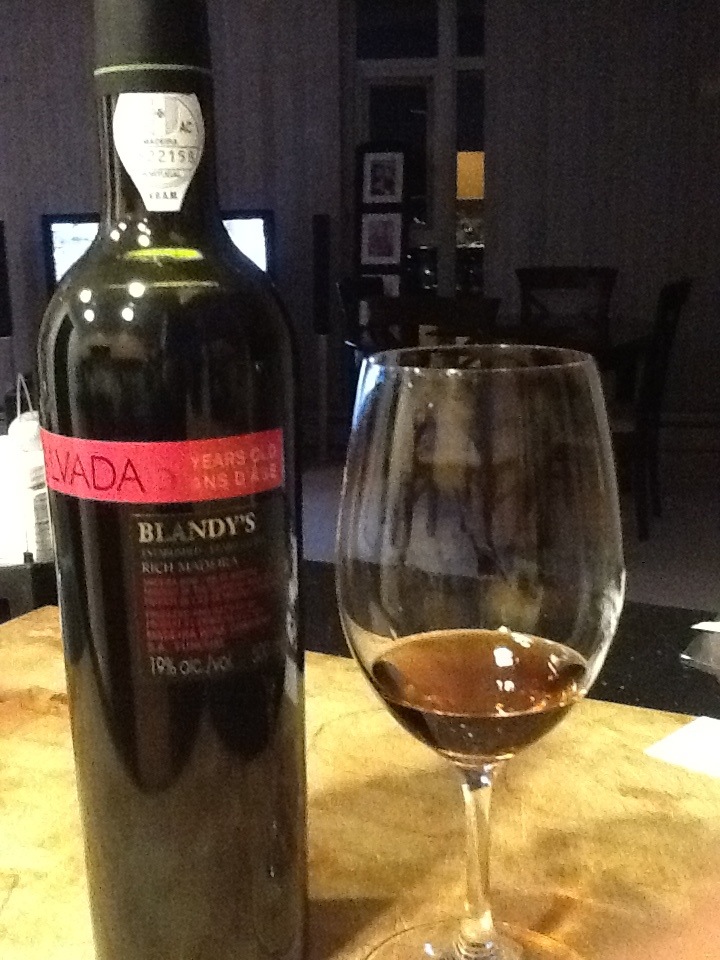
Blandy’s Rich Madeira, Alvada 5 yo, Madeira Wine Company, Madeira, 19% abv, C$35.00 500 ml

Madeira is ‘the other’ great fortified wine from Portugal. Located about 600 km southwest off the Portuguese coast, the main island of Madeira was ‘discovered’ by Portuguese settlers around the year 1420. Unfortunately, in their haste to settle the volcanic, sub tropical island and establish crops, they decided to clear the slopes of trees by burning and in the process killed almost all the vegetation.

In the end, the settlers built an amazingly intricate system of channels that carry water from the mountains in the north to the carved out terraces (poios) located on the southern coast of the main island. Over 40km of the channels carry water through tunnels. They planted vinifera white grapes that produce wines from driest to sweetest – Sercial, Verdelho, Bual/Boal and Malmsey (aka Malvasia). These ‘noble’ Madeira varietals are the ones accepted for EU labelling that must have 85% of the varietal in each bottle (since Portugal was accepted into the EU in 1993). Red wine based Madeira is usually made from Tinta Negra Mole, the most widely planted red varietal on the island, but as it’s considered a lesser quality grape and produces very high yields, the best quality wines are produced from the four whites.

This Blandy’s Rich Madeira is made by the Madeira Wine Company (MWC) which formed originally in 1913 as the Madeira Wine Association. It changed to the MWC name in 1981. In the 1700s, there were over 30 producers involved in the industry, but by 2000 there were only 6. MWC is run by two families, the Symingtons (of Port fame) and the Blandys in conjunction with Cossart + Gordon, Leacock and Miles. Together they represent over 20 different brands and have introduced new and unique ways to promote Madeira wines (Alvada, Colheita and Vintage).

This wine is clear and bright, medium brown with legs noted.
On the nose it’s developed and clean with medium intense aromas of brown sugar, molasses, gingerbread, fig newton and clove.
The palate is medium sweet with medium plus acidity (the main marker that would identify it as Madeira as opposed to Sherry in a blind tasting), high fortification and alcohol, medium body and flavour aromas of burnt Demerara, orange conserve, toffee, ginger, clove and Christmas cake. The finish is medium plus.
Very good quality wine, the alcohol is integrated, the acidity is refreshing and the flavour profile fresh. As an Alvada, it’s a combination of both Bual and Malmsey varietals and made oxidatively in the estufagem and canteiro method that mimics cooking the wine fortified with RCGM spirit as it would have been in the hull of a ship sailing over the equator.

Madeira wine and the fortified wine industry on the island managed to survive the ravages of oidium, phylloxera, the opening of the Suez Canal, the Russian Revolution and even American Prohibition (Madeira was the wine used to toast the signing of the Declaration of Independence in 1776). It’s still around and tasting great.

20130504-235916.jpg

Posted in FORTIFIED WINE, Madeira | Leave a comment

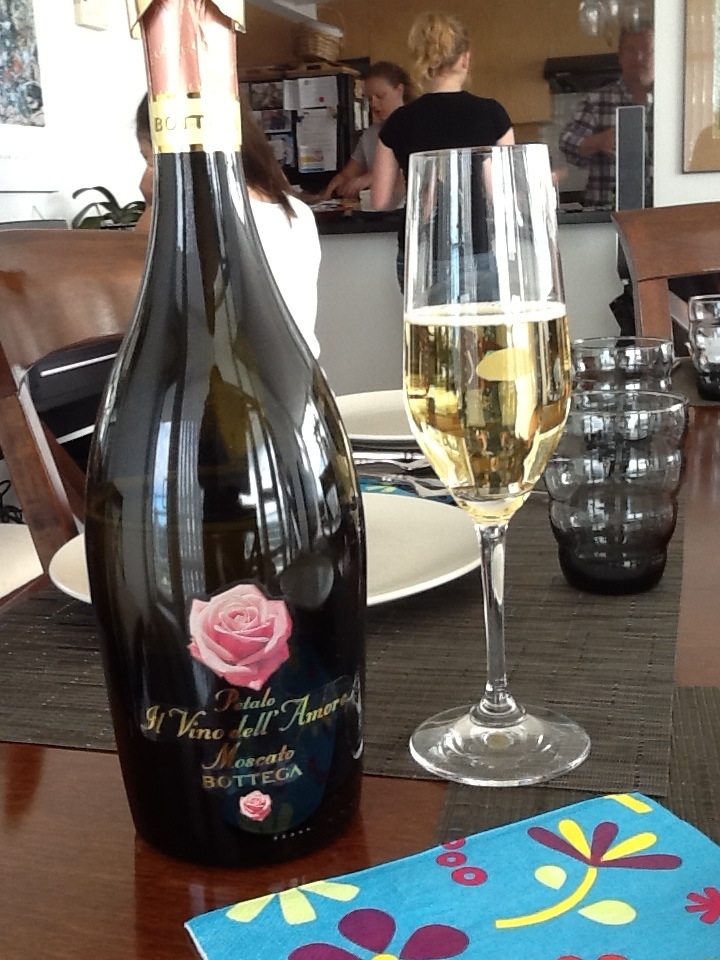
Petalo Il Vino Dell’Amore, Moscato, Bottega, Dolce, Veneto, Italy, NV, 6.5% abv.

Made in the charmat method (first fermentation in steel tanks and the second in sealed tanks and under pressure for 30 days), this moscato was perfect for our spring brunch with fresh fruit salad, pancakes with maple syrup and artisanal preserves.

Clear and bright, pale gold with a surprisingly persistent and creamy mousse noted.
On the nose, clean with medium intense aromas of rose petals, sweet perfume, apples and pears and the hallmark of moscato, grapes.
The palate is fully sweet with medium+ acidity, low alcohol, medium – body and medium taste profile of stone fruit including asian pear and Macintosh apple, grape and a floral component marked by roses. The finish is medium and marked by syrupy sweetness.

This wine is WSET ‘good’; the mousse is persistent and the fruit fresh. The sweetness can be headache inducing, but I fully recognize this is a hallmark of Moscato! Enjoy with similarly sweet fruit like the salad, maple syrup and preserves we had this morning – or a dessert.

20130428-115243.jpg

Posted in Italy, Moscato, Sparkling Wine | Leave a comment

Viña Gravonia, Crianza, López de Heredia, Rioja Alta, Spain, 2000, 12% abv, C$42 BCLB

It was a sad day for the unusual wines of Rioja, Spain; Pedro Lopez de Heredia passed away today.  This called for the raising of a special glass in his honour and memory.

Enter the Viña Gravonia, Crianza 2000. Several years ago when I knew nothing of wine save that I enjoyed drinking it, I made a trip to Spain.  Excited on my first evening there, I stumbled with extreme jet lag into a local Madrid drinking hole and mumbled in fractured Spanish that I wanted some Rioja.

It was the only thing I knew to say. I didn’t even really know what Rioja was, let alone appreciate its fame.  Someone had recommended I use that term and I learned if I managed to say it, a great glass of wine would appear before me.

At the time, I thought Rioja could only be red; then I learned about white Rioja made from Viura grapes.

Fast forward to summer 2012, the start of my WSET Diploma program and opening some bottles of López de Heredia’s Tondonia, Rose, Gran Reserva 2000 with family and friends.

Tonight, in honour of Pedro and Maria Jose, the future of López de Heredia, we opened the Viña Gravonia, Crianza 2000.

Clear and bright, medium lemon – akin to light apple juice – with heavy legs noted. On the nose, clean with pronounced aromas of brine and salty sea air, bruised yellow plum, citrus and ripe apricot and almond.  A developed wine.

On the palate, it was beautifully unusual. Dry with medium acidity and medium minus alcohol at just 12%, but with a medium plus body – very mouth filling.  The flavours mimic the nose with deeply intense brine, olives, fresh citrus and stone fruit – lemon and apricots with nectarines and bruised tree fruit.

Honey notes with beeswax and wool make me think this wine would be mistaken for Chenin Blanc in a blind tasting.  Sherry-like and oxidative (when I opened another bottle in January 2015, it seemed to be on the back end of its life.  There was less intensity at this point).

It went perfectly with our Manchego, Iberico cow, goat and sheep mixed cheese, olives, walnuts and pâté.  The finish was medium plus.

WSET Very Good wine – weird and yet wonderful.  Aged in American oak for four years and then in glass for an additional four, at the first tasting it was 13 and in January 2015 it was 15.


20130422-214854.jpg

Posted in Spain, Viura / White Rioja, WHITE | Tagged , , , , , , | Leave a comment

L’Ermitage, Roederer, Brut 2003, Anderson Valley, Sonoma, California, 12% abv US$47 (+C$17 tax at border)

Oh to be back on holiday in the Anderson Valley. How I miss it so. With good friends over tonight it was a reasonable enough excuse to pull out my special bottle of L’Ermitage, Roederer Brut 2003 from said valley to enjoy and reminisce about holidays past – and plan the next one.

Clear and bright, pale gold and the tiniest hint of copper, medium and delicate bubbles noted.
On the nose, clean with medium minus intensity aromas of citrus and stone fruit including light Asian pear and minerality. This is a youthful wine.
The palate is dry with high acidity and medium minus alcohol and body. The flavour aromas are surprisingly medium and include citrus, lemon, lime and yellow grapefruit along with light stone fruits including the aforementioned Asian pear and also some Anjou. There are autolytic flavours of toasty bread and brioche along with some yoghurt. A medium plus finish completes this beautiful wine.

‘Very good’ quality traditional method sparkling wine from the Anderson Valley – a blend of 52% Chardonnay and 48% Pinot Noir grapes along with 4% reserve wines in assemblage.

Extremely enjoyable and perfect for our evening of appetizers pre dinner out. We paired this with light cheeses from Agassiz (Fermiere and the Heidi) along with fresh guacamole with cilantro and salty tortilla chips.

20130413-222316.jpg

Posted in Anderson Valley, California, Sonoma, Sparkling Wine | 1 Comment

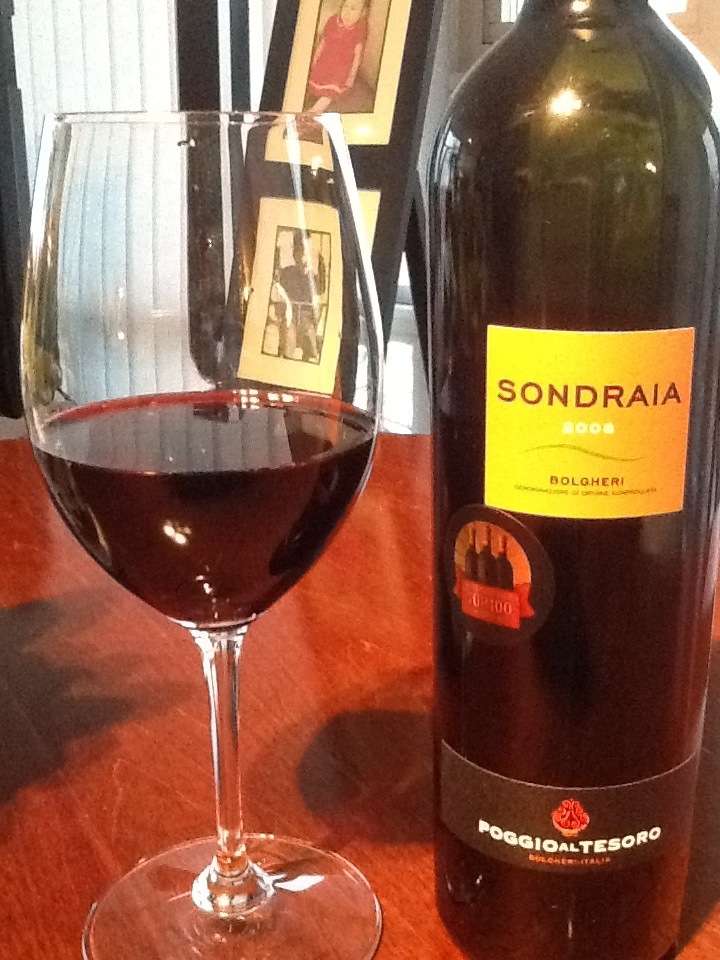
Sondraia, Bolgheri DOC, Poggio al Tesoro, Bolgheri, Italy, 2008, 14.5% abv, C$62.00

This wine hails from the Bolgheri DOC in Italy. There is a Bolgheri DOC and a Bolgheri Sassicaia DOC in Tuscany, but I didn’t know that Bolgheri wines don’t list the varietals on the label because of course, they are all intended to be Bordeaux blends and to be examples of that specific terroir.

This one doesn’t disappoint – it’s a 65% Cabernet Sauvignon, 25% Merlot and 10% Cabernet Franc blend that could possibly be cellared for a while but is still drinking very nicely right now.

Clean and bright, an extraordinarily deep garnet and legs noted. On the nose, it’s a medium plus intensity developing wine with notes of bramble, cassis, black cherry, savoury and meaty tones, liquorice and vanilla.

The palate is dry with medium acidity, smooth tannins, medium + alcohol, a pleasing and mouth-filling medium body and medium + intense flavours of blackberry, deep black fruit, liquorice root, forest floor and herbs including dill, prune and pencil shavings. The finish is long and the wine is beautifully balanced.

A very good Bolgheri wine for a rainy Vancouver Tuesday with porch-barbecued Italian sausage, rice and salad.

20130409-195806.jpg

Posted in Cabernet Sauvignon / Blends, Italy, RED | Leave a comment