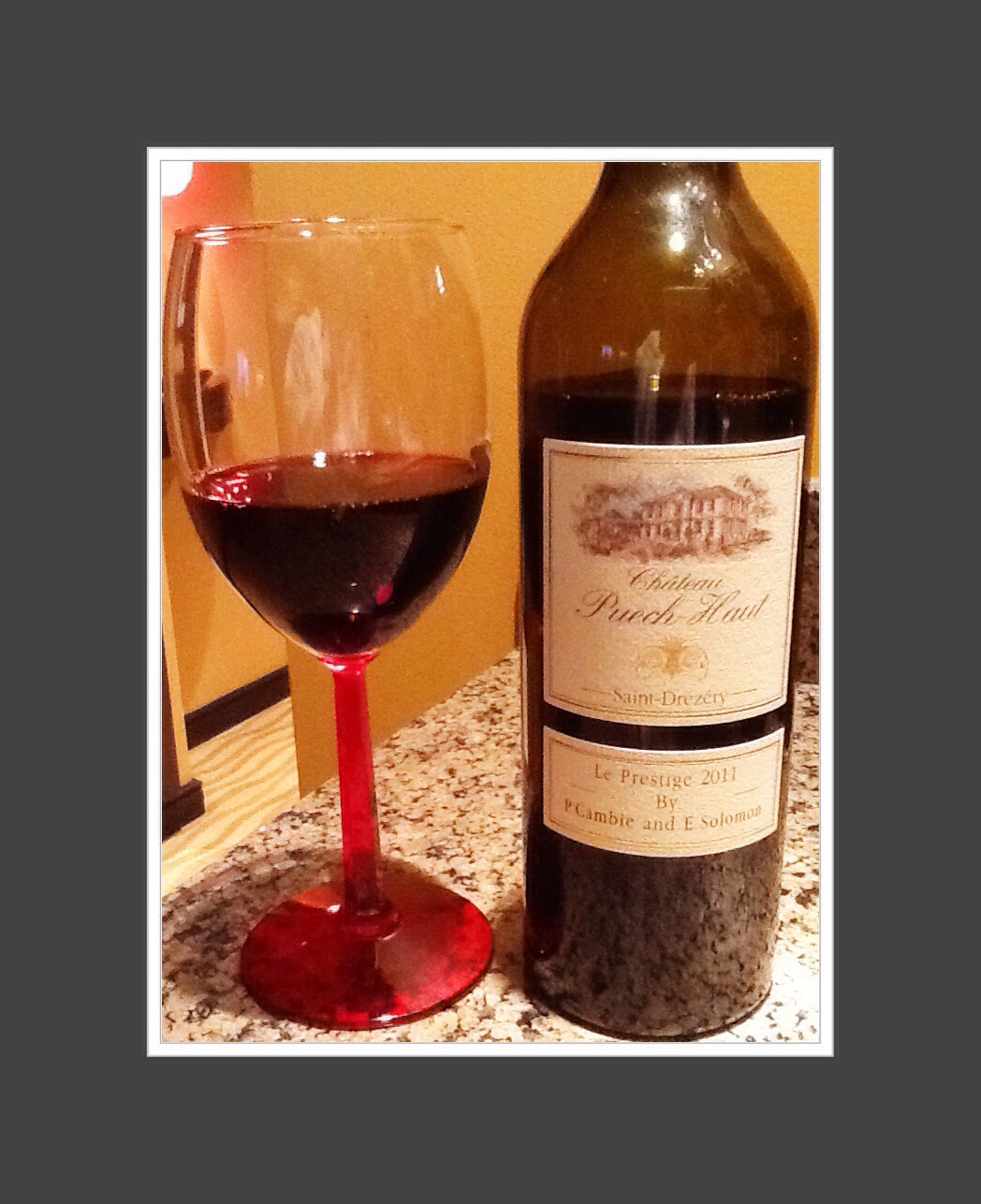
Chateau Puech-Haut, Saint Drezery, Le Prestige 2011, P. Cambie and E. Solomon, Coteaux du Languedoc AOP, France, 15% abv, US$19.99

When the owner of a funky little wine shop in downtown Bellingham with 35 years of experience in serving, buying and selling wine (Seifert & Jones Wine Merchants – check them out) introduces a wine to you by saying, ‘It’s like a cool, good looking guy who’s been working out and favours tight black t-shirts,’ you know you’ve got to buy it. And now, after tasting it, I’m like ‘He’s mine, all mine!’

The Chateau was founded only in 2000 and has 100 ha of vines in Saint-Drezery, a small village just 15 km northeast of Montpellier in Coteaux du Languedoc, AoC. The Coteaux du Languedoc is in the far eastern part of Languedoc-Roussillon, adjacent to the Costieres de Nimes. Some of France’s first vineyards planted around 125 BC were established here.

Coteaux du Languedoc is huge and extensive, but is also sometimes referred to by some ungenerously as a ‘simple’ appellation. That said, it has come to offer some of the best value options for French wine. Saint-Drezery is the Coteaux’s smallest region. Most wine produced there is engineered by the local cooperative, save for Puech-Haut which is noted in Jancis Robinson’s Oxford Companion of Wine as ‘producing fine reds and whites’.

A little research reveals that Puech-Haut’s 2009 exploded onto the US wine scene with a 93 awarded by Robert Parker, unsurprising as this is exactly the style venerated in the Wine Advocate – big, bold, flamboyant, full and with so much going on. The 2010 was similar, earning a 94 in the Rhone Ranger, and sold out quickly. The most incredible thing though is the price – how is it possible that after several celebrated vintages, this 2011 is still less than US$20?

But hey – I’m not one to question a good thing…No, make that a beautiful thing. This wine is 55% Grenache and 45% Syrah, grown on gravelly limestone strewn with galets (huge round rocks that absorb the day’s heat and re-radiate it to the vines overnight) in dry conditions with low yields and aged in concrete tanks.

Gerard Bru is the owner and he has had some of the best of the best consultants assist with his wines including the one-and-only Michel Roland and Claude Gros. This cuvée is no exception; it was executed by Philippe Cambie and Eric Solomon whose names are on the front of the bottle which is itself interesting and unusual.

Clear and bright, this wine is a deep, inky ruby red with deep legs. On the nose it’s clean with developing medium plus aromas of ripe, red and black fruit, leather glove, sous bois, vanilla, game, lavender and roasting herbs.

The palate is dry with high but integrated alcohol, medium plus acidity and medium plus body. The tannins are medium ripe and velvety and the medium plus flavour characteristics include more raspberry, ripe strawberry, pomegranate, cassis, dry leaves, thyme, rosemary, purple blossoms, savoury meats and leather saddle. The finish is long and lingering.

This wine is WSET ‘outstanding’. What a find; I’m going back for more of this black t-shirted hunk. The balance is phenomenal and seamless – fresh and fruity, perfect tannins that can go for 5-8 years more and still provide a frame, development of secondary characteristics, the flavours and aromas of which are lengthy and complex.

This will age gracefully but I recommend ‘drink now’, and enjoy as much as you can.
20131220-001345.jpg

Posted in France, Grenache / Garnacha, RED, Shiraz / Syrah | 4 Comments

Langmeil, The Long Mile, Three Gardens, SGM, Barossa, South Australia, 14.5% abv, 2010, C$27.00

This wine first caught my eye because of the way it listed its varietals in an ever-so-slightly backward manner. Instead of the usual GSM, indicating dominance by Grenache, followed by Syrah and Mourvedre, this one has a majority of Shiraz (45%) with 35% Mourvedre (called Mataro in Australia) and 20% Grenache.

Maybe it just seemed backwards because it’s actually upside down – isn’t that what happens in Australia? Because it’s still wrong – it should be SMG, shouldn’t it?

Well, regardless, there is nothing backward about the taste and bouquet of this wine. It hails from the famed Barossa Valley in South Australia, ‘The’ Australian wine state. Barossa is a very small parcel of land, but it dominates production and output for the South Australian region (about 50%). Most vines are concentrated in the south-eastern corner of the region near Adelaide.

The Barossa is located an hour north of Adelaide and vies with the Hunter Valley (just outside of Sydney) as Australia’s best known wine region. Evidence of German immigrants abounds but most Riesling production has since moved to the close by Eden and Clare Valleys while concentration on red wines has focused on the region’s warm valley floor. After all, this is where Penfold’s Grange is from.

There is an issue though in the area with increasingly less water and there has been much focus on dryland irrigration of the bush pruned vines with low yields – some as low as 16 hl/ha. Some of the vines hail from the late 1800s while there are also many newer arrivals (there are about 80 wineries in the region).

The Shiraz that comprises 45% of this wine is the king of Australia’s red grapes. The wine is clear and bright and a deep, opaque purple with legs. The nose is clean and developing with medium plus aromas of blue and black fruit, blackberry pie (with vanilla), mocha, eucalypt, some pomegranate and a touch of kid glove as it opens.

The palate is dry with medium plus acidity, ripe medium plus tannins and medium plus alcohol. The medium plus flavour characteristics include more blueberry, blackberry along with cranberry and raspberry. The eucalyptus is still present along with an unmistakeable chocolate note with light leather, vanilla and spice cake. The finish is medium plus.

This is a WSET ‘good’ wine with a fruit forward feel and some leather and mocha on the back end. Not entirely seamless, it is certainly reasonably complex. Drink now and enjoy or save for 2-5 years.

20131215-103545.jpg

Posted in Australia, Grenache / Garnacha, Mouvedre, Monastrell, RED, Shiraz / Syrah | Leave a comment

Tantalus, Riesling, Okanagan Valley VQA, Kelowna, BC, 2010, 12.2% abv

I pulled out ‘the good stuff’ when the parents were here last week. When Jancis Robinson declared earlier this year that the Tantalus Riesling 2008 was Canada’s best white wine, I managed to snag a half case plus several other vintages and bottles to make up the twelve. And I’ve been hoarding it ever since.

Riesling is an often mispronounced and misunderstood wine grape, but it’s immensely versatile and capable of producing wines that span the spectrum of possibility – from bone dry to late harvest sweet wines with racy acidity that can last for decades.

One of its parents is Gouais Blanc, also a parent of other noble varieties Chardonnay and Pinot Noir. Riesling does not like being with oak and tends to be low in alcohol and is not always considered very fashionable because of this.

However, in earlier times, back in the 1800s for example, Rieslings were valued because their acidity could enable them to age for decades regardless of how sweet they were or their alcohol levels.

Being sweet may also have eventually damaged the reputation of this grape’s wines because that is often (erroneously) equated with lesser quality. Riesling is capable of producing top notch botrytized icewines, Beerenauslese and Trockenbeerenauslese style wines (try saying that 10x in a row) because its bunches are tight and this makes the grapes susceptible to botrytis and other infections. It buds late so can avoid spring frosts but ripens early meaning it can be picked sooner.

This grape is the main noble varietal of Alsace and the first records of it being planted there date back to 1628. In Germany, it has been cultivated since the Middle Ages and today comprises 80% of plantings in the Rheingau, but its German showcase are the steep south facing slopes of the Mosel-Saar-Ruwer where 25% of the vines are Riesling planted on red and blue slate soils that warm the vines during cool evenings.

Riesling is noted for its rapier-like aromas – flowers, steel, honey and if you’re lucky, a whiff of kerosene or petrol. This is released by something called TDN – ‘Tri-methyl-dihydronapthalene’ – which evolves with age and is considered highly valuable by cork dorks.

This version by Tantalus is clear and bright, medium gold with legs. On the nose, it’s clean and has pronounced developing aromas of wet rocks (the steely scent mentioned above), minerals, blossom, quince, pomelo, a splash of lime zest and petrol.

The palate is off dry with medium minus alcohol and the grape’s signature high acidity. The body is medium minus and the flavours are pronounced – white flowers, bergamot lime, ripe yellow apple, Granny Smith, more quince and a ripe Okanagan pear. The wet rocks and minerals round it off with the kerosene and a strong medium + finish.

The top end of WSET ‘very good’, this is a wine that could age for 5-8 years with the fruit and acidity to develop the TDN flavours and aromas but it’s drinking absolutely beautifully now.

20131215-094507.jpg

Posted in BC, Riesling, WHITE | Leave a comment

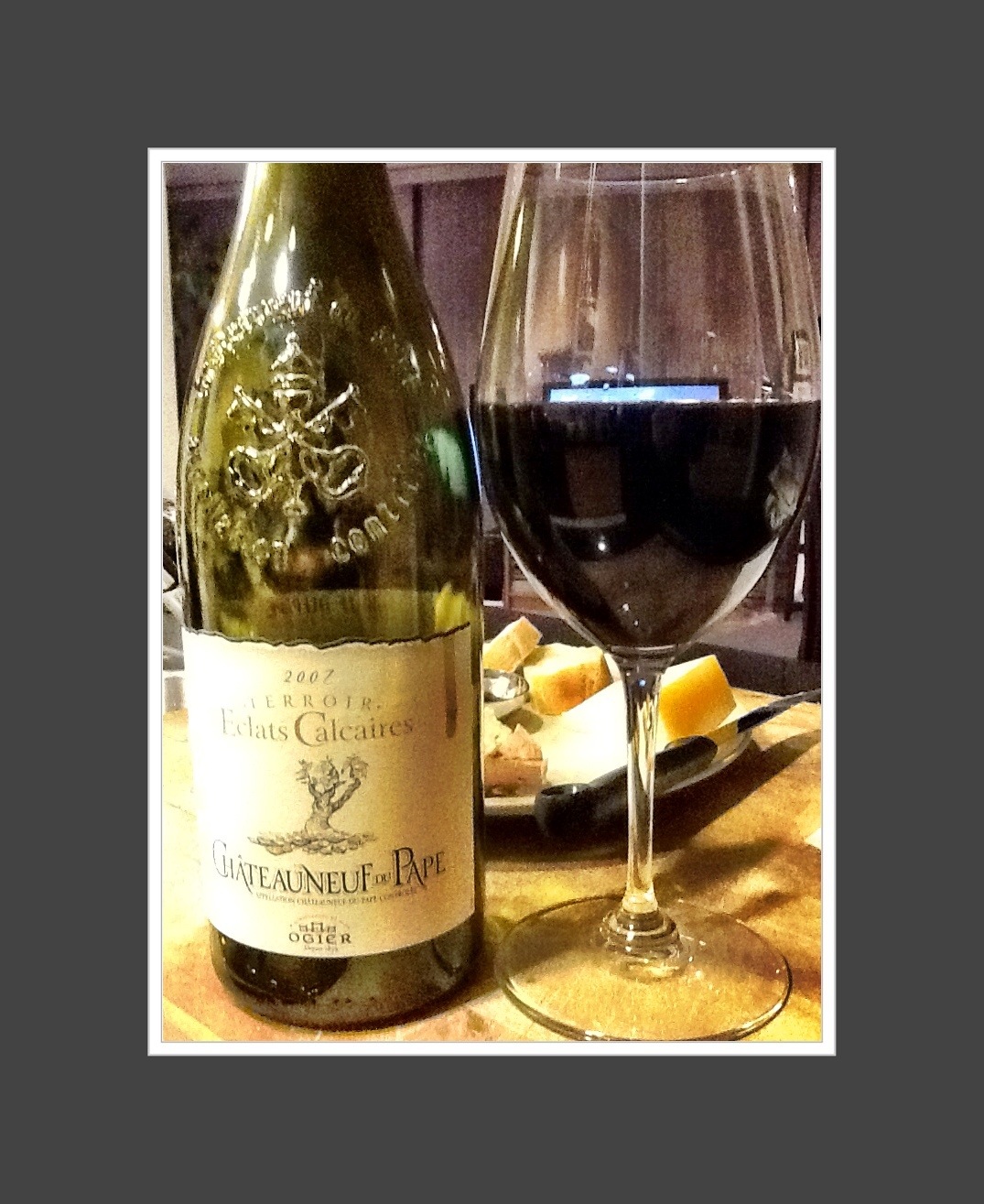
Terroir Eclats Calcaires, Ogier, Chateauneuf-de-Pape AoC, 2007 14.5%, C$52

“If I was going to drink wine, this would be it!” When a non-drinker announces his impression of a wine’s aromas in this way without having even tasted it, you know it really must have something going for it.

Located deep in the Southern Rhone Valley, Chateauneuf-de-Pape or CdP is famous for a few things – including being the very first French appellation and for allowing up to 13 different red and white varietals to be included in its wines.

Referred to as ‘Vin d’Avignon’ in the 1700s, CdP literally means the ‘Pope’s New Castle’ and was named as such because in the early 1300s the papal court moved to the region, set up in Avignon and planted vines. Its reputation for wine ( a lighter version of today’s product) grew until phylloxera hit in the 1870s and the vineyards were destroyed (along with all the others located throughout Europe).

Rebuilding the vineyards into the early 1900s was difficult and financially taxing but by 1923, rules were drawn up for planting and the prototype for Appellation Contrôlée system was established right here in this region. This included a geographical delimitation of the land allowed to be used, imposing a minimum alcoholic strength of 12.5% (still the highest in France) that must be achieved naturally and not by adding sugar, triage picking (to ensure ripe fruit) and the outlawing of Rose wine (to show up their neighbours in Tavel). The yields are limited to about 35hl/ha which ensures concentrated and sweet fruit.

The reds allowed in CdP wines include Grenache (the most popular one here), Syrah, Mourvedre and Cinsault as well as lesser knowns Picpoul, Terret Noir, Muscardin, Vaccarese and Counoise. For the rarer whites (only 1/14 of the distinctive embossed CdP bottles are white wine), Grenache Blanc, Bourboulenc, Roussanne and Clairette are legal.

CdP tends to be fairly flat but is riddled with pebbles called ‘galets’ which retain the day’s heat and radiate it back to the ‘gobelet’ or bush-trained vines at night – ensuring the rich, concentrated fruit the region is renowned for. The soils in the ‘eclats calcaires’ are shallow and based on crumbling limestone which means the roots don’t go very deep but can obtain water from cracks in the limestone.

This CdP is Grenache-based with Syrah and Mourvedre. Clear and bright it is a deep garnet with legs. On the nose, it’s clean with developed, medium plus intense aromas of deep lush black fruit, bacon fat, leather saddle and roasting herbs.

The palate is dry with medium plus body, medium plus alcohol and medium acidity. The medium tannins are soft and ripe and support the medium plus intense flavours of black currant and blackberry, strong tar and leather, thyme and rosemary, salami and cured meat along with peppery notes. The wine’s finish is long and savoury.

A WSET high end of ‘very good’ wine – beautifully balanced with lush fruit and a long finish. The tannins are perfect right now and are supported by the medium acidity. Drink now and lots of it – or may hold another 2-5 years.

20131208-102812.jpg

Posted in France, Grenache / Garnacha, Mouvedre, Monastrell, RED, Shiraz / Syrah | 3 Comments

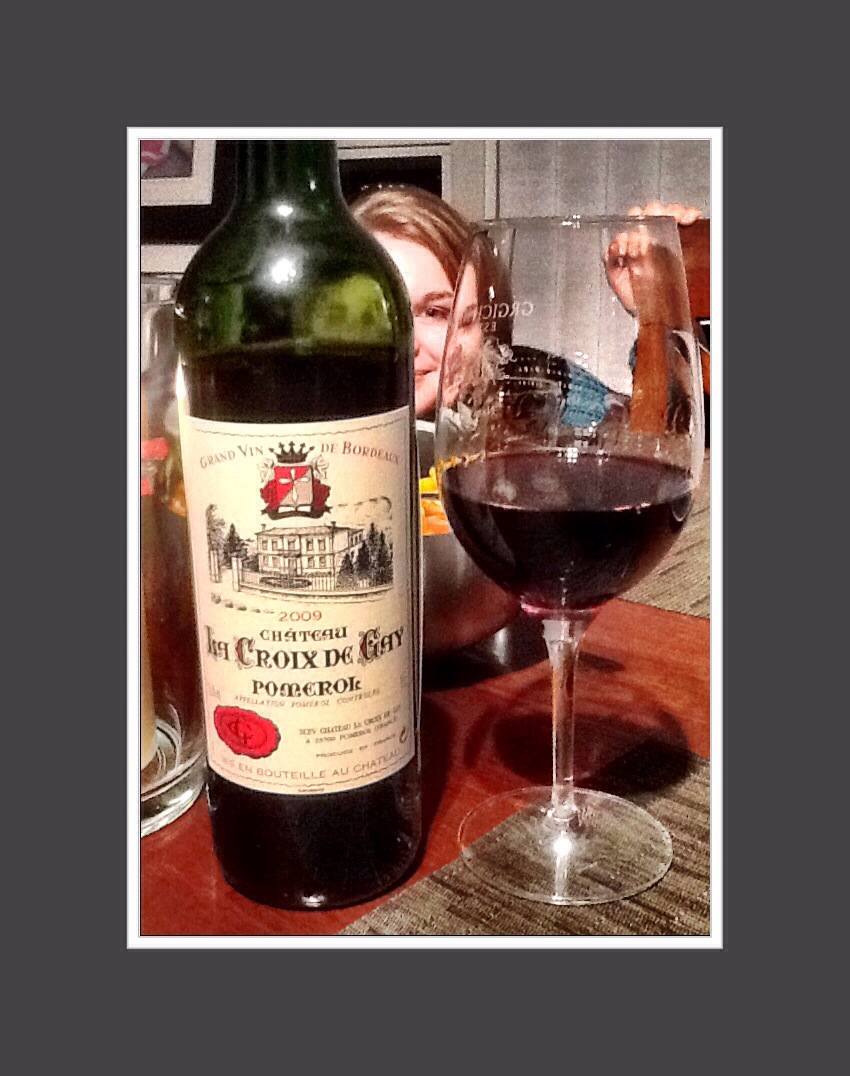
Chateau La Croix de Gay, Grand Vin de Bordeaux, Pomerol AC, France, 2009, 13.5% abv, C$50

Having never been there, I can’t corroborate it, but I understand Pomerol is one of the most monocultural and boring landscapes around. Who would think!? Bordeaux takes shape in my mind as the land of fairytale chateaux and rolling hills. Apparently though while Pomerol’s wines are renowned, the fame is attached to the name and not the scenery.

During the Hundred Years War (between England and France, 1337-1453), the vineyards which had been established on this infertile land by the Romans were abandoned for the most part. They were replanted in the 16th century, but didn’t attract any attention until the Belgians started importing Pomerol wines in the early 1900s.

Wine merchants based in close-by Libourne marketed these wines along with other Right Bank wines in Paris, Belgium and Holland and eventually the world ‘discovered’ Pomerol wines, including famous Chateau Petrus in the 1950s.

The finest wines of Pomerol are grown on the highest parts of the plateau and this one comes from a property located on the plateau itself. The soils are particularly suited to plump, lushly fruity, early ripening Merlot being comprised of clay layered with gravel. There is more sand in them the further west one goes. The subsoil here has a lot of iron in it – apparently this is what Ch. Petrus has a great deal of.

Yields in Pomerol are amongst the lowest in Bordeaux and this helps produce wines that can be drunk young but that may also be held for decades. Merlot accounts for 80% of all plantings in this region of Bordeaux which can be nerve-wracking in those years when spring frost kills the early ripening Merlot vines. This wine is 95% Merlot with the rest Cabernet Franc.

Pomerol is widely acclaimed as one of Bordeaux’s great wine appellations, but yet it has no official classification system. Many of the properties are very humble and produce only 1-2 or maybe 3000 cases of wine a year. Its most famous Chateaux include Le Pin and Petrus.

This wine from the Chateau La Croix de Gay (not to be confused with the better known La Fleur de Gay) is clear and bright, deep ruby (almost garnet) and has noticeable legs. The nose is clean and developing with medium plus intensity, aromas of big, black fruit (Damson plum, blackberry), red fruit (cranberry, black cherry), black olives, pencil shaving and vanilla with slight vine.

The palate is dry with medium + acidity, medium + alcohol and medium + grippy tannins. It has medium + intensity of deep plum, blueberry, boysenberry and cassis, tar, Dutch licorice, lead, cedar and leaf. The finish is medium plus.

This is a ‘Very Good’ deeply lush wine with solid balance and complexity. The acidity and tannins are in coordination with the fruit and length. Drink it now and enjoy as we did with steak, grilled veg and AWall’s fresh tarragon butter on french bread or hold for 3-5 more.

20131201-214001.jpg

Posted in France, Merlot, RED | Leave a comment

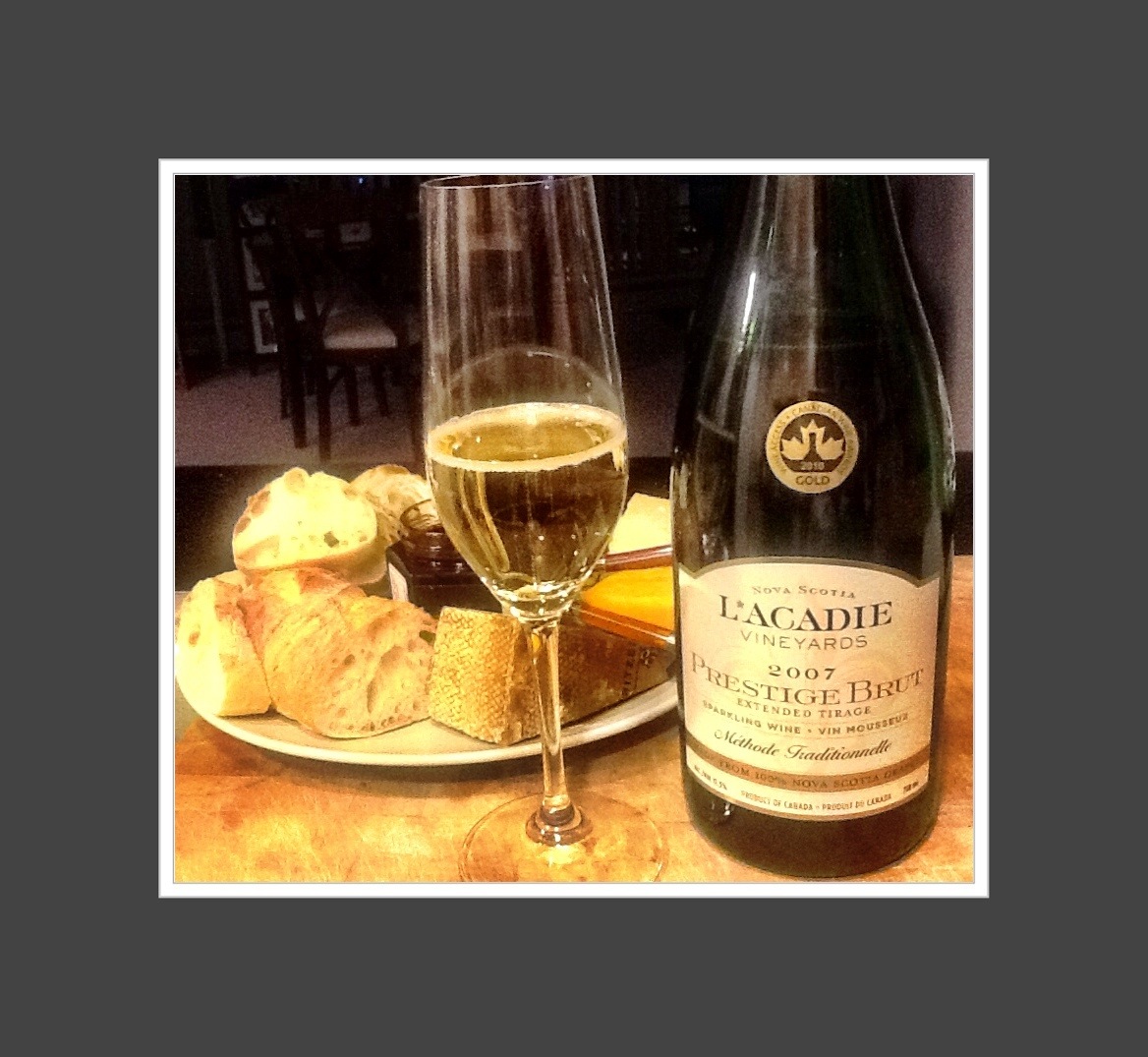
L’Acadie Vineyards, Prestige Brut, Methode Traditionnelle, Nova Scotia, 11.5% abv, 2007, $39.99

Nova Scotia – Canada’s second smallest province, land of the intrepid Acadians, the Mi’kmaq nation, maritime beauty, outstanding liberal arts universities and….quality sparkling wine?

As odd as that may sound, it shouldn’t really be too surprising. Consider that Nova Scotia lies almost exactly half way between the equator and the North Pole at about 44-45 degrees latitude. In contrast, Reims and Epernay lie at about 49 degrees.

Although Nova Scotia is surrounded almost entirely by water (apparently you’re never more than 20km away from the coast), it boasts a continental as opposed to a maritime climate. The region was one of the first in North America where grapes were grown specifically for wine with cultivation stretching back to the 1600s.

Today, Nova Scotia actually has 70 wineries. To be sure, it’s a boutique industry at only 223 ha under cultivation, but it has managed to build up a respectable following for its crisp and aromatic whites using L’Acadie Blanc, Seyval Blanc and Vidal and less success has been seen with Chardonnay, Ortega and Riesling. These whites are said to go incredibly well with the local seafood dishes. Their reds often centre around Marechal Foch and Baco Noir.

Now, when I saw ‘L’Acadie Blanc’, I had to go straight to Jancis Robinson’s Wine Grapes to figure out just what it is. Turns out it’s a hybrid of Cascade x Seyve-Villard produced back in 1953 in Guelph at that University’s Department of Plant Agriculture. It’s comprised of 8 different vitis including riparia, labrusca (I know, I know – but hold your judgement), vinifera, rupestris, cinerea and berlandieri. It can survive temperatures as low as -25c, even lower than the hardy Seyval Blanc.

Wine Grapes notes the L’Acadie Blanc (known also as Acadie and by the least romantic ‘V 53261’) is hardy, resistant to disease and rot (its bunches are loose) and its varietal wines are generally full-bodied and often shows notes of honey and flowers.

It’s grown widely in Nova Scotia (surprise!) as well as in Quebec and more recently its been planted in north central Ontario. This sparking wine is made from 100% L’Acadie Blanc and winemaker Bruce Ewert is really doing all the right things.

The Prestige Brut 2007 has been aged for 4-5 years on its lees (the dead yeast cells) using the traditional method. Its also been hand riddled and hand disgorged.

Clear and bright, it’s medium gold with aggressive, long-lasting mousse.

On the nose, it’s clean and developing with medium intensity aromas of light biscuit and yeast, stone fruit, citrus, Granny Smith apple and minerality .

The palate is dry with medium minus alcohol, high acidity and the creamy mousse is long-lived. The medium intensity flavour characteristics include white blossom, more stone fruit (pear, white peaches), some key lime, Granny Smith apple, rising bread and wet rocks. The finish is medium long.

I must admit to wondering exactly how a sparkling wine made from this grape would taste – and I was most pleasantly surprised. WSET ‘good’ – the high acidity combined with the lower alcohol and fruit produce a very interesting and unique version of new world sparkling with the L’Acadie Blanc grape from Wolfville, Nova Scotia.

20131117-175641.jpg

Posted in L'Acadie Blanc, Nova Scotia, OTHER, WHITE | 2 Comments

Clement Rhum Vieux XO, Martinique AOC, Martinique, 44% abv, US$110

Rhum Agricole is made from sugar cane juice instead of molasses and is a specialty of French Caribbean islands including La Reunion, Guadeloupe, Haiti and Martinique in particular which has its own AOC (https://winellama.com/2013/10/18/clement-premiere-canne-premium-cane-rum-rhum-agricole-aoc-martinique-40-abv/). It is also produced in Brazil.

‘Vieux’ technically only needs to be aged for 3 years in oak, but this one is a blend of several vintages including 1976, 1970 and 1952. Now that’s putting ‘tropical ageing’ to the test (generally the rule is that 1 year in the tropics is the equivalent of 3 in a cold climate like Scotland). The interesting thing about sugar cane juice is that it is subject to vintage variations; sugar cane can be harvested 1-2 times a year and the cane is cut at about 10 feet high when the sucrose is 12-14%. It’s extremely important to get it to processing as soon as possible so the sucrose doesn’t diminish.

This Rhum Vieux XO was carried lovingly back after a trip to the Cayman Islands. It’s clear and bright, deep amber and has heavy legs. On the nose it’s cognac-like and fully matured with aromas of sweet baking spice (nutmeg, clove), creamy clover honey, Demerara sugar, fruitcake, toffee, walnut and leather.

The palate is dry with soft alcohol (smooth without water) and medium body. It’s got medium intensity with medium flavour characteristics of Christmas cake, more Demerara sugar, caramel and toffee, leather glove, charcoal – and it’s here where the Rhum Agricole is completely apparent – unmistakeable deep green walnut and leaf. The finish is long and lingering and very complex.

Truly a WSET ‘outstanding’ spirit. Matured with a long finish, seamlessly integrated alcohol and secondary aromas and flavours, balanced, complex and unique.

20131113-221644.jpg

Posted in Rum/Rhum, SPIRITS | Leave a comment

Makepeace Merlot, Clos du Soleil, Grower’s Series, Similkameen Valley VQA, BC, 2011, 13.8% abv

I’ve been away from wine for a while taking distilled spirits courses and drinking more than I’ve wanted of 40% abv beverages. After all, I signed up for the WSET Diploma to learn more about wines. I just forgot what the ‘S’ in Wine and Spirit Education Trust stood for.

But, assuming I passed the exam last week (we’ll know in 3 months), I can safely go back to my wines and finish off the last monster of a course next June. With that, I celebrate with this Similkameen Valley beauty.

Clear and bright, deep ruby turning to purple with deep legs, this wine is clean and developing. It has medium plus intensity with aromas of blueberry, sweet tobacco, clove, cedar and granite. Is it unfiltered? I can’t find any reference to this on the online description. It spent 18 glorious months in US and European oak (please which kind – Troncais, Limousin, Alliers?)

The palate is dry with very high acidity, medium plus body, medium alcohol and medium fine-grained tannins. It has medium plus intensity with flavour characteristics of blueberry, boysenberry and loganberry, damson plum and pomegranate. Soft tobacco with mocha-espresso, baking spice (more clove and nutmeg with vanilla), kid leather gloves and licorice support the fruit. It has a long and lingering finish.

WSET ‘Very Good++’ wine – the complexity of the fruit and the balancing act between tannins, acidity, fruit and secondary characteristics is seamless and so clean in true Clos du Soleil style. This will age beautifully for at least 5-7 more years. I’m quite sure though I won’t be able to hold onto the other bottles.

I need to make a trip to Keremeos soon.

20131109-174546.jpg

Posted in BC, Merlot, RED | 2 Comments

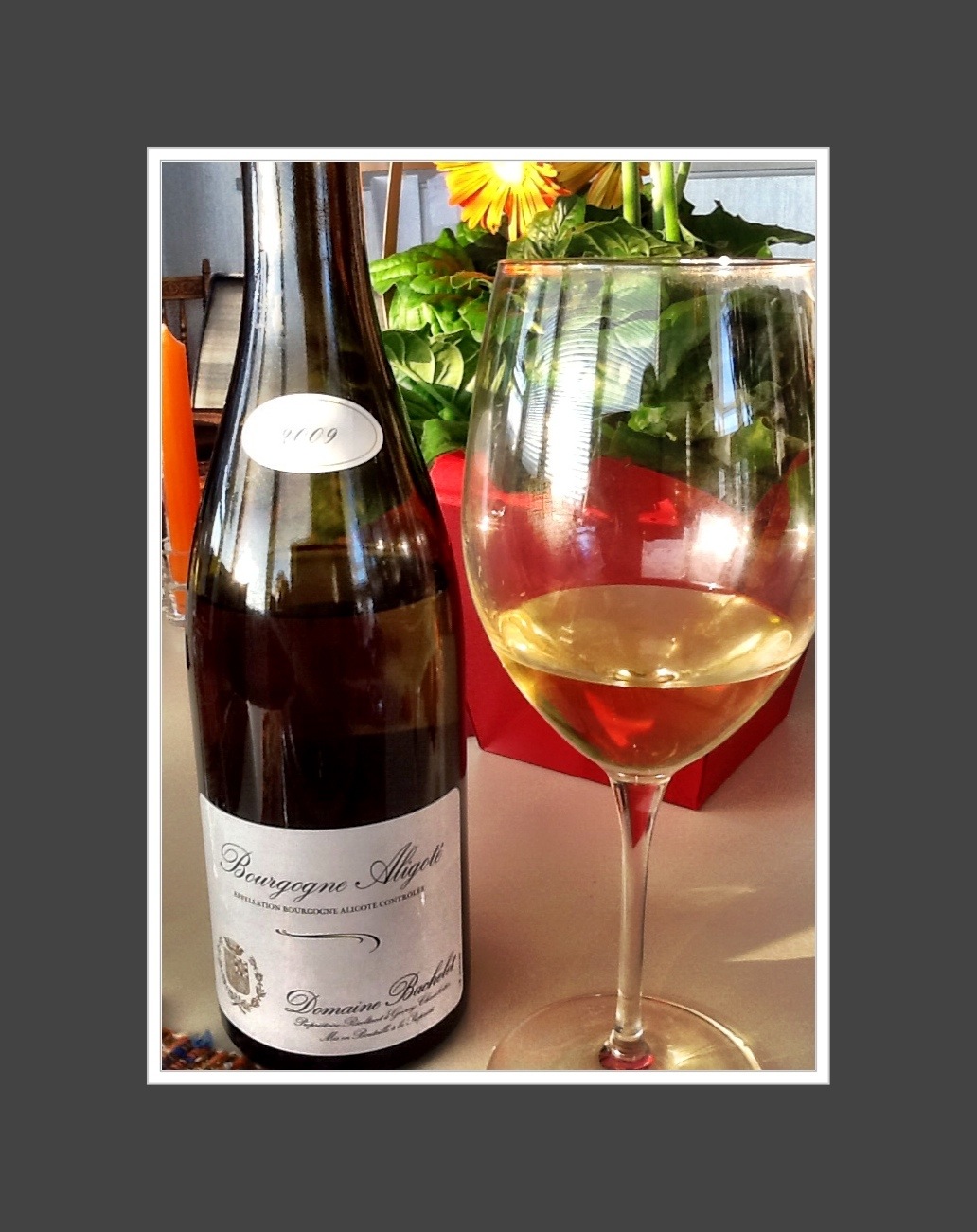
Aligote, Bourgogne Aligote AC, Domaine Denis Bachelet, Proprietere Recolante Gevrey-Chambertin, France, 2009, 11.5% abv

Always one to champion the underdog, I admit that’s why I purchased this bottle of Aligote in the first place. Around since the 17th century in France, today it comprises only 6% of total plantings in its home of Burgundy where it is largely overshadowed by the prolific and popular Chardonnay and Pinot Noir.

Bourgogne Aligote has been an Aligote-specific appellation since 1937 and only since 1998 has Bouzeron (in the Northern Cote Chalonnaise) been afforded its own appellation solely for Aligote wines. This is an AC level wine – meaning it’s the lowest of the four levels available in Burgundy.

This wine is clear and bright, pale lemon with legs. On the nose it is clean with a youthful minerality showing aromas of pear, white nectarine, lime, stone fruit, white grapes and green apple.

The palate is dry with medium minus alcohol, medium acidity, medium minus body and medium intensity. The flavour characteristics include bergamot lime, Granny Smith, mineral and wet stone, pear and a medium finish.

WSET ‘good’ wine with no bitterness on the finish and nice fruit characteristics. A longer finish, more taste intensity, complexity and higher acidity would have given it a higher rating.

20131109-142852.jpg

Posted in Aligote, France, WHITE | Leave a comment

Sokol Blosser, Pinot Noir, Big Tree Block, Dundee Hills, Willamette Valley, Oregon, 2009, 14.5% abv

With turkey time upon us, it was the right moment to pull out the Willamette Pinot Noir purchased during a August trip to that favourite AVA.

Dundee Hills is the ‘epicentre’ of Pinot Noir in Oregon and its soil and elevation are the reasons why. There was a flood about 15,000 years ago during which sediment was deposited throughout the region below the 200 foot mark. Everything above 200 ft is red lava-based Jory soil (reddish silt, clay and loam) and perfect for vine growing. The micro-climate is drier and warmer than the surrounding AVAs. Combined with the Jory soils, these factors make this part of the Willamette most desirable.

Several families including the Sokol Blossers recognized this and started planting vines over 40 years ago. I’ve had several of their wines before and tasted others at industry tastings here in Vancouver. So, this summer we were excited to see their new building and learn about all their current wine and sustainability adventures.

This Pinot Noir from their Big Tree Block was clear and bright, medium garnet with legs. On the nose it was clean with medium plus intensity and aromas of cedar, red fruit, cherry, clove, pepper and a distinct rhubarb.

The palate was dry with high alcohol, medium acidity, medium body and medium plus intensity with medium and fine-grained tannins. The flavour characteristics included baked strawberry, cedar frond, cherry, baking spices (more clove) and white pepper and the finish was medium plus.

This is a WSET ‘very good’ wine that has lovely fruit and some complexity, was well balanced and with the tannin, acidity and fruit may go a while longer (3-5).

20131109-140746.jpg

Posted in Oregon, Pinot Noir | Leave a comment