Il Cremovo, Marsala Fine DOC, Cantine Intorcia, Sicily, Italy, NV, 16% abv

Marsala is an Italian fortified wine that because of plunging quality levels and increasingly fewer markets has had great difficulty selling itself as a product worthy of purchase.

Interestingly, although wine has been part of the viticultural history of Sicily’s Trapani province since Roman times, English trader John Woodhouse is the man credited with ‘creating’ Marsala. He realized the similarity of the local wines to Maderia, Port and Sherry and in 1773 added grape spirit to the barrels he shipped to England. Ta da – a fortified wine industry eventually dominated by commercial houses was born.

Modern Marsala comes in either Oro, Ambre or Rubino and varying sweetness levels – secco (max 40 g/L residual sugar), semisecco (40-100 g/L) and a sweet dolce (over 100 g/L). There are five additional age categories as well – one year for Fine, 2 for Superiore, 4 for Superiore Riserva, 5 for Vergine and 10 for the Stravecchio version of Vergine.

This bottle of Fine Ambre Marsala is based on Cararratto grapes and was purchased just outside an extraordinarily restored Roman Emperor’s vacation villa in Sicily last year.

It is clear and bright, medium brown with legs. The colour indicates that Mosto Cotto was used to create the impression of a cask-aged wine by deepening the colour with the concentrate.

On the nose, it’s clean with medium plus intense aromas of cola, sarsaparilla, burnt brown sugar, caramel, a bit of coffee and clover honey.

The palate is medium sweet with medium plus acidity, medium body, medium fortification and medium plus flavour characteristics of strong cola, root beer, brown sugar, toffee and cookie dough (imagine butter and vanilla combined and ready to bake cookies). The finish is medium and offered the impression of orange zest.

The surprisingly moderately high acidity and medium (not viscous) body was refreshing and well balanced with the flavours and concentration.

WSET ‘good’ fortified wine – enjoy as often as possible with tiramisu or sweet biscotti. Cin cin!

20140119-171605.jpg

Posted in Catarratto, FORTIFIED WINE, Italy, Marsala, WHITE | Leave a comment

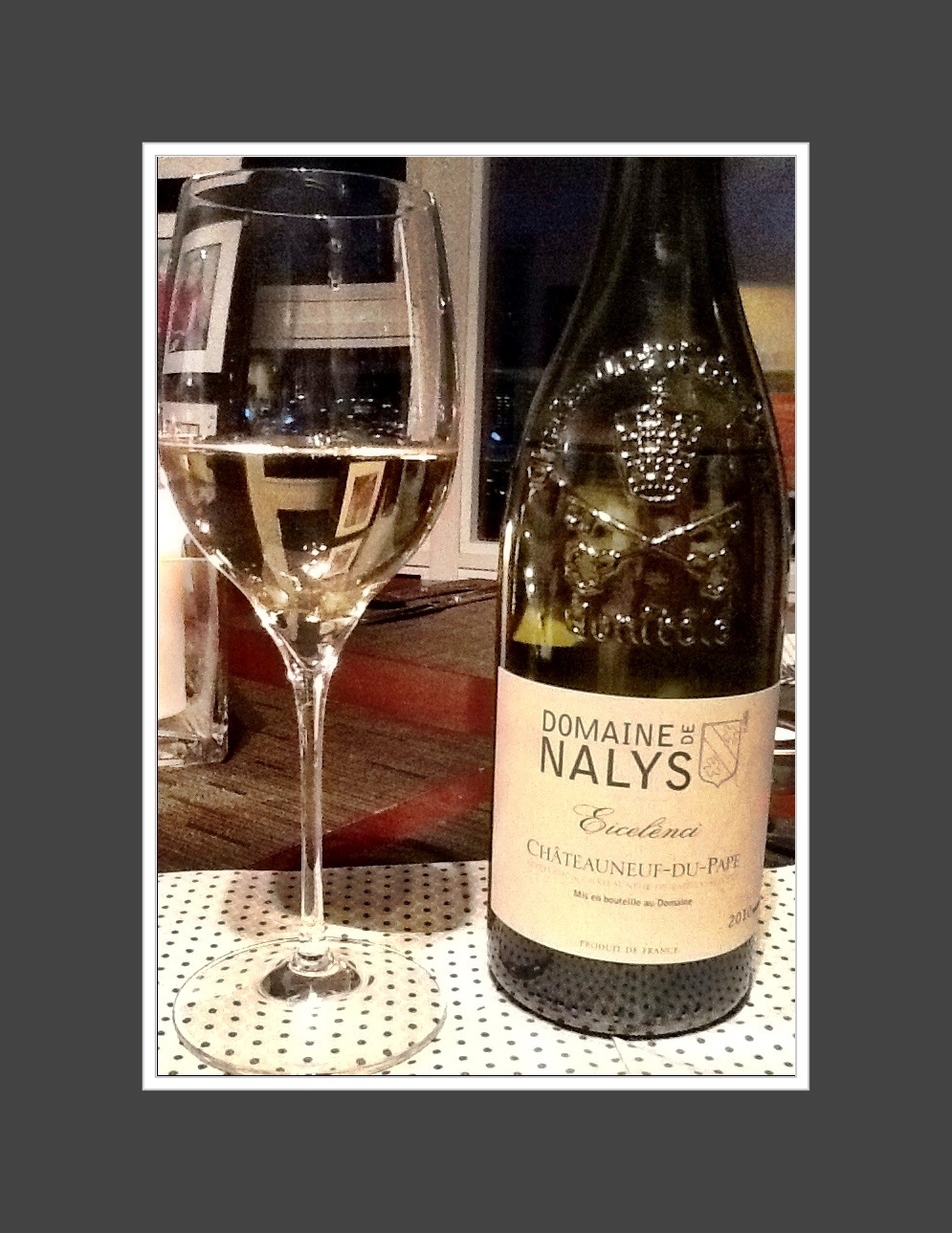
Domaine de Nalys, Eicelenci, Chateauneuf-du-Pape AC, France, 2010, 14% abv

Ah, the Rhone Valley. After Bordeaux it’s France’s second most prolific region where 95% of what is produced is red.

There has been wine in this region since the first century BC. Once the Gauls discovered it was possible to cultivate vines, there was not much to hold them back – they were making wine in the North at Hermitages by 71 BC and Pliny the Elder wrote about their excellent quality. Theories abound as to where the two most prolific grapes of the region originated from – most believing the Phoenicians brought Syrah with them from Persia and that Viogner came from the Dalmatian Coast.

Fast forward to 1309 when the Southern Rhone Valley area that we now know as Chateauneuf-du-Pape (CdP) was ‘discovered’ by Pope Clement V. The name of this region honours a new Chateau built by Pope John XXII when the papal court lived at Avignon. While it was destroyed in a fire after WW2, the fame the region acquired for its wines has endured.

CdP was the very first French appellation, established in 1923 by Baron Le Roy to try and rebuild the vineyards following the devastation wreaked first by phylloxera and then by WWI. An astonishing 13 varieties of grapes are allowed in CdP wines. Most are red and focus on using Grenache, Syrah, Mourvedre and Cinsault along with a mix of others, while white CdPs are relatively rare (only 1/14 bottles) and use Grenache Blanc, Clairette, Picardan, Bourboulenc, Picpoul and Rousanne.

The white Nalys is a blend of whites with a majority of Rousanne. Hand picked, there’s a note on the bottle warning about the possibility of tartrate crystals because the wine was not cold-stabilized, but I see none.

Clear and bright, medium gold with light legs, the nose is clean and developing with medium plus aromas of honey, minerals, dried herbs and stone fruit.

The palate is dry with medium plus acidity, medium plus verging on full body and medium plus alcohol. The medium plus flavour characteristics include flowers, herbal tea, almond, melon, pear, white peach and creamy honey. The wine has a lovely creamy mouthfeel and a medium plus finish.

WSET ‘very good’ and beautifully aromatic with a growing gamey quality to complement the fruit, herbed tea character and acidity. Complex and balanced; cellar it if you can for the next 5 years. We enjoyed it with appetizers and it went fabulously with the herbed cream cheese and smoked BC salmon.

20140112-110154.jpg

Posted in France, Rousanne, WHITE | Leave a comment

Marie de Beauregard, Saget de Perriere Estate, Vouvray AC, Loire Valley, France, 2012, 12% abv, US$16.99

The Loire Valley’s Vouvray AC is one of the hallmark appellations for the Chenin Blanc grape. This is the most important white wine appellation in Touraine and while it is acceptable to include some Arbois in your whites here, for the most part it’s all Chenin Blanc, all the time.

Wine has been produced in this region since the Middle Ages and today’s vintners owe a lot to past eras of monks and monasteries – as well as to the Dutch – all of whom helped develop viniculture here significantly.

The wine cellars of the region are carved out of tuffeau, a sedimentary rock that has formed over time to be a chalky limestone perfect for building blocks and creating storage cellars for wine and mushrooms. Some of the most beautiful public buildings in the area are built from the excavated limestone blocks.

The AC’s porous tuffeau soils are blended with clay and gravel and this makes them excellent for grape growing; some of the best expressions of Chenin Blanc can come from here, although there is a risk of vintage variation in this northern climate.

Vouvray is where the maritime climate meets the continental in the Loire Valley and the harvest here is usually amongst the last in France; it can last well into November and this is often exacerbated by the fact that Chenin Blanc buds early but also ripens extremely late.

In cooler years, high acidity can overwhelm the fruit and cause the wines to fail to exhibit unique Chenin Blanc flavours of stone fruit, honey and straw. Climate change, however, is making vintage variation less of a risk. This grape is capable of producing all types of wines from dry to lusciously sweet.

In this case, the wine is 100% Chenin Blanc and of the Saget la Perriere Estate which has been family-owned for 8 generations. It’s clear and bright, pale gold with legs.

The nose is youthful and clean with medium intense aromas of wet rocks, honey, white blossoms and stone fruit. The palate is medium sweet with high acidity, medium alcohol, medium plus body and medium plus intense flavours of light pink grapefruit, ripe pear, apricots, honeysuckle blossom, almond and strong minerality. The finish is medium plus.

An undeniable deal at only $16.99, it is a WSET ‘very good’ wine – the 2009 was rated 91 and the 2010 earned 92 on Wine Spectator. Drink this with spicy Asian/Thai food. I enjoyed it with veggie stirfry with garlic and soy sauce.

20140111-153741.jpg

Posted in Chenin Blanc, France, WHITE | 5 Comments

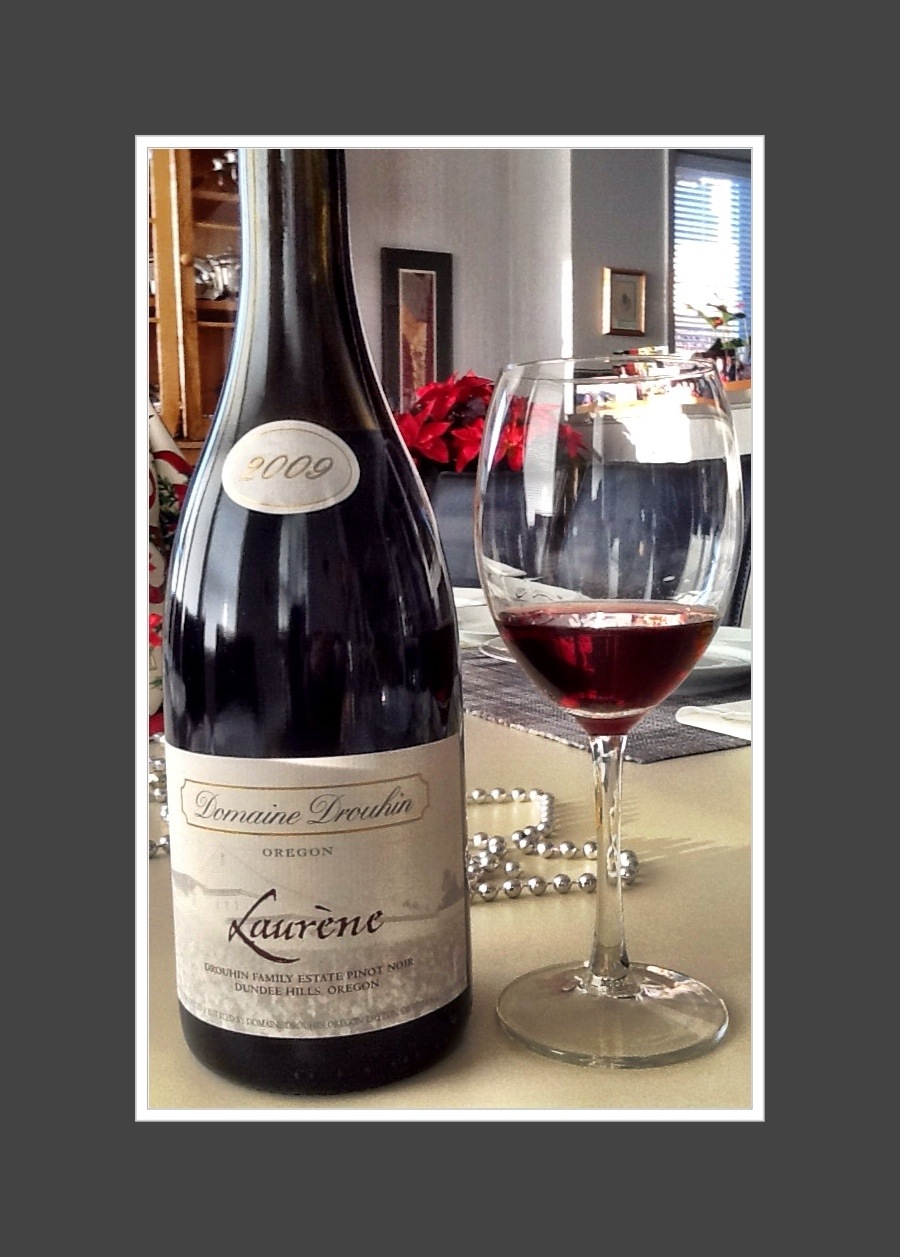
Domaine Drouhin, Laurene, Pinot Noir, Dundee Hills, Willamette Valley, Oregon, 14.4% abv, 2009

We visited the Domaine Drouhin Family Estate during an end of summer trip in 2013. Yes, they are ‘those’ Drouhins – the famed negociant family of Burgundy. Daughter Veronique Drouhin-Boss is the manager here and spends her time between France and Oregon.

Land is becoming almost impossible to purchase in Burgundy and it’s becoming moreso in the Willamette, so it’s not surprising that in December 2013, the Drouhin Estate doubled its holdings by buying “Roserock”, 122 acres planted to Pinot Noir with a tiny bit of Chardonnay 25 miles to the south in the Eola-Amity Hills AVA. Although they’re located southward, the hills have some altitude and these grapes will ripen slightly slower than those at the Dundee Hills Estate.

Roserock has a good reputation amongst the premium wineries in the Willamette and many have purchased grapes from the blocks in the past (Soter, Penner-Ash and Argyle, for example). As Veronique Drouhin-Boss puts it, they will likely vinify the harvest from each estate separately for now and have an Estate grown and bottled example for each property, “… just as we have a Gevrey-Chambertin in Burgundy to go with our Pommard”.

This wine is named for her eldest daughter, Laurene and since we have one of those too (a daughter named Lauren, but alas not a winery), it was an easy purchase to make.

This wine is clear and bright, medium garnet with legs. On the nose it’s a clean, subtle medium bouquet of soft cherry, raspberry, creamy vanilla and wood spice.

The palate is dry but with high acidity and medium plus silky smooth tannins. The body is medium and alcohol high, but not out of balance at all with the wine. The medium flavour characteristics include more cherry, raspberry and pomegranate along with vanilla and slight anise, clove, nutmeg and ginger. A long finish accompanies this wine.

WSET ‘very good’ – drinking beautifully now but may cellar another 3 years.

20140109-215855.jpg

Posted in Oregon, Pinot Noir, RED | Leave a comment

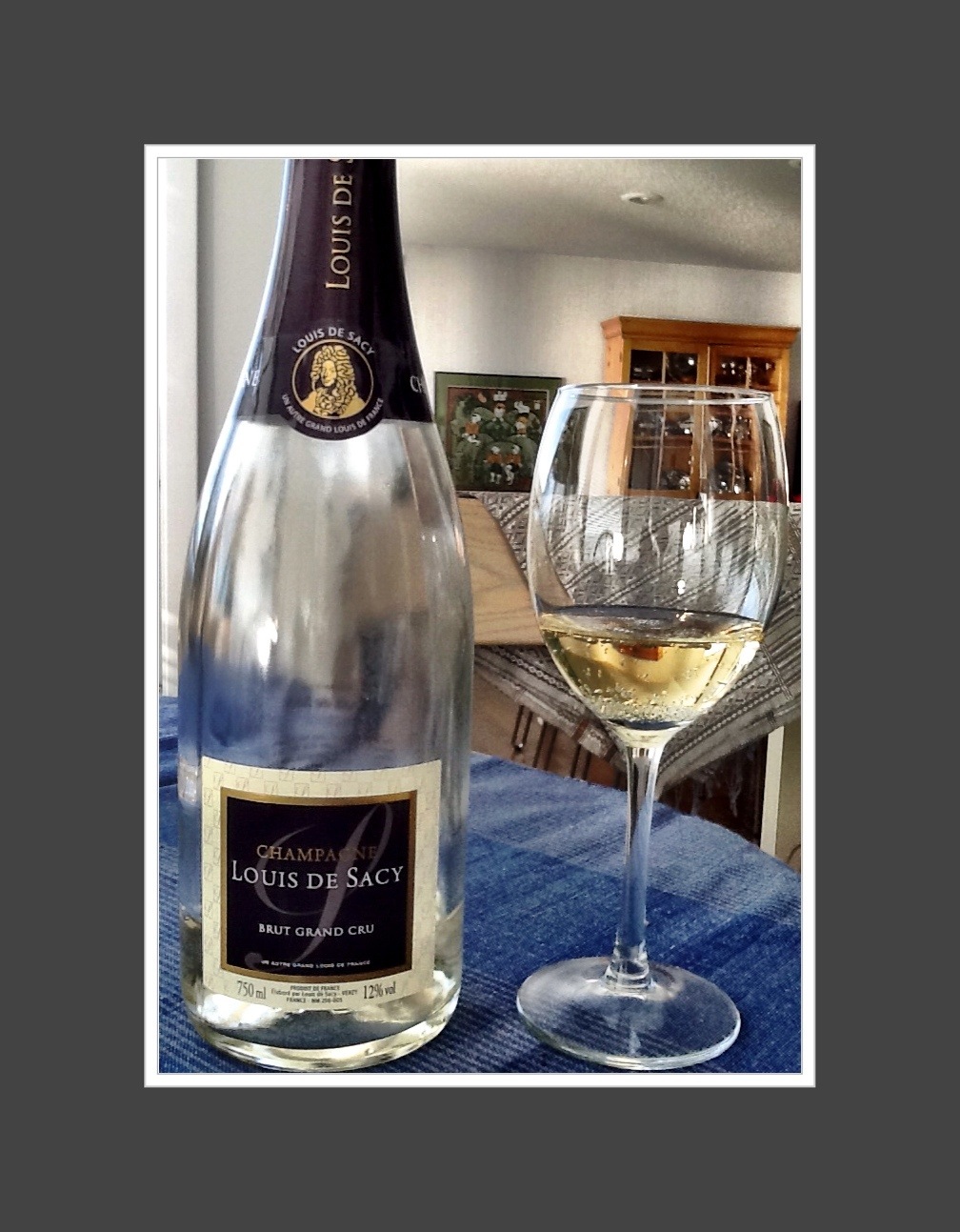
Louis De Sacy, Champagne, Verzy, Montagne de Reims, Brut Grand Cru, NM (Negociant Manipulant), NV 12% abv, C$75

Documents going back to 1633 prove that these Verzy vineyards have been in the Sacy family for about 12 generations. We met Alain Sacy’s daughter during a recent promotional trip to Vancouver and purchased a bottle of this champagne for a toast to 2014 celebrated with family.

Today the family proclaims themselves as ‘grower and producer’ on the back label of their product. Determined to move into the North American market, the famille Sacy has made a concerted effort to travel to major cities for personalized tastings and to capitalize (quite rightly!) on the growing interest in champagnes produced by ‘the little guys’.

This wine, comprised of 60% Pinot Noir, 35% Chardonnay and 5% Pinot Meunier from Grand Cru vineyards is clear and bright, pale gold with long-lasting mousse. The nose is clean and developing with medium plus intense aromas of brioche and toasty yeast, ripe red apples and creme caramel.

The palate is dry with medium plus acidity, medium alcohol and a creamy mousse. The medium plus flavour characteristics include Macintosh apple, pastry, toffee, soft pomelo citrus and a long finish.

This is WSET ‘very good’ champagne – can hold for 3-5 years more with the fruit and acidity to support its developing caramel and apple danish flavours and aromas.

20140105-223714.jpg

Posted in Champagne, Chardonnay, France, Pinot Meunier, Pinot Noir | Leave a comment

Torbreck, Woodcutter’s Shiraz, Barossa Valley, South Australia, 2011, 14.5% abv

Torbreck is located in South Australia’s Barossa Valley, ‘the‘ Aussie wine state producing about 50% of the country’s crush (down from 75% in the 1940-50s). It dominates production and output although it’s an incredibly small portion of land. Most of its vines are concentrated in the small south western corner of the region near Adelaide.

Barossa Valley is one of the most famous parts of South Australia. Just one hour north of Adelaide, it competes with the Hunter Valley (near Sydney) as one of the best known Australian wine regions.

The area was originally settled by immigrants with Germanic roots and this is evident in place names and the presence of the Lutheran church. While Riesling was planted originally, it’s been replaced with Chardonnay and Semillon. For red grapes though, the warm valley floor has proven best reserved for Shiraz.

Water availability and drought are perennial issues in the Barossa Valley, but the dry land irrigation plantings have produced incredibly complex wines. Shiraz (aka Syrah) is the ‘king’ of Australia’s red grapes. It used to be treated as very lowly compared to Cabernet Sauvignon, but over time the Australians have come to realize its importance and the unique wines it creates Down Under, some of which are now viewed as international icons and compared freely and favourably to world famous Rhone Valley products.

This ‘Woodcutter’s Shiraz’ is clear and bright, a deep opaque purple with legs.
On the nose, it’s clean and developed with medium plus intense aromas of overly ripe blackberries, Macintosh apples, sous bois, light liquorice, wet leaves and leather.

The palate is dry with medium acidity and ripe, medium plus tannins, medium plus body and medium plus intense flavour characteristics of deeply ripe red and purple fruit (more apple, damson plum and cassis), star anise, leather saddle, wet leaves and light tar. Over the course of some hours as it opened up, the undergrowth grew stronger. Complemented by a long finish.

Balanced fresh fruit with acidity and perfectly ripe tannins. The long finish and ability for this to age for another 3-5 years give it a WSET ‘very good’ rating.

20140105-221035.jpg

Posted in Australia, RED, Shiraz / Syrah | Leave a comment

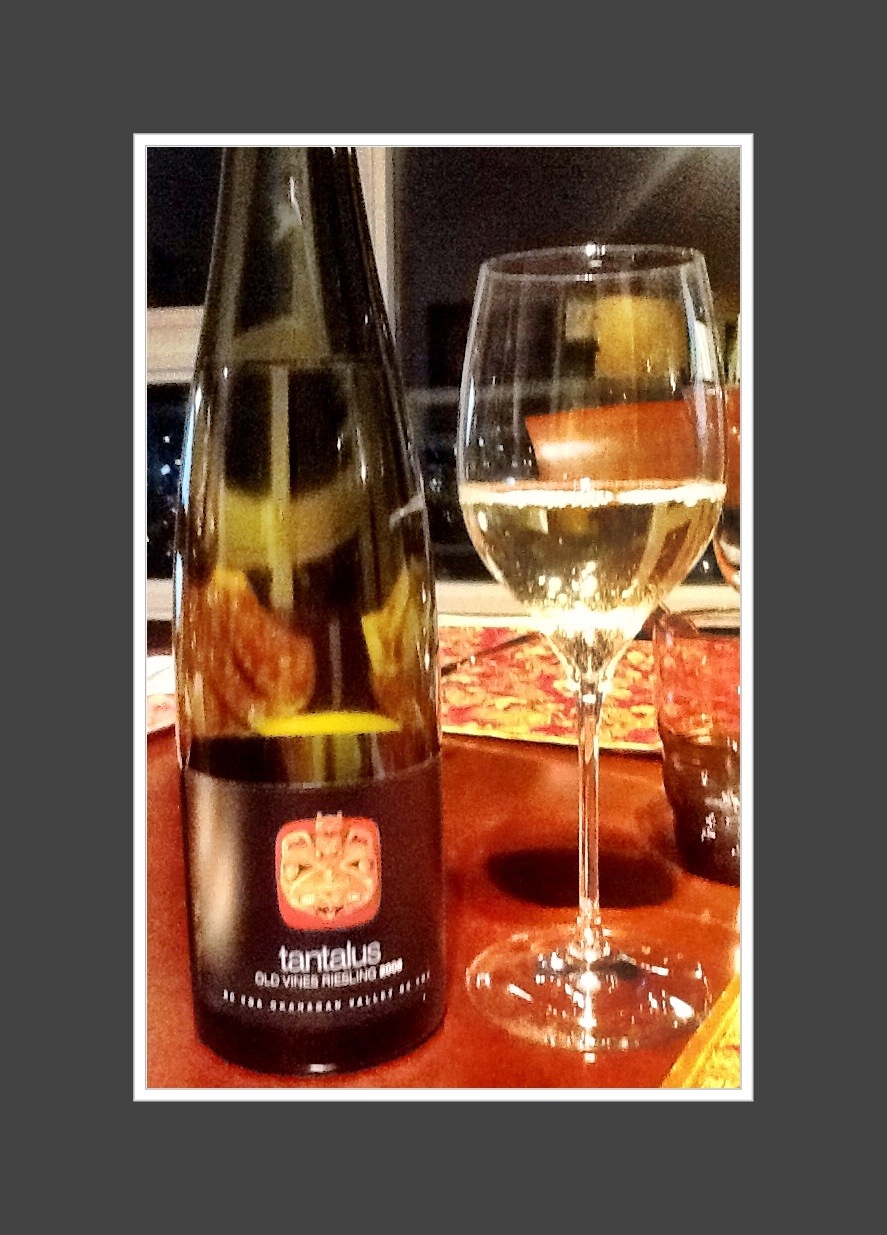
Old Vines Riesling, Tantalus, Okanagan Valley VQA, Kelowna, BC, 2008, 12.1% abv., C$30 (Tasted Dec. 2013, Jan. 2015, and April 2021)

Riesling – such a maligned grape and so often misunderstood.  There is no valid reason for this.  It’s the most versatile varietal around – a great grape of Germany, as well as the Alsace, and first class specimens are produced around the world – including this one in Canada’s westernmost province, British Columbia.

In November 2012, Jancis Robinson tasted this wine and wrote about as one of the top Canadian whites of that year.

I started with 6 bottles of this and have given away 3, but stored the rest to do comparisons over the next decade.

The 2008 Old Vines Riesling is a clear and bright, pale gold wine with light legs. On the nose, it’s gorgeous, developing and clean with pronounced intensity of wet stones, kerosene, pear, white blossom, lime and lemon zest.  A hint of honey envelops it.

The palate is pronounced and bone dry with rapier acidity and medium minus alcohol, but the lime, lime and lime.  Did I mention lime? There was loads of citrus – lemon zest and bergamot – with white peach and Anjou pear as it warmed in our glasses.  The petrol was complimented by a long finish.

This WSET Outstanding wine will last for years – if you can hide and cellar it.  The high acidity and intense fruit will enable this pronounced but balanced beauty to age for a solid decade while the TDN (tri-methyl-dihydronapthalene that offers the petrol note), will continue to grow over time.

Tasting note – January 17, 2015 (7 years)
Still a pale gold tone, the wine continues to be intense on the nose with deep kerosene, lemon, lime blossom and minerals.  The palate is dry and delicate but still pronounced with the high acidity and flavours of bergamot and lime blossom, Meyer lemon and diesel.  This time I noticed some green notes – green pineapple and some lemon grass in place of much of the intense lime.  The finish is still long.

Tasting note – April 25, 2021 (13 years)

Now a medium gold on the eyes, the nose is replete with wet mountain river stones with bushels of lime and kerosene.  The continued intensity of the citrus and rocks is surprising, but perhaps shouldn’t be.  The super dry palate still shows incredibly sharp acidity which simply confirms that I could have waited many more years to open this, my last bottle.  Lemon zest, key lime and tart pineapple nestle with sharp rocks and a minerality that seems to have no end.  If you are still holding any of this outstanding specimen, congratulations.  Wait another 5-7 years and let me know.  Or better yet, call me to help!

20131229-122202.jpg

Posted in BC, Riesling, WHITE | Tagged , , , , , | Leave a comment

Mission Hill Family Estate, Compendium, Okanagan Valley, 2008, 14% abv, $50

At 43% Cabernet Sauvignon, 28% Merlot, 26% Cabernet Franc, 3% Petit Verdot, this classic Bordeaux blend or Meritage (rhymes with ‘heritage’) has been hand harvested and sorted and gravity fed into small French oak fermenting barrels.

After fermenting for four weeks, the free run wine and some lightly basket pressed wine was aged separately in 100% French oak barrels for 15 months.

The Cabernet Sauvignon grape that forms the backbone of this wine is one of the most renowned, but is actually a relative ‘newcomer’. It’s the offspring of Cabernet Franc and Sauvignon Blanc and didn’t really impact Bordeaux’s vineyards until the end of the 1700s when it was introduced to the Medoc by Baron Hector de Brane, once the owner of Ch. Mouton and his neighbour Armand d’Armailhacq. Prior to that time much of the Medoc had been a swamp, but the Dutch drained it and subsequently vines were planted there.

Rivalled only by Merlot for number of red grape plantings around the world, its flavours and aromas (marked most by blackcurrant and green pepper – just like each of its parents) do best in gravelly soils and produce famous examples in Medoc, Pessac-Leognan, Napa, Sonoma, the Santa Cruz Mountains, Bolgheri, Coonawarra, Margaret River and Penedes.

Even in what is considered its French homeland on Bordeaux’s Left Bank, Cabernet Sauvignon is difficult to ripen and that’s why a mixture is planted alongside it – including Merlot, Cabernet Franc, Petit Verdot and often Malbec (aka Cot) and/or Carmenere. After all, if your Cabernet Sauvignon doesn’t ripen as well as it should, one can always rely on a combination of the other grapes to pull through and the blend can take on a more Right Bank (Merlot based) feel if necessary.

While Cabernet Sauvignon supplies the wine’s framework, colour and tannin, Merlot offer plumpness, fruit and is early ripening (compared to much later for Cabernet Sauvignon). Petit Verdot lends spice and ripens even later, while Cabernet Franc supplies blackcurrant flavours and perfume to the wine.

Clear and bright, deep ruby red with legs showing, this wine has developed medium plus aromas of cassis, blackberry, liquorice, dry leaf, baking spice and vanilla.

The palate is dry with medium plus alcohol and medium plus acidity. The tannins are medium plus and velvety with the slightest hint of grip. With medium plus body, the medium plus flavour characteristics are reminiscent of ripe blackberry, cassis and dark Damson plum, leather, tar star of anise, black pepper, clove and vanillin.

This is a ‘very good’ WSET wine. The fruit is bright, full and refreshing and in balance with the velvety tannins that will enable this wine to age a good 5-8 years more. Enjoy as we did with bbq steak, red rice and quinoa and heirloom tomatoes with buffalo mozzarella, fresh pressed extra virgin olive oil and basil.

20131229-113950.jpg

Posted in BC, Cabernet Franc, Cabernet Sauvignon / Blends, Meritage, Merlot, Petit Verdot, RED | Leave a comment

Georges Duboeuf, Beaujolais Nouveau AC, Beaujolais, France, 2013, 12%, US $8.99

Beaujolais Nouveau is a style that generates a lot of cash flow for producers and negociants immediately following the harvest – after all this is wine made in the fall and meant to be consumed immediately. It’s literally a baby wine – having just been picked, fermented and bottled.

Since its real marketing push following WW2, a tradition has emerged and many rush to purchase it by the third Thursday in November when it’s available for sale (originally it was available by December 15, then November 15). The Beaujolais Nouveau phenomenon hit its peak in 1988.

Made to be fresh, fruity and ‘gouleyant’ or ‘gulpable’ when served cool from the cellar (or your handy fridge), the Beaujolais Nouveau wines from the Appellation Controllee (such as this one), Beaujolais Superieur and Beaujolais Villages are all made from the Gamay Noir a Jus Blanc grape that constitutes 98% of those grown throughout the region. This grape is different from the Gamay Tenturier variety which has red flesh. This percentage makes Beaujolais France’s most monocepagiste (single variety) region. The other 2% is Chardonnay, Aligote which is allowed until 2024 and a little Pinot Noir.

This wine is clear and bright, deep purple and has legs. On the nose it’s clean and youthful with medium plus aromas of pear drop, kirsch cherry and a whiff of blackberry juice. It smells distinctly new – like homemade wine.

The palate is dry with medium acidity and medium minus alcohol, light grainy and slightly green tannins and medium minus body. The medium flavour intensity shows plenty of fresh fruit characteristics including blackberry juice, cranberry, cherry and plum.

Drink now and don’t hold – Beaujolais Nouveau is not mean to be aged unless it’s from one of a few Crus. This wine is fresh, fruity, simple – a lower level WSET ‘good’ (It earned an 84 on Wine Spectator). Truthfully, I did not enjoy it or even get through the first glass. I fully recognize this is a specific style that I am simply not accustomed to. Given that, I decided to cut my losses and move instead onto a Beaujolais Cru wine to accompany Christmas dinner.

20131226-104545.jpg

Posted in France, Gamay, RED | Leave a comment

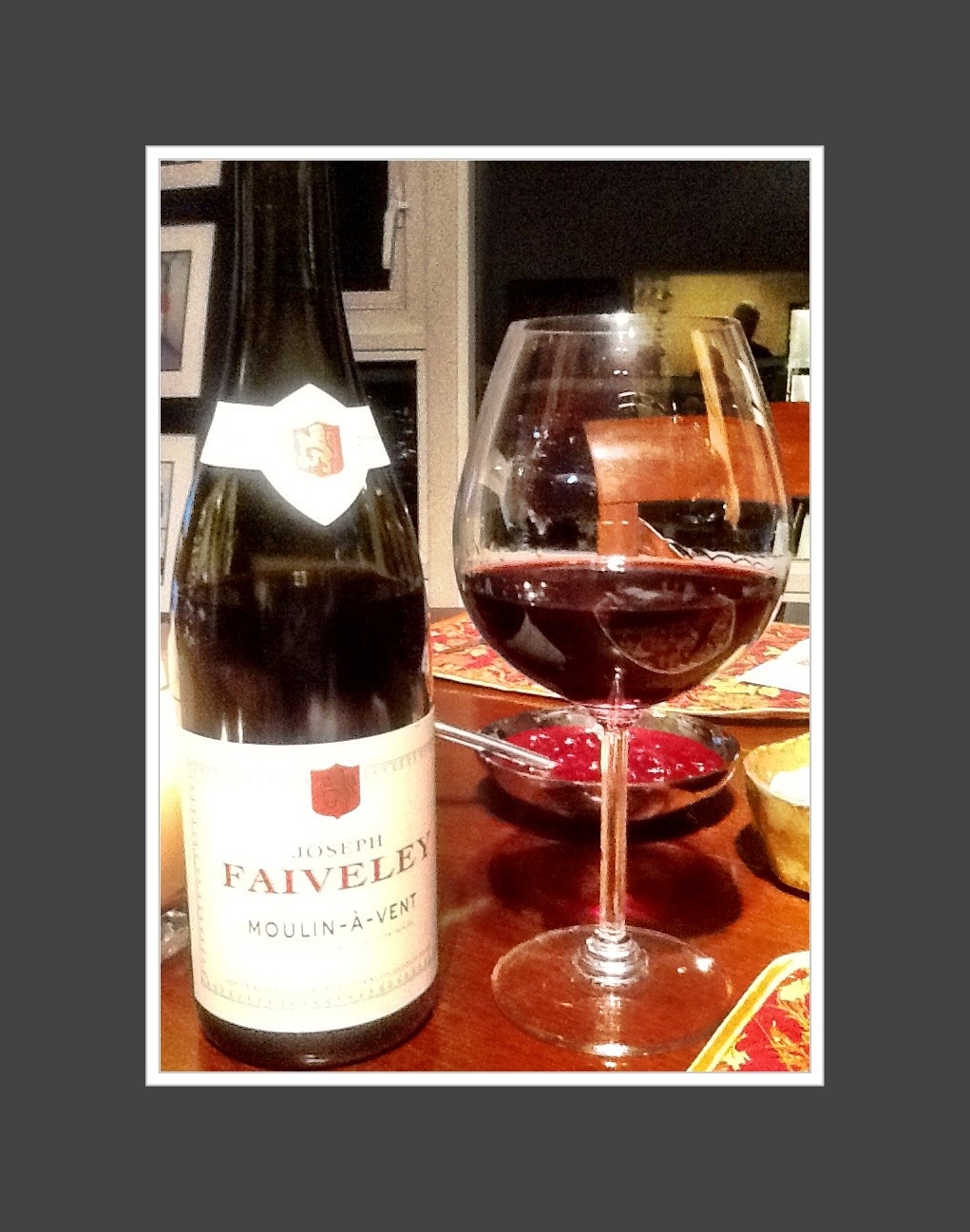
Joseph Faiveley, Moulin-a-Vent AC, France, 2009, 13.5% abv, C$34.95

Now we’re talking turkey – Christmas turkey that is…rubbed and roasted with freshly herbed butter, just-picked sage, rosemary and thyme and served with homemade stuffing and cranberry sauce.

Made from the Gamay Noir a Jus Blanc grape and hailing from one of the best known Beaujolais Crus, this Moulin-a-Vent wine hit the Christmas spot.

About 25% of Beaujolais wine production emerges from the hilly north and if it’s from just one village (or commune) it can add the village name onto the name of the wine (this one, alas, is not). This wine is from the Moulin-a-Vent (‘Windmill’) Cru and as such can be aged for up to 10 years. Most Beaujolais Crus can go for 3, but those from Morgon, Moulin-a-Vent, Chenas and Julienas are able to age much longer and often acquire Pinot Noir-type characteristics as time passes.

Beaujolais wines are known for several characteristics, one being the manner in which they’re vinified – carbonic or semi-carbonic maceration. For this process, whole bunches of grapes go into sealed cement or stainless steel fermentation vessels where the bottom third of the grapes are crushed by the weight of the top ones.

As the bottom grapes convert their sugars into ethanol, CO2 is given off and it bathes the upper layers which undergo intracellular fermentation. This is unique and helps produce pear drop, kirsch and banana aromas that are common in Beaujolais wines.

This fermentation method takes place for 4 days with Beaujolais Nouveau and can last up to 10 days for Cru wines. The pommace is pressed and that wine is included in the final blend (this is also unlike other regions). If the wine is made semi-carbonically however, it will be fermented in this style for 1-2 days and then vinified in a normal manner.

An increasing amount of these Beaujolais wines are produced more as they would be in Burgundy however (normal fermentation), especially in Northern Beaujolais where this wine in particular is produced by the negociant company Joseph Faiveley.

This wine hails from a good vintage and is clear and bright, medium plus garnet and has legs. It’s clean with medium plus aromas of raspberry and pomegranate, black cherry, plum, some dusty leaf and is developed.

On the palate it’s dry with medium alcohol, medium body, medium grainy tannins and medium plus acidity. The medium intensity flavours of black cherry and raspberry, plums, licorice and dried leaf offer a medium finish.

A WSET ‘very good’ wine – well balanced alcohol and fruit with just there silky tannins and a perfect accompaniment to Christmas turkey dinner with cranberry sauce. Drinking beautifully now, but could last another year or two. Enjoy…

20131226-114044.jpg

Posted in France, Gamay, RED | Leave a comment