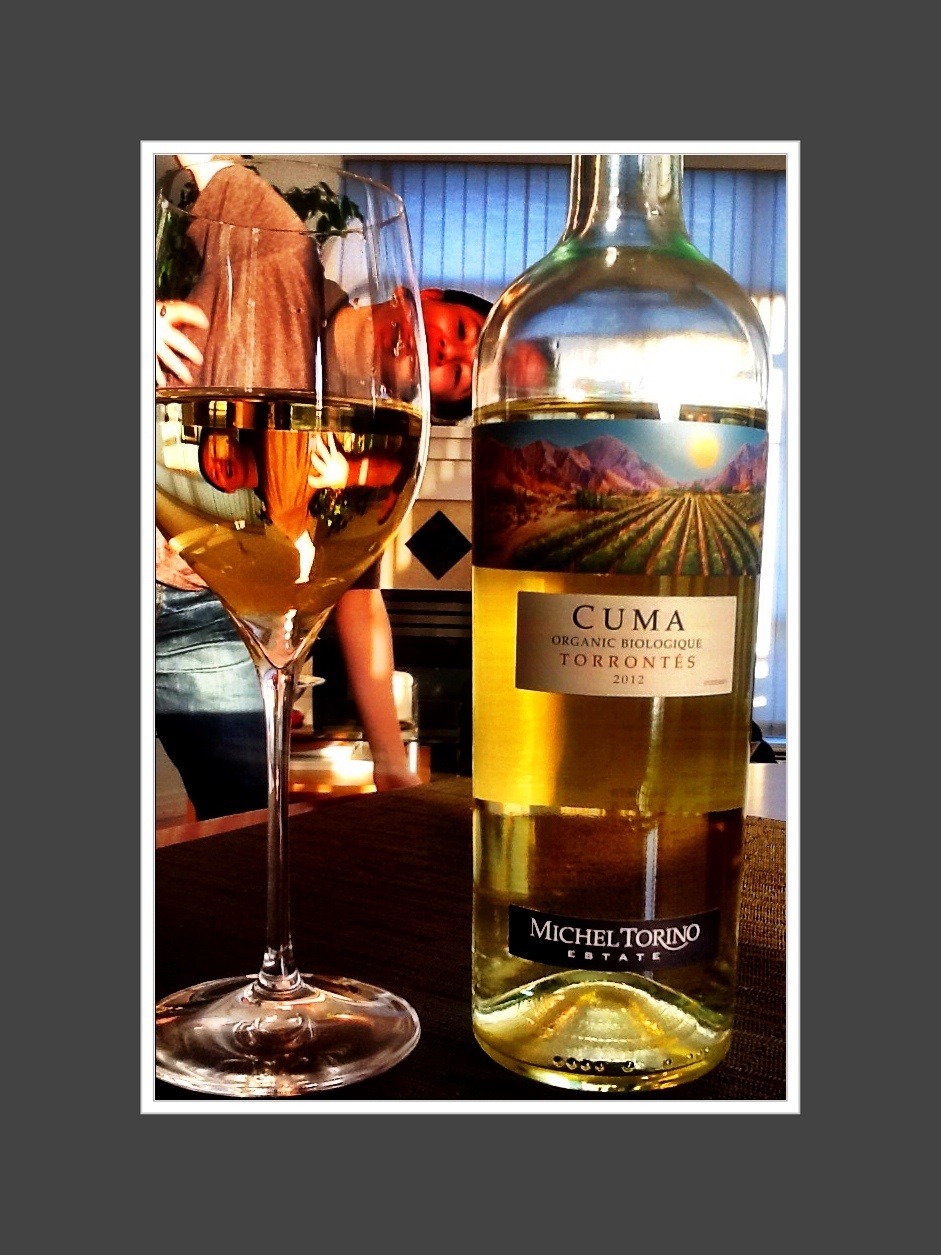
Cuma, Torrontes, Michel Torino Estate, Cafayete, Argentina, 13.5% abv, C$14

Spring has sprung – and here’s a grape variety that will encourage you to break out of those winter cobwebs and try something a little floral, fragrant and terribly tasty.

This is a dry white wine made from the Torrontes grape, Argentina’s most widely planted white variety which is about 10% of plantings but produces about 20% of the white wines (it’s used as a blender in many).

There are 3 versions of Torrontes – Sanjuanino, Riojana and Mendocino. The first two have been proven by DNA profiling and ampleography to be a cross between Criolla Chica or Mission and Muscat d’Alexandria. Most Torrontes are the Riojana version and are labeled simply as ‘Torrontes’.

It was originally believed that Torrontes is the same as the version grown in Spain, but recent evidence suggests there’s no such link.

The best Torrontes comes from Argentina’s Cafayete region, located in the far north east and at only 26 degrees south latitude, is renowned as being one of the premium growing areas. It’s extremely close to the equator, but it’s windswept and cool here and consequently it’s possible to grow grapes because of altitude.

These are some of the highest vineyards in the world – at 1700 or even 1800 m above sea level, the heat found at lower elevations is mitigated by the coolness of the mountain air. They’re irrigated with fresh mountain water and when yields are kept lower, the wines can be very delicious. Torrontes wines are vinified in stainless steel and not treated with oak.

This wine is clear and bright, medium lemon with legs. The nose is clean and youthful with pronounced intensity and aromas of flower blossoms, honeysuckle, stone fruit, pomelo and citrus zest.

The palate is dry with high acidity, medium alcohol and body, medium plus intensity and flavours of yellow grapefruit, lime rind, white peach and nectarine, light honey, white blossoms and a medium plus finish with slight bitterness on the back end.

This wine is a solid WSET ‘Good’. Good acidity and fruit concentration combine to produce this refreshing and fruity wine. Drink now, don’t hold as they’re not meant to age. A great alternative to the same old, same old Sauvignon Blancs, Pinot Grigios and Chardonnays.

Go for it. Be bold. Yes, you can. Try some Torrontes.

20140313-192924.jpg

Posted in Argentina, Latin America, Torrontes | Leave a comment

Wapiti Cellars, Viognier, Naramata Bench, Okanagan Valley, BC, 2011, 12.5% abv

Viognier – who would have thunk?

Fun facts
It’s either a half sibling or a grandparent to Syrah.
It’s related to Freisia, which means it’s also distantly related to Nebbiolo.
Fifty years ago, there were only 14 ha planted of this variety in Condrieu AC and at Chateau Grillet in Northern Rhone’s Cote Rotie. However, now it’s literally planted everywhere in the world.
Most is planted in France (4300 ha), but there is actually 93 ha in Virginia where it’s the state grape. Seriously.

Heady, aromatic and fuller bodied, this white variety’s homeland is the Northern Rhone valley. It’s early budding and risks spring frosts but is mid-ripening. It has long and compact bunches with small, thick-skinned berries that offer it good resistance from diseases such as botrytis (bunch rot).

In addition to making 100% varietal wines, it may also be added to and co-fermented with Syrah (5-20%) for the purpose of stabilizing colour and adding perfume. In France, this is legal in Cotes du Rhone, Cotes du Rhone Villages and Lirac (but it’s not allowed in Chateauneuf du Pape, St. Joseph, Hermitage or Crozes Hermitages). Apparently there’s no real reason for this – the appellations probably just followed the status quo of the day when they decided not to allow it.

This particular example is from British Columbia – where according to last count there is about 67 ha planted.

It is clear and bright, pale lemon yellow with legs. On the nose it’s clean and youthful with medium intensity, and aromas of stone fruit, light wood, honey and minerality.

The palate is dry with medium acidity, medium alcohol, medium plus body and medium plus intensity, flavours of peach, nectarine and ripe apricot, light lemon balm, wet rocks, acacia, honeysuckle and almond. The finish is medium plus.

This is WSET ‘Very Good’ wine – nicely balanced and concentrated fruit and acidity, lovely length and mouthfeel. So carefully put together and with the deftness of wood treatment (aged for 7 months in second fill and neutral French oak barriques).

Posted in BC, OTHER, Viognier, WHITE | Leave a comment

Rabl, Gruner Veltliner, Kaferberg, Kamptal DAC Reserve, Langenlois, Austria, 13.5% abv, 2010, C$40

This is awesome stuff. Fully realizing I needed to try some quality Gruner Veltliner because I had no idea what it actually tastes like and it is bound to come up on an exam, I went to purchase some recently.

Gruner Veltliner, or ‘Gru-Ve’ as pronounciation-challenged English speakers often refer to it, is a white variety that is Austria’s go-to vine and wine. About 2/3rds of Austria’s varieties are white and Gruner Veltliner comprises about 30% of all plantings – and even more, 2/3rds, of those planted in the NE Neiderosterrich region.

It’s the offspring of Traminer and St. Georgen, has average ripening and is quite vigorous if not managed appropriately. It grows well in loess soils and enjoys a wet environment.

Austrians make all levels of Pradikat wines with it from dry and still Spatlese to the full sweet Trockenbeerenauslese. Much of the lower end wines are enjoyed at the Heurige Inns located in and around Vienna.

Most Gruner Veltliners never see oak and instead are vinified in stainless steel. When their yields are well-managed, their spicy, pickle-like and limey character shows through (and no, that was not a slag against my English friends).

In addition to Austria, Gru-Ve is planted in the Czech Republic, Hungary and the Central Otago Valley on New Zealand’s South Island (of all places).

The Rabl is clear and bright, pale gold and has legs. On the nose it’s clean and youthful with medium plus intensity, aromas of wet pebbles, wet wool, citrus, nectarine, a little dry herb and black pepper.

The palate is dry with high acidity, medium plus body and medium plus alcohol. The medium plus intensity has flavours including cracked pepper and bergamot lime with lemon balm, lemon grass and gherkin juice. There is a softly rounded peach character that adds lovely mouthfeel.

With its long and lingering, peppery finish, this wine is WSET ‘Very Good’. Its high acidity, concentrated fruit and creamy mouthfeel make it a characterful and excellent example of Gru-Ve. Drink now or hold for 5 years.

20140306-214725.jpg

20140306-214732.jpg

Posted in Austria, Gruner Veltliner (Gru-Ve), WHITE | Leave a comment

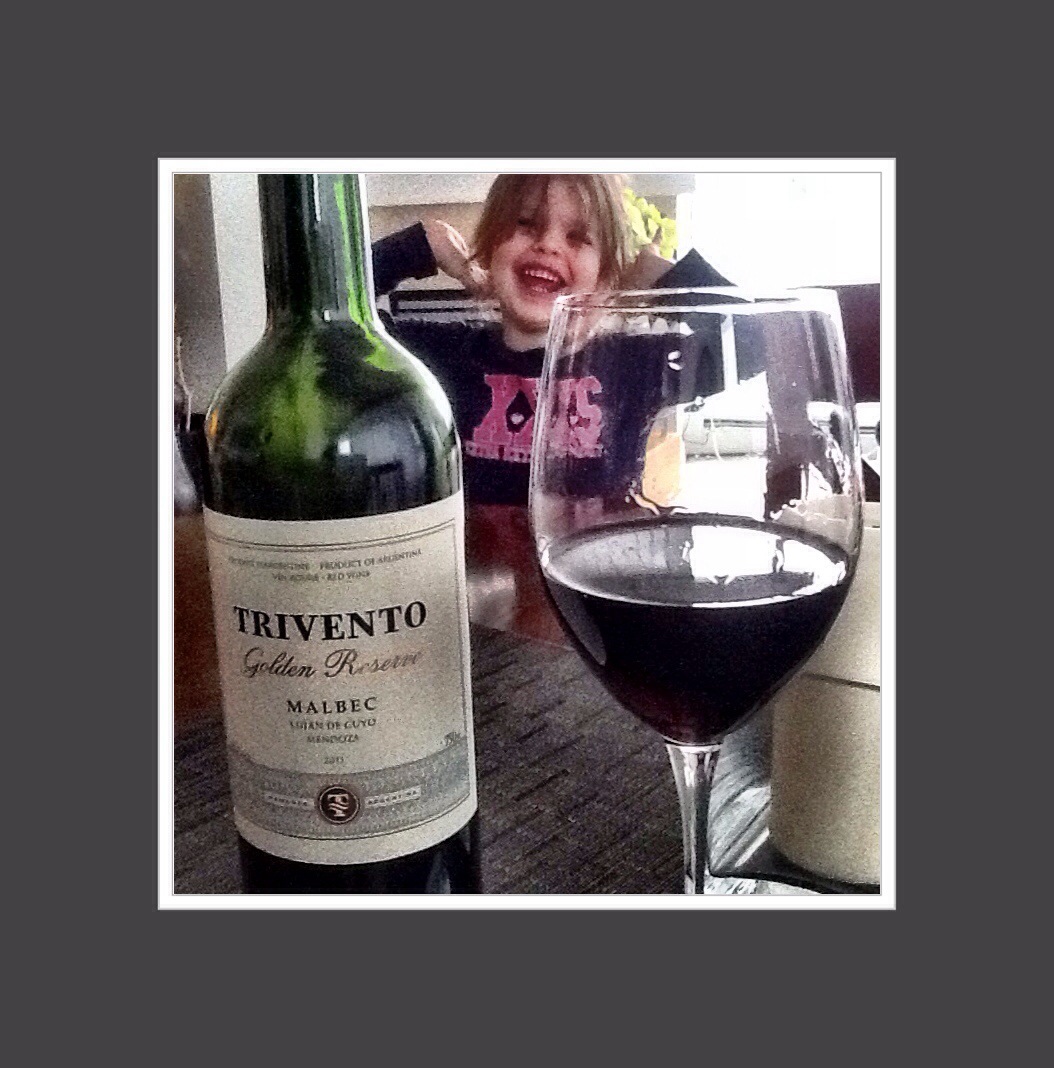
Trivento Golden Reserve, Malbec, Lujan de Cuyo, Mendoza, Argentina, 2011, 14.5% abv

Argentina is the most important wine producing country in Latin America. Since the 1990s, it has been one of the most dynamic regions and in 2004 it was the 5th largest producer in the world.

Well over 40% of its wines are deep inky reds but a surprising 30% plus is made from pink-skinned grapes and over 20% is white. The remainder is made of indigenous and non-vinifera ‘others’.

It’s generally accepted that vines made their way to Argentina from Spain, Peru and Chile and were established initially by the Jesuit Missionaries, but in 1900 by a second wave of immigrants from several European countries with great wine histories and experience (Spain, Italy and France).

When these immigrants emerged on the Argentine wine scene, they urged their new compatriots to ditch many of their old methods, but kept the Argentine renowned expertise in dams and irrigation methods.

Argentine vineyards are some of the highest in the world – most start at about 600m and can go as high as 1,600m. Almost all of them are on the country’s western strip bordering the Andes mountains and extend from the Tropic of Capricorn in the north to the south’s 40th parallel.

The seasons are well defined so the vines get to rest. However, there are some temperature extremes from 0c or below in the winter to well over 40c in summertime. Irrigation is always necessary and luckily there is lots of Andes Mountain water available.

The dry and very hot hurricane force winds from the northwest called ‘Zonda’ can affect the vines’ flowering and they are very susceptible to hail as well. The Mendoza area often uses hail nets to protect the vines and grapes.

This wine is from Lujan de Cujo – part of the Mendoza region and north of Mendoza city. In 1993 it became Argentina’s first controlled appellation. Reds (Malbec, Tempranillo, Italian varieties and Cabernet Sauvignon) do well as do the Criolla Grande and Cereza pink-skinned grapes. Whites (Chardonnay) are also grown here, but are better from the equally well-regarded Uco Valley (south of and part of Mendoza).

The Trivento is clear and bright with legs and that distinctive deep inky purple colour that Malbec often has. On the nose, it’s clean and developing with medium plus intensity, aromas of blackberry, cassis, Damson plum, tobacco, spices and pepper.

The palate is dry with medium plus acidity, medium plus ripe tannins with grip, medium plus body, high alcohol and medium plus intensity. Flavours include blackberry, cassis, Damson plum, black currant, boysenberry juice, baking spices and black pepper. The finish is medium plus.

This is WSET ‘Very Good’ wine – the acidity and alcohol are well-balanced and the fruit is beautifully concentrated. Drink now or hold for 4-6 years to allow the tannin to soften. The medium plus acidity will accommodate that. The complexity and finish are medium which hold it back from a higher qualification.

20140302-162748.jpg

Posted in Argentina, Latin America, Malbec | Tagged , , , | Leave a comment

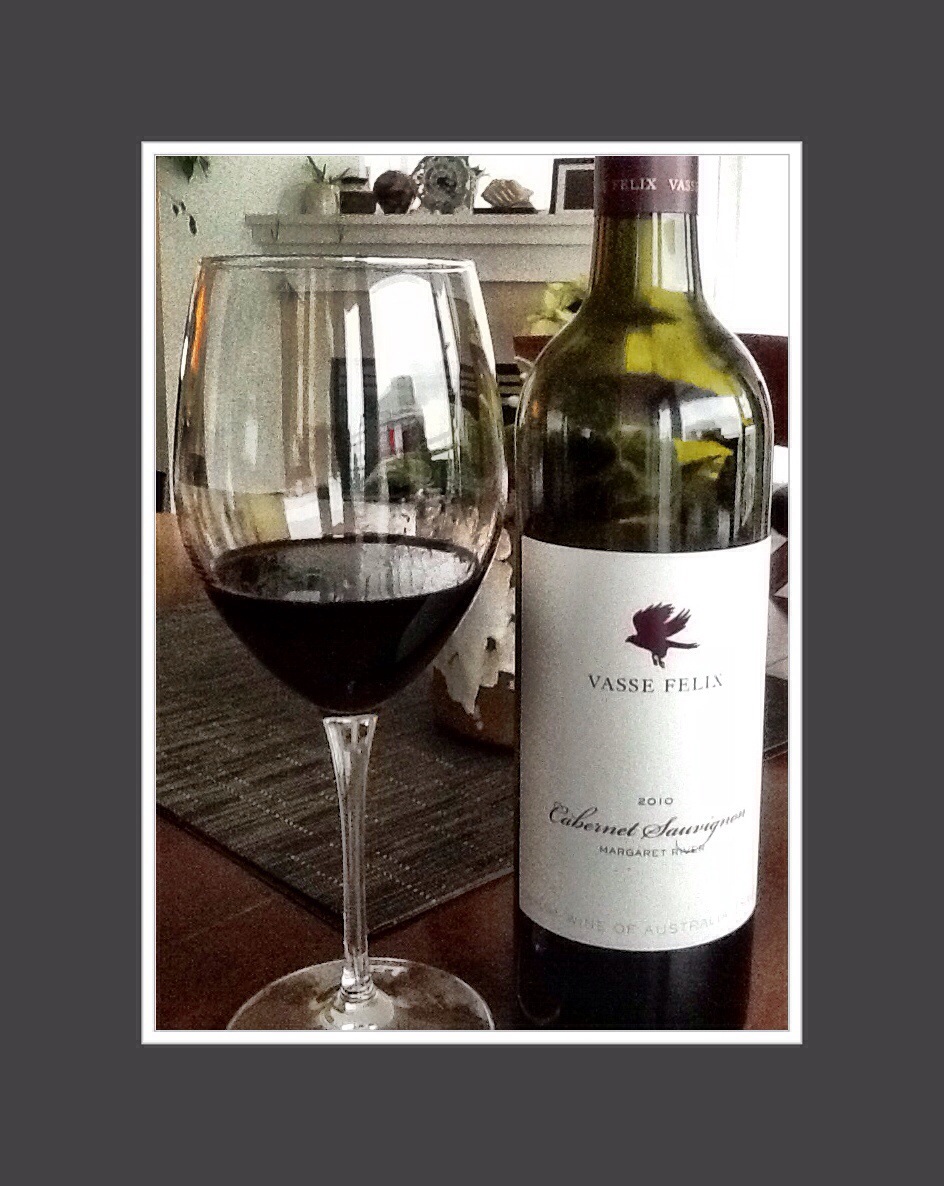
Vasse Felix, Cabernet Sauvignon, Margaret River, Australia, 14.5% abv, 2010, C$41

Margaret River, part of the Western Australia zone, is one of that country’s most isolated wine regions. Located furthest west on the continent, it is about 240 km south of Perth. It’s a stunningly beautiful land and combines great surfing, nature, wines and friendly folks (from all accounts!).

Blessed with a maritime climate similar to that of Bordeaux but with less rain, Margaret River is cooled by the Indian Ocean currents that blow in off the coast. It’s known for its Cabernet Sauvignon and Merlot as well as its Sauvignon Blanc, Semillon and Chenin Blanc blends and its long-lived Chardonnays.

Although it accounts for only about 3% of the total Australian production, its 215 wineries are responsible for 20% of the premium wine market in the country. It is very well known – and is most often grouped alongside the wines of Coonawara and the Yarra, Barossa and Hunter Valleys.

The Vasse Felix vineyard was actually the first planted one in Margaret River back in 1967. This wine is clear and bright, deep ruby with legs noted. The nose is clear and developing with medium plus intensity, aromas of eucalypt, ripe blackberry, raspberry and Damson plum, baking spice and wood.

The palate is dry with high acidity, medium plus body, medium plus grainy and grippy tannins, high alcohol and medium plus intensity with flavours of blackberry, red currant, more eucalypt, mint leaves, cedar frond, nutmeg, cinnamon, clove and black pepper with a medium plus finish.

It’s WSET ‘Very good’ wine – drinking beautifully yet can be held. It’s fresh and fruity with great concentration and deft wood treatment (18 months in French oak barriques), high alcohol, but not out-of-balance. The strong acidity and tannins will enable the ageing for 5-7 years.

20140216-170235.jpg

Posted in Australia, Cabernet Sauvignon / Blends, RED | Leave a comment

Table 1006 Sweethearts’ Dinner 2014

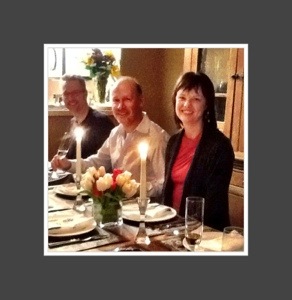
From the moment we drove up to the valet parking, to the uniquely sourced French and German wines to the personalized take-away goodie bags, the standing-room-only 2014 Table 1006 Sweethearts’ Dinner was a masterpiece, to say nothing of the stellar company.

Created by the one and only Chef Francine Parker, she of the grace-under-pressure fame, we joked that based upon the last event at Table 1006, we fully expected to be met by fire and/or a plague of locusts. A few hors d’oeuvres did get sacrificed at one point to the fire alarm, but thankfully there were no flying insects or flooding this time around.

Chef Parker’s thoughtful menu included five exceptional courses, the first being an array of three hors d’oeuvres made with the freshest of ingredients.

Pumpernickel, smoked salmon and cream cheese with fresh chives thoroughly complemented the Blanc de Blancs. And then there were the ‘bacon roses’ with kale – how else to say ‘I love you’ to that special someone? The champagnes also loved the wild mixed mushrooms on crostini with garlic butter. Seriously, who are we kidding though – champagne loves everything and everything loves champagne (well, almost).

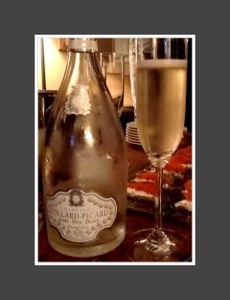
The first was Collard-Picard, Cuvée Domaine Picard, Grand Cru, Blanc de Blanc, 12.5% abv, US$49.91, apparently very similar to ‘Salon’ (although having never had any myself I cannot guarantee this).

Clear and bright this champagne is pale lemon with aggressive and persistent bubbles. It’s clean and youthful and has medium intense aromas of citrus (pomelo, yellow grapefruit and lemon) with biscuit and brioche.

Dry with medium plus acidity, medium alcohol and creamy yet assertive mousse, it offers medium minus body and medium plus intensity with flavours of lemon creme, lime zest, grapefruit and baked apple danish. The lingering medium plus finish signals the WSET ‘very good’ rating.

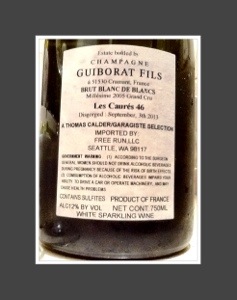
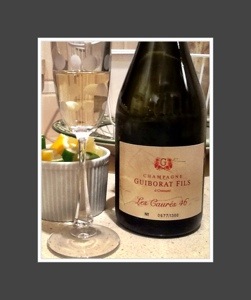
The evening’s second champagne was a stunner from Guiborat Fils a Cramant, Les Caures 46, Brut Blanc de Blancs, Millesime 2005 Grand Cru, No. 0677/1300, Disgorged Sept. 3, 2013, US$59.80

This wine gives new meaning to handmade with a traditional seal and tied cork, limited edition bottle number and a disgorgement date to boot! After my embarrassingly geek-worthy display of dribbly bubbles excitement, I’m sure my fellow patrons thought I’d gone nuts.

With only a hundred bottles released to the US market and from the final harvest of this 60 year old vineyard, Chef Parker spirited one across the border from our friends at Garagiste Wines especially for this evening. Apparently it’s equally interesting to drink after being open for a few days. I can’t understand how that could ever happen though – it disappeared rapidly.

Clear and bright, medium lemon with a finely delicate mousse, on the nose it is clean and youthful with medium minus intensity and aromas of apple and fresh lemon, lime and yellow grapefruit. Light brioche and yeast envelop the fruit.

The palate is dry with high acidity, medium minus alcohol and medium plus flavour intensity of ripe green apple, lemon curd and fresh baked bread on the back end. It’s got a long and friendly finish and is WSET ‘Outstanding’. This is a unique and special wine – we were lucky to be able to try it. What a treat!

Our salad course, a stunning combination of hazelnut-encrusted goat cheese served on a bed of fresh salad – including dandelion greens – with blackberries and basalmic and simple salt and pepper seasoning was happily paired with the Loire Valley.

Les Romains, Sancerre AOC, Domaine Vacheron, France, 2011,13%abv (C$60) is clear and bright, pale lemon and has light legs. On the nose, intense minerals with peach and stone fruit, gooseberry, honey and a slightly pungent green tone grew as the wine warmed. Youthful and slender. The palate is dry with medium plus acidity and medium minus body with intense flavours of stone fruit, gooseberry, acacia and honey and a medium finish.

This wine is WSET ‘very good’ – the nose is strong but the palate so balanced and elegant it wrapped itself around the salad and especially the cheese; it’s completely subtle and yet complex.

Our main course of lemon garlic roasted chicken with dijon roasted potatoes and Farmer’s market haricots verts. Now, we’ve had these potatoes before – dubbed ‘sex potatoes’ and the highlight of the evening for one certain diner, they have been known to cause a little seat dancing. They did not disappoint and the chicken was tender and juicy. Delish.

Two sensational wines complemented our main – the first an intensely floral and herbal Beaujolais Cru Gamay noir from Fleurie AC, Jules Desjourneys, Red Burgundy, France, 2007, 12% abv, (US$42.99).

This 100% bio-organic wine is clear and bright, medium ruby with legs. Clean and developing, the wine has pronounced intensity and aromas of light raspberry cordial, red cherry, crab apple, serious cedar frond and clove with nutmeg, green tobacco leaf and garrigue.

Dry with medium plus acidity, medium minus body and the low end of medium alcohol (it’s an elegantly slender 12%), medium ripe and lightly grainy tannins, medium plus intense flavour aromas of raspberry, red cherry, more cedar and spice box including cinnamon with tomato vine and dried herbs. The finish is long.

WSET ‘Outstanding’ – shorter body (possibly due to the semi-carbonic maceration method?) it’s intensely aromatic, quaffable and tasty with well-integrated alcohol, nicely concentrated fruit and beautifully ripe tannins. The garrigue completed the absolutely masterful combination with the roasted chicken and sex potatoes (oh my!).

Some guests preferred the white option, Chablis Grand Cru Valmur AC, Grand Cru, Domaine William Fevre, France, 2009, 13%abv and raved endlessly about the combination it produced with the beans and chicken.

Clear and bright, pale lemon with legs, it’s clean and youthful with medium minus aromas of lemon, pomelo and light yeast with minerals and clover honey.

Dry with medium plus intensity, medium alcohol and medium minus body. Medium intense flavours of lemon, cooked apple, green melon and lime curls with biscuit, almond and wet rocks. The medium plus finish was wedded perfectly to those green haricots. WSET ‘Very good’ with excellent minerality, delicate fruit and balanced alcohol.

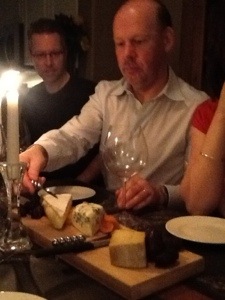
Chef Parker then presented the cheese course consisting of St. Augur from Auvergne, a triple cream Brie and a Morbier from Franche-Comte with dried apricots and figs. This is getting truly ridiculous. I have reached my limit of superlatives to describe these delectable morsels of goodness.

But wait, the piece de resistance, the crowing glory, the cherry on top – the fresh apple galette with homemade cinnamon ice cream. Bring it on, Chef Parker.

Served alongside Dr. Loosen’s German Riesling, Beerenauslese, from the Mosel, Germany, 2006, 7% abv, 187 ml (1/4 bottle), the medium sweetness went swimmingly with the elegantly spiced ice cream, apples and pastry.

Clear and bright, pale lemon with deep legs, the Dr. Loosen is clean and developing with medium plus intense aromas of black tea leaves, pear juice, honey, ripe apricot, sage and minerals.

Medium sweet with refreshing, high acidity and low alcohol, the wine has medium plus intense flavours of more pear juice, apricots and nectarine, minerals and honey. The medium plus finish completes a WSET ‘very good’ rating. This wine will happily age 5-8 years more; its acidity and fresh fruit will see to that.

Risking a Python-esque “Mr. Creosote” scene, the evening concluded with oh-so-delicate macadamia nut cookies that were “only wafer thin”. Suffice to say, cookie mission accomplished, no harm, no foul, and no cleaning lady required.

What an evening – no pestilence, no floods, no (real) fires – just seriously outstanding food, absolutely lovely company all around, great service (although someone did remark that Chef Parker shouldn’t allow the staff to speak with the patrons) and gracious wine sharing. Wondrous.
20140215-223031.jpg

20140215-223042.jpg

20140215-223050.jpg

20140215-223100.jpg

20140215-223112.jpg

20140215-223123.jpg

20140215-223129.jpg

20140215-223137.jpg

Posted in Champagne, Chardonnay, France, Gamay, RED, Riesling, Sauvignon Blanc, WHITE | 2 Comments

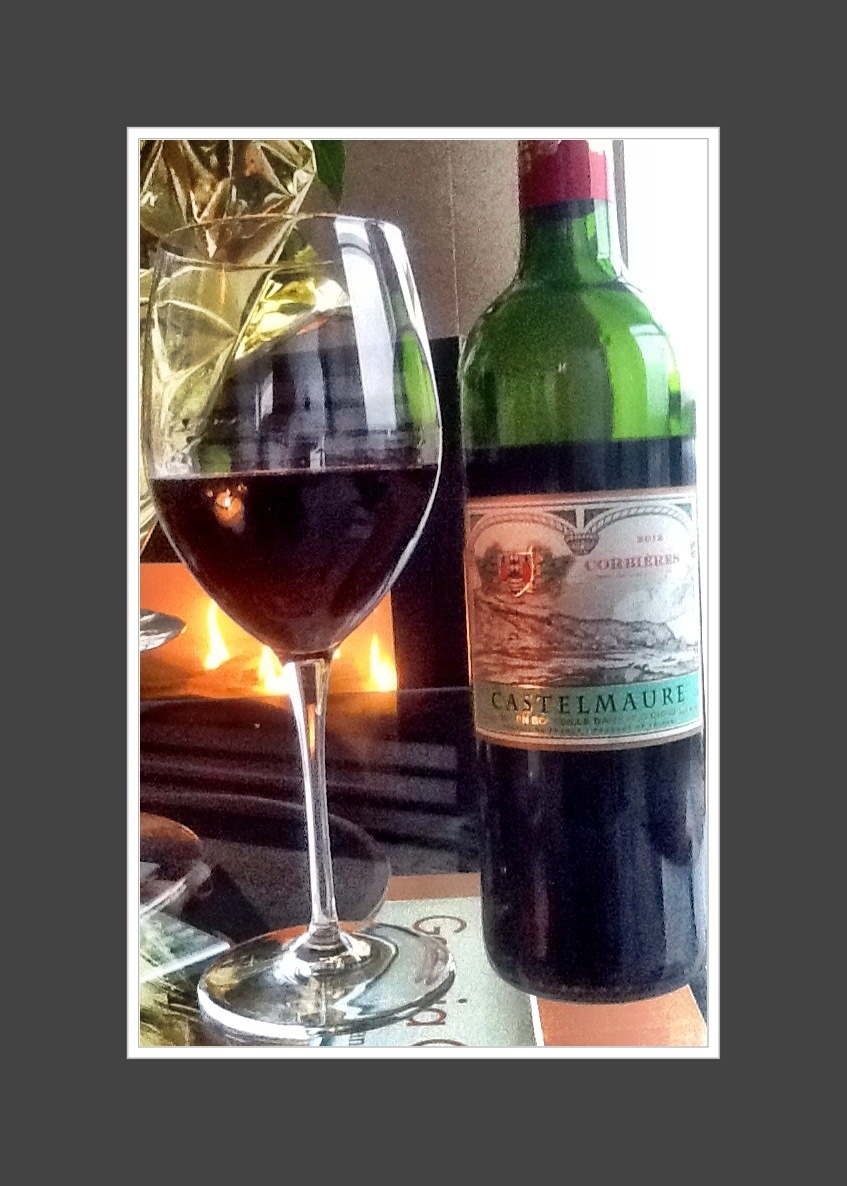
Castelmaure, Corbieres AOP, Languedoc-Roussillon, France, 2012, 13.5% abv, US$9.99

Corbières is an Appellation d’origine contrôlée (AOC) (or since 2012, Appellation d’origine protegee, AOP) for wine in France’s Languedoc-Roussillon region.

Located in the foothills of the Pyrenees mountains, near Narbonne and close to the France-Spain border, it’s the region’s largest AOC, and in 2005 was responsible for 46% of the region’s total wine production. About 12,000 ha of vines are planted there with red wine dominating production at 95%. Whites and roses make up the remaining 5% of wines produced.

There is much debate in France regarding exactly who was first to grow and/or introduce vines to this region – the Romans, Greek or Gaul. But all involved agree the first vineyards themselves were in Narbonne in 125 BC. So much wine was produced here it was actually transported to Ancient Rome.

Carignan is the most common red grape variety and produces dense, herbal wines followed by Grenache, Syrah and lesser-known Liedoner Pelut and Mourvedre gaining in popularity. The white wines produced are most frequently made from grapes that are curiosities to most including Bourboulenc, Macabeo, Grenache Blanc, Clairette, Muscat, Picpoul, Terret, Marsanne, Roussanne and Rolle. The region also boasts Limoux, a sparkling wine named for the centre it comes from that predates the bubbly made in Champagne.

Due to its size and geography, Corbières encompasses an enormous variety of soil types and microclimates. The most admired one being ‘Corbieres Boutenac’ or ‘Golden Triangle’ which has a limestone base with poor soils perfect for grape growing. The region has France’s sunniest climate and most of its quality vineyards have some elevation here where the Atlantic’s Tramontane winds aerate the grapes and provide protection from rot and other diseases. Yields are very low – mostly because of the arid climate – and this helps with the production of the intensely herbal wines.

This wine was made and bottled at a local cooperative, Les Vins du Littoral Mediterraneen in St. Felix de Lodez. Coops bottle most of the wines in this region.

This wine is clear and bright medium ruby with legs. On the nose it’s clean and developing with medium plus intense aromas of black fruit – blackberry and currant – black tea, meaty garrigue and herbal notes.

The palate is dry with medium plus acidity, medium plus tannins with slight grip, medium body and medium plus alcohol. The medium plus intense flavour characteristics include black currant, blackberry, Lapsang-Souchong tea, dry herbs (rosemary, sage and thyme), salami and the finish is medium.

This wine is WSET ‘Good’. The fruit concentration, acidity, tannic structure and finish are all very good but the wine escapes a higher designation because it’s slightly hot on the finish and the alcohol has not been integrated completely into the other components. The body is slightly light at only medium. That said, it’s a smoking deal at only US$9.99 a bottle. At that price, don’t hold, drink now and enjoy this great daily drinker.

20140213-163740.jpg

Posted in Carignan, France, Grenache / Garnacha, OTHER | Leave a comment

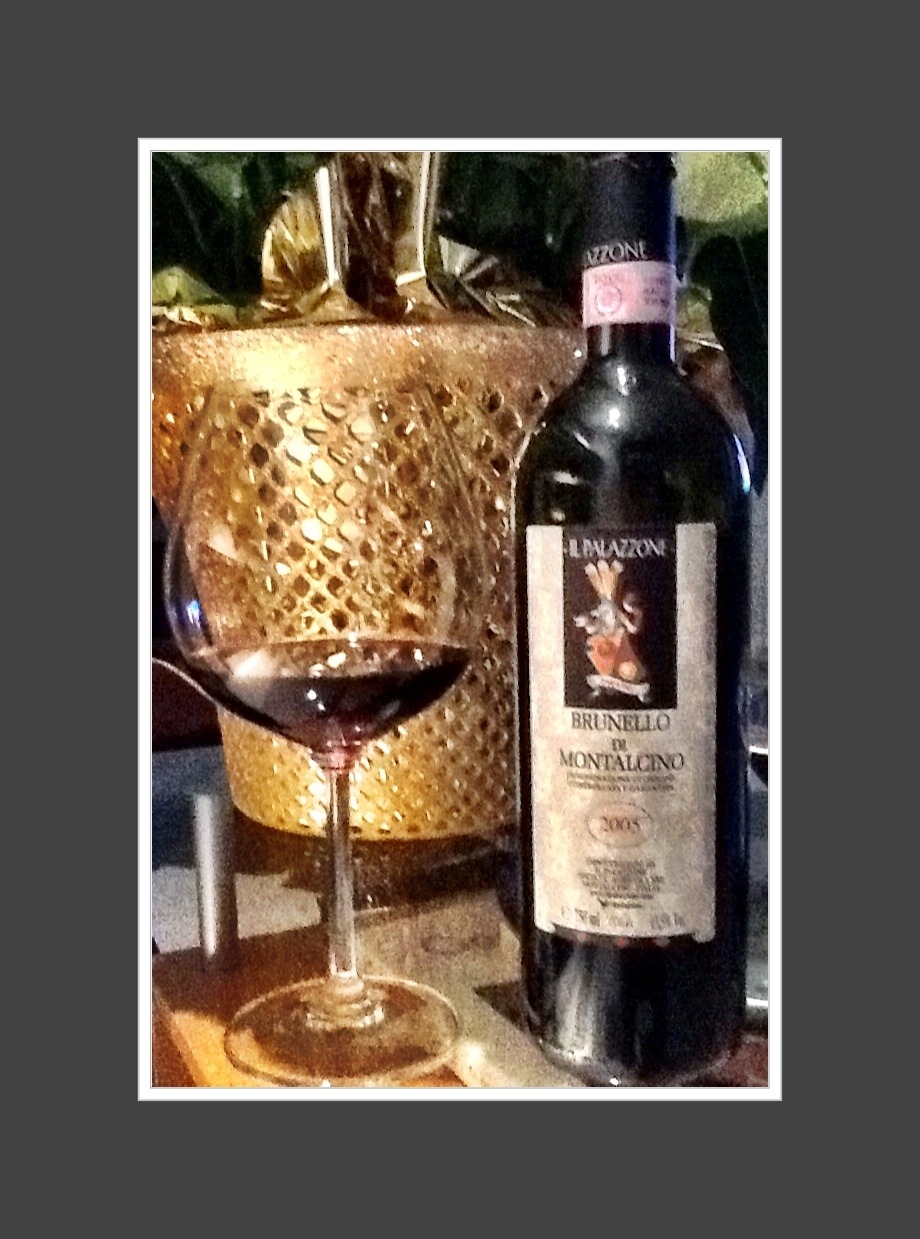
Il Palazzone, Brunello di Montalcino DOCG, Italy, 2005, 13.5% abv

‘Always use all the resources available to you’ is one of those resolutions I ended up making after posting more than a few notes about Italian wine. So, this time I got smrt. Yes, S M R T. I asked Marta Chiavacci, FiSAR Sommelier of the Year (2007), CSW and FWS for a little Italian input. Happily, she put her stamp of approval on the following Brunello di Montalcino note.

There are many great red Italian classics – Barolo, Barbaresco, Chianti,
Vino Nobile di Montepulciano, and more recently the Supertuscans – but this
is one of the youngest. The Biondi-Santi family first bottled and sold this Brunello di Montalcino in 1888 and established its prestige; there are still 5 bottles left of that first illustrious vintage. The Biondi-Santi family were the only producers of this wine until after WW2, there were only 4 vintages declared in its first 57 years.

Brunello is the Sangiovese Grosso grape, a clone of Sangiovese, and is termed ‘Grosso’ because its grapes are larger than the Sangiovese found in Chianti. In fact, the Grosso was created by Ferruccio Biondi-Santi around 1870 and ended up being more resistant to phylloxera than the other Sangiovese clones.

Climate is crucial to the characteristics of this wine. Grown in Montalcino, about 120 km south of Florence in Tuscany, where it is drier and warmer, the cool maritime breezes and cool evenings mean there is little danger of rot here and the Sangiovese Grosso reaches maximum ripeness. The wines often reach well north of 14% abv.

The soils here are termed ‘galestro’ – Italian marl-like soil – and
depending on what part of the DOCG the vines are in, they ripen slightly
later in the north (where they’re grown at higher altitude vineyards) or a
week later in the warmer southern Colle which has more clay. Many producers combine wines from both for balance in the final product.

The Oxford Companion to Wine states that under the DOCG rules in effect since 1998, the wines must be aged in ‘Barica Bordelesa’ (225 litre oak casks) for 2 years total before they may be released. However, other sources (the DOCG laws themselves for one) indicate Brunello may be aged in any size of oak vessel for a minimum 2 years in oak and 6 months in bottle.
They cannot be sold before January 1 five years following the harvest meaning that this year, the 2009 can be sold. Riservas take an extra year.

This wine is clear and bright, medium garnet with legs noted. On the nose
it’s clean and developed with medium plus intensity and aromas of red fruit
(raspberry and cherry), some dried plum and black currant, purple flowers (violets), kid glove leather, vanillin and oak.

The palate is dry with medium plus acidity, medium ripe, dusty tannins,
medium plus alcohol, medium body and medium plus flavour characteristics of more ripe red fruit (raspberry, cherry, red plum), iris and violet floral notes, savoury leather and earth with a medium plus finish.

The wine is WSET Very Good; well balanced acidity, alcohol, fruit and
beautifully dusty tannins are integrated with the oak. Age has developed
its savoury and secondary notes including leather and some earth. A longer
finish would have enabled a higher rating.

Drink now or continue to hold for another 2-3 years; there is just enough acidity and tannin left to eek out that long. Great wine.

20140207-170015.jpg

Posted in Italy, RED, Sangiovese Grosso (Biondi-Santi) | Leave a comment

Ardales Airen, Vino de la Tierra de Castilla, Spain, 2009, 12.5% abv

Nothing goes better with a Super Bowl game than…. evidently a white Spanish wine made from Airen grapes.

Yeh…

So, here we have a wine that’s termed ‘Vino de la Tierra’ (VdlT) referring to wine from certain and specific regions and generally considered equal to French Vin de Pays.

The Airen grape is the most frequently planted white variety on the planet. In Spain it’s especially popular as it’s drought resistant and is often used for brandy and cheap white wines – usually as a blender, but more recently as a varietal wine. Some producers have been doing an increasingly better job at producing it.

This Airen has been grown in Castilla La Mancha, part of Spain’s Central Region located just south of the central plateau at 500-700m of altitude and with one of the most extreme climates in Spain where the winters are long and cold and the summers extremely hot. Even the locals say they get 9 months of winter followed by 3 months of ‘hell’.

Yet, despite the fact that the river beds are usually dry in July and August, it still manages to produce half of all the wine in Spain. There are 250,000 ha of the drought-friendly Airen planted here mostly as gobelet style bush vines – followed by 50,000 ha of Cencibel in Valdepenas DO (aka Tempranillo).

While Airen has been largely blamed for supporting the European ‘Wine Lake’, growing techniques were revolutionized during the 70s and 80s and now some of the 100% Airen wines produced are actually reasonably good -as is this one.

This wine is clear and bright, deep gold, with legs noted. On the nose it’s developing with medium plus intense aromas of honeysuckle, baked apple, lemon creme and oak.

The palate is dry with medium plus acidity, medium plus body and medium alcohol. The medium plus flavour characteristics include ripe apple, pear, lemon zest, honey and some apricot with almond, but the finish is disappointingly short.

An interesting wine and certainly not one you get every day – we’ve all had Airen in something or other, but rarely do we see it as a varietal wine. That said, this is merely WSET ‘Good’. The promise on the nose and of the palate’s fruit is not borne out in the very brief finish and the oak is rather too pronounced and unbalanced.

Enjoy now, watch the Seahawks win the Super Bowl, and do not hold.

20140202-174210.jpg

Posted in Airen, Spain, WHITE | Leave a comment

Masi Brolo di Campofiorin Oro, Veronese IGT, Italy, 2009, 14% abv

Made from Corvina, Rondinella and Molinara grapes, this is an Appasimento or ‘baby Amarone’ meaning about a quarter of the Corvina grapes were dried for six weeks Amarone-style and then pressed. This style of wine jockeys for position between the high end Amarones and the entry level Valpolicellas.

In Italy, the counterpart to the French AC (Appellation Controllee) system is the DOC or (supposedly even better ‘garantita’ quality) DOCG terminology. The terms were introduced in Italy in 1963, tabled in parliament and were intended to guarantee a wine to be of elite quality.

Also known as ‘Law 930’, it was supposed to indicate quality level by dictating allowable varieties, fermenting rules, alcohol and acidity levels, extract, yields and winemaking practices. However, as time went by it became clear that the system was often hobbled by politics and inflexibility did not necessarily guarantee quality at all.

In fact, because of the often overly strict DOC and DOCG rules, many Italian producers have turned their backs on the designations and made wines ‘outside’ of the DOC/DOCG rule books. In addition, Italians themselves have simply refused to pay more for DOC/DOCG wines making it difficult for some producers to sell their products.

To combat this, in 1992 ‘Law 164’ was introduced to allow changes, one of which was a new category for Vino da Tavola wines – the IGT or Indicazione Geographica Tipica category. This is the most vibrant Italian wine category by far as it allows more flexibility with rules about varieties, blending, extract, fermenting, oak/maturation and winemaking methods.

The Veneto IGT was legislated in 1995 and its wines may be made in any one of several various styles – red, white or rosé, blend or varietal and still, sparkling or sweet.

This still, red wine is clear and bright, deep ruby with legs. The nose is clean and developing with medium plus intense aromas of deep red fruit (raspberry and plum), dried prune, tar, dried leaf.

On the palate, it’s dry with medium acidity, medium plus alcohol, medium body and medium smooth tannins. The medium plus flavour characteristics include cherry, plum, dried leaves, tar, leather and black peppercorn along with a medium plus finish.

The high end of WSET ‘good’, drink now or may hold for 3-4 years. Food friendly with a moderate finish, complexity and balance.

20140119-161400.jpg

Posted in Corvina, Italy, Molinara | Tagged , , , | Leave a comment