
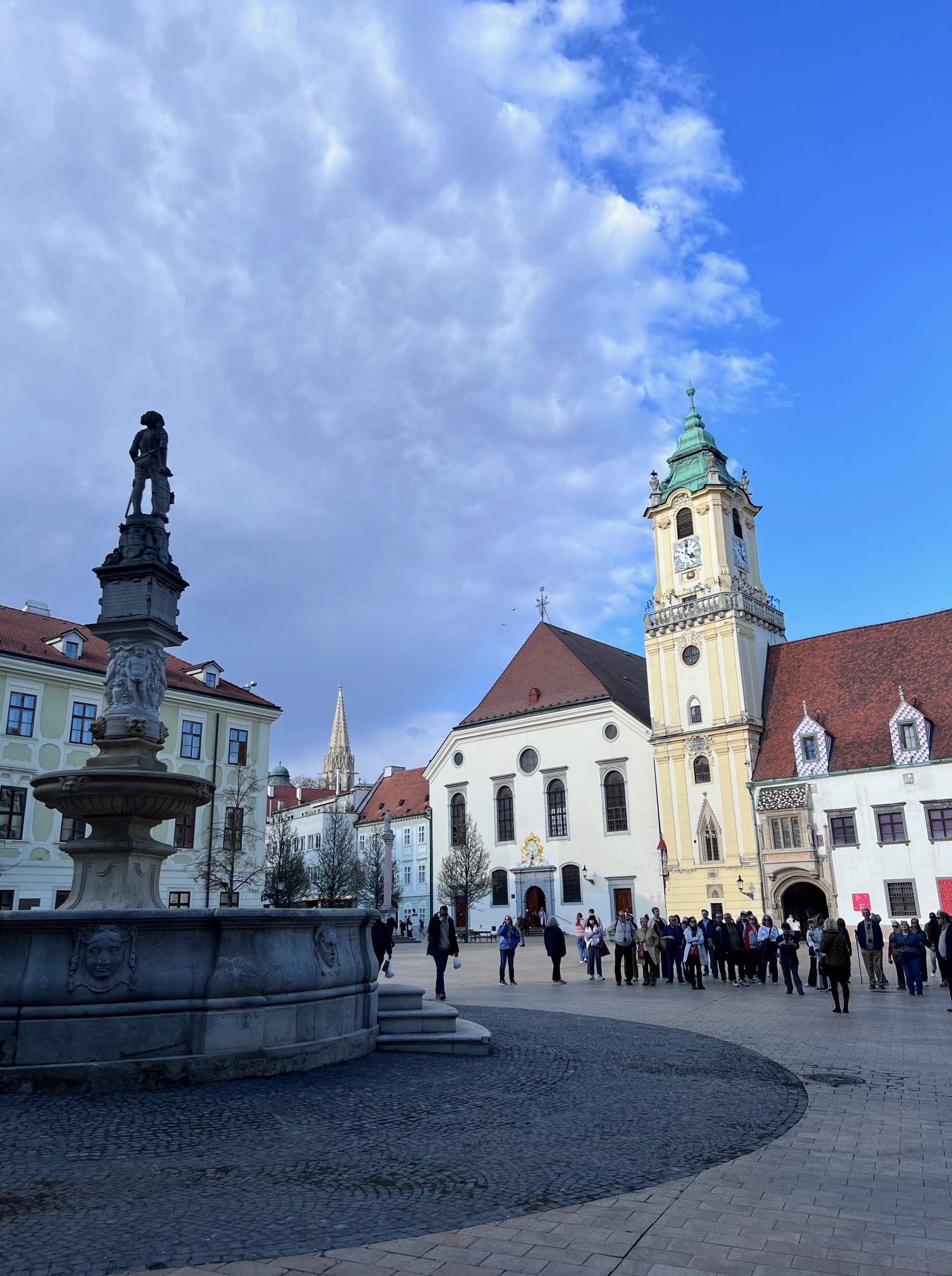
 We were walking in Bratislava’s old town looking for an authentic Slovakian restaurant when we spotted intriguing signs promising true Bratislavan farm-to-table cooking in a 13th century cellar, and Slovakian wines, spirits and beers, with ‘no Heineken bullshit’. I laughed out loud.
Then, we read the second guarantee, ‘Not a tourist trap!’ We were in.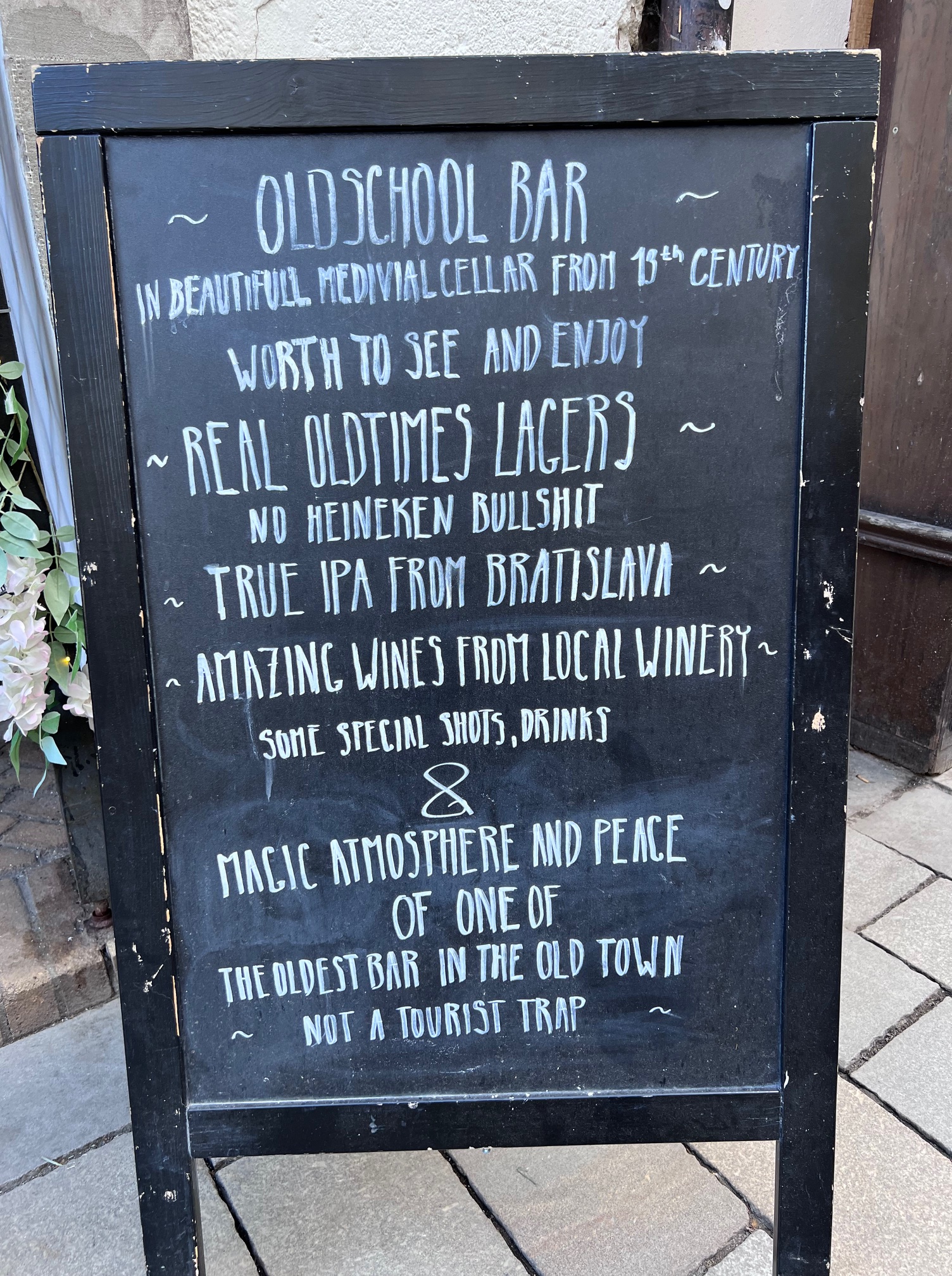
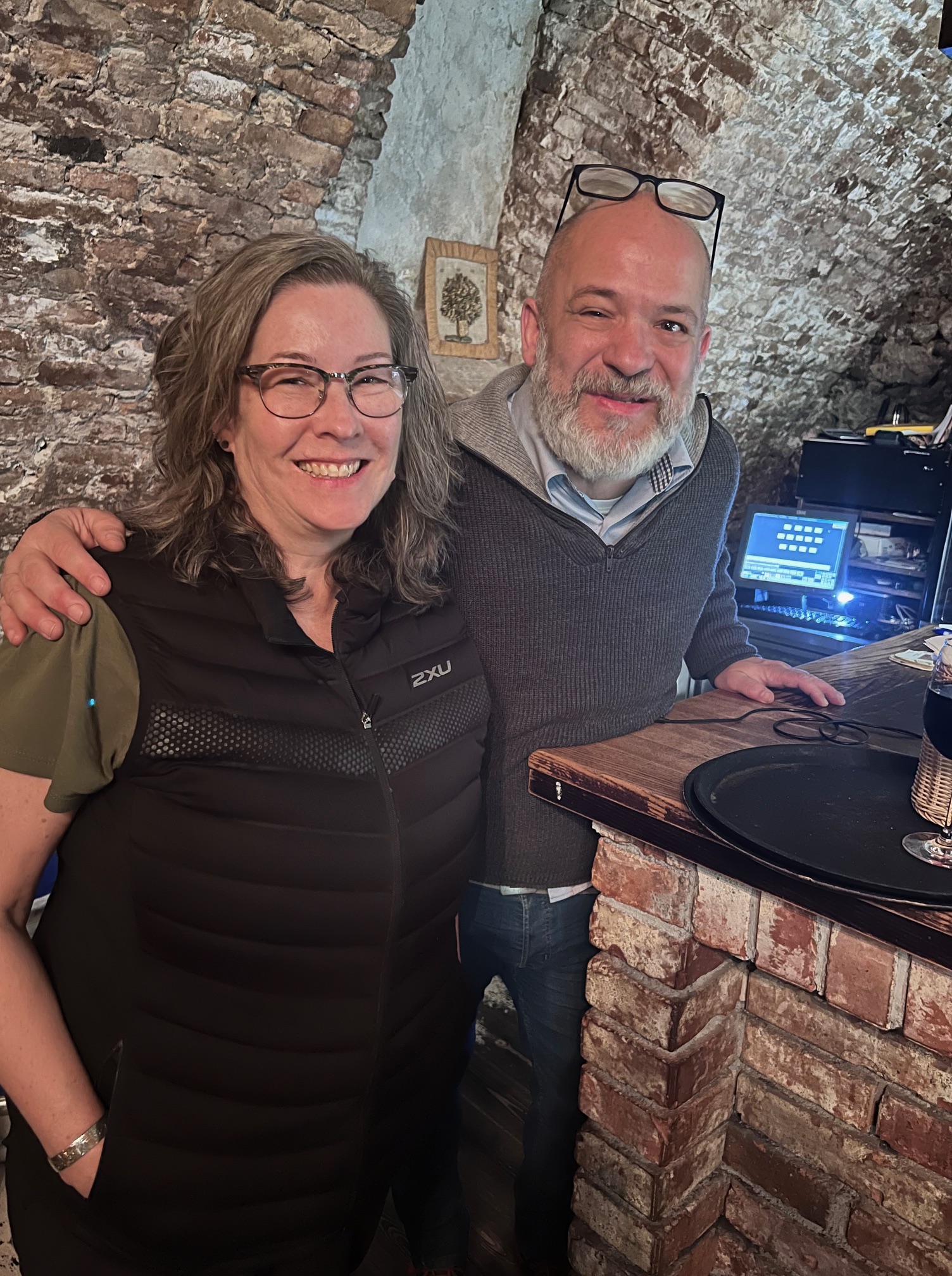
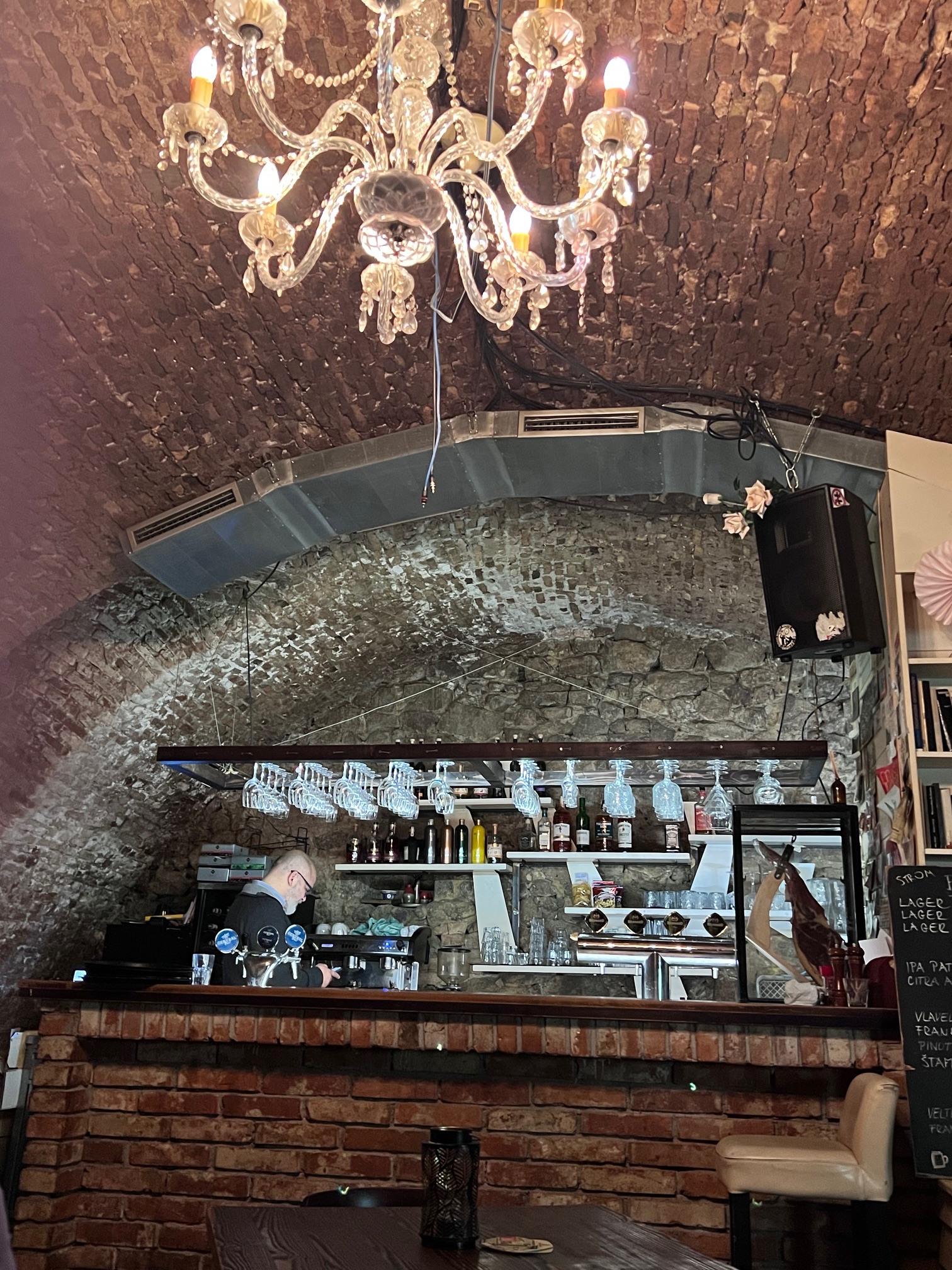 Marek greeted us literally with open arms and invited us to dine in the courtyard or downstairs in the cellar, renovated in 2010. It was cold – we chose the cozy downstairs cellar.
The menu changes daily depending on what is possible from his small village suppliers. So, that afternoon we had zander (a Slovakian fish, aka pikeperch) and potatoes, prepared with local cold-pressed sunflower oil. We also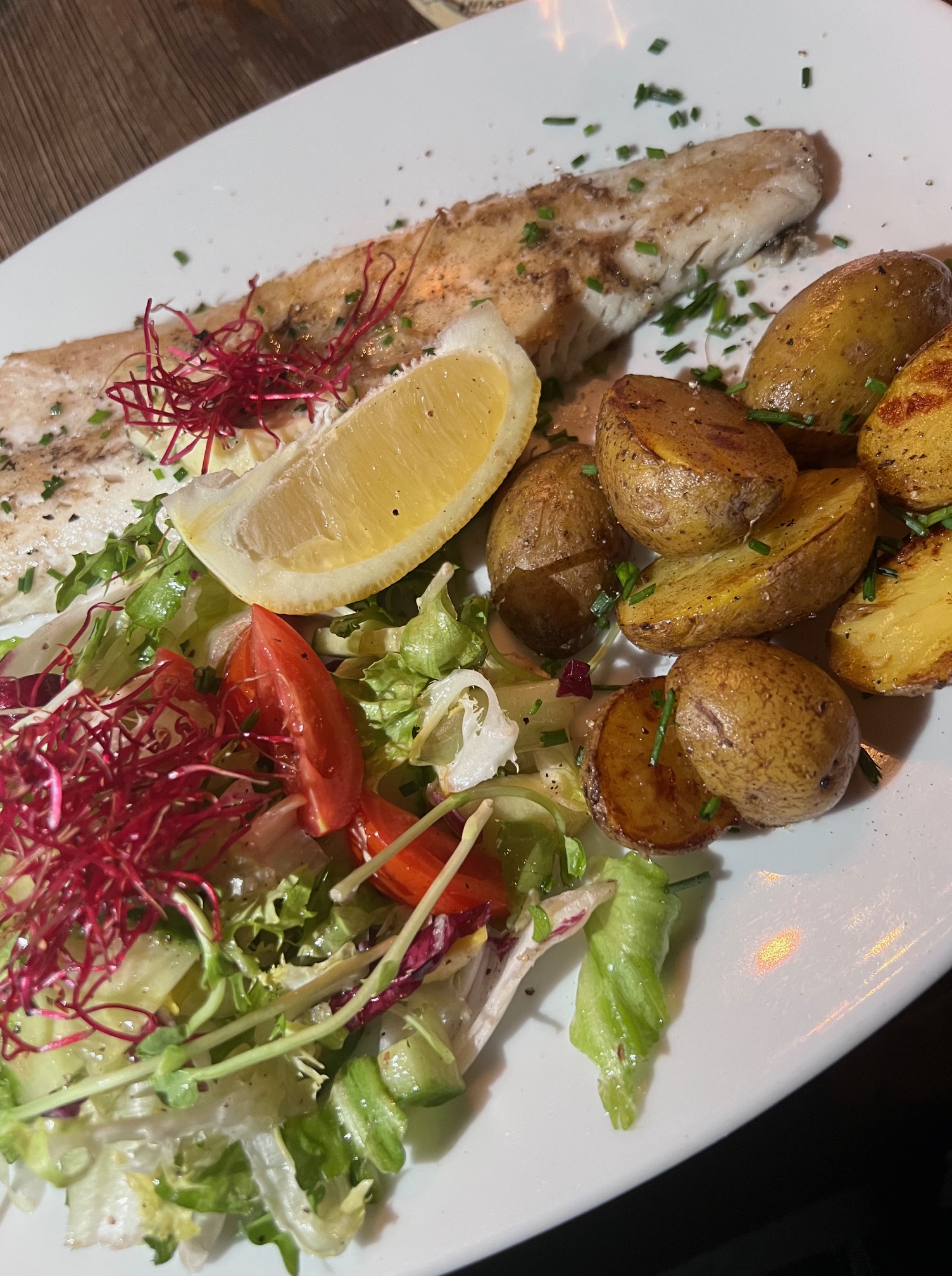 devoured the best pirogis of the trip, stuffed with fresh sheep cheese
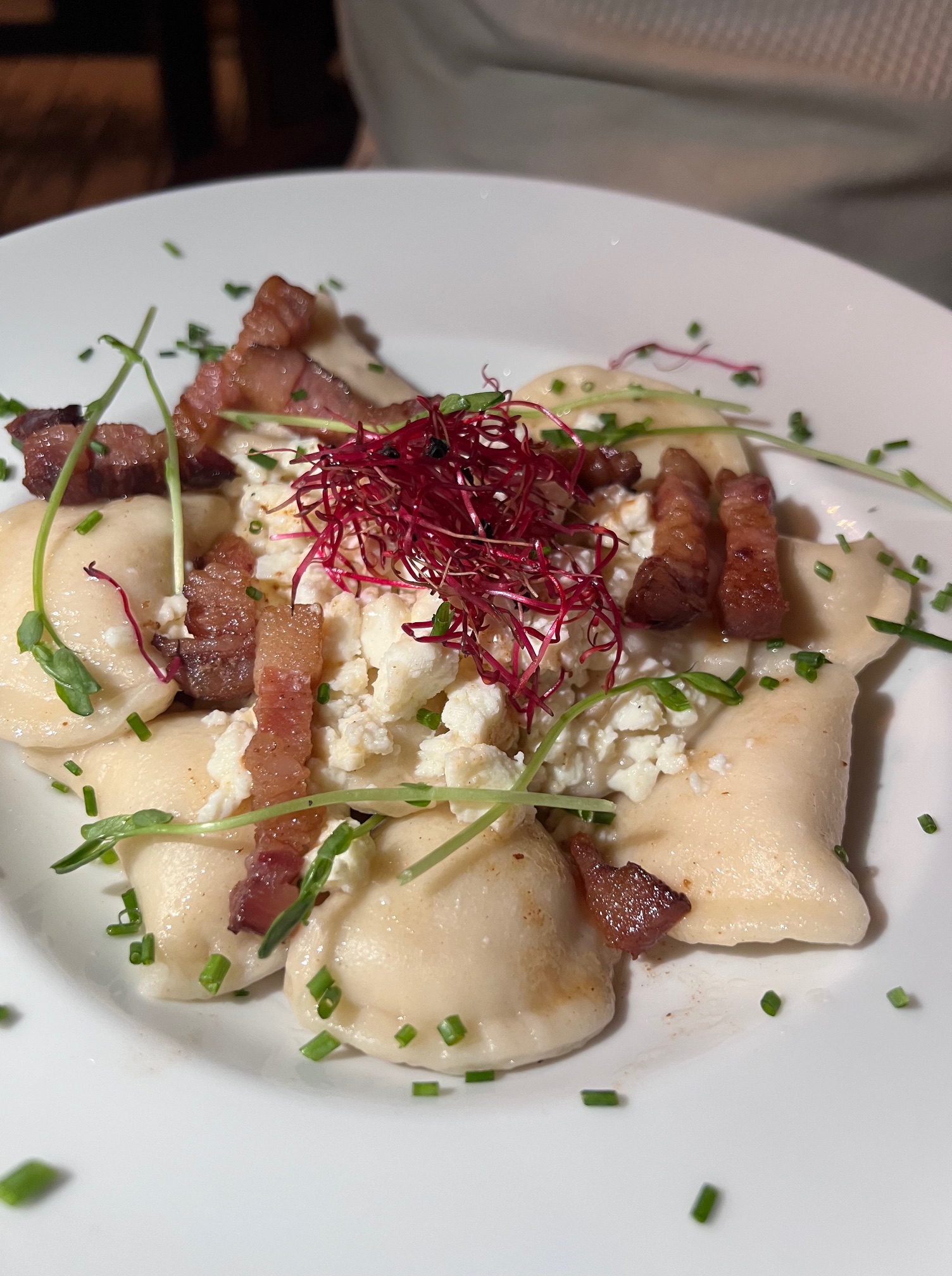 and sprinkled liberally with the most delicious pork belly we’d ever tasted.
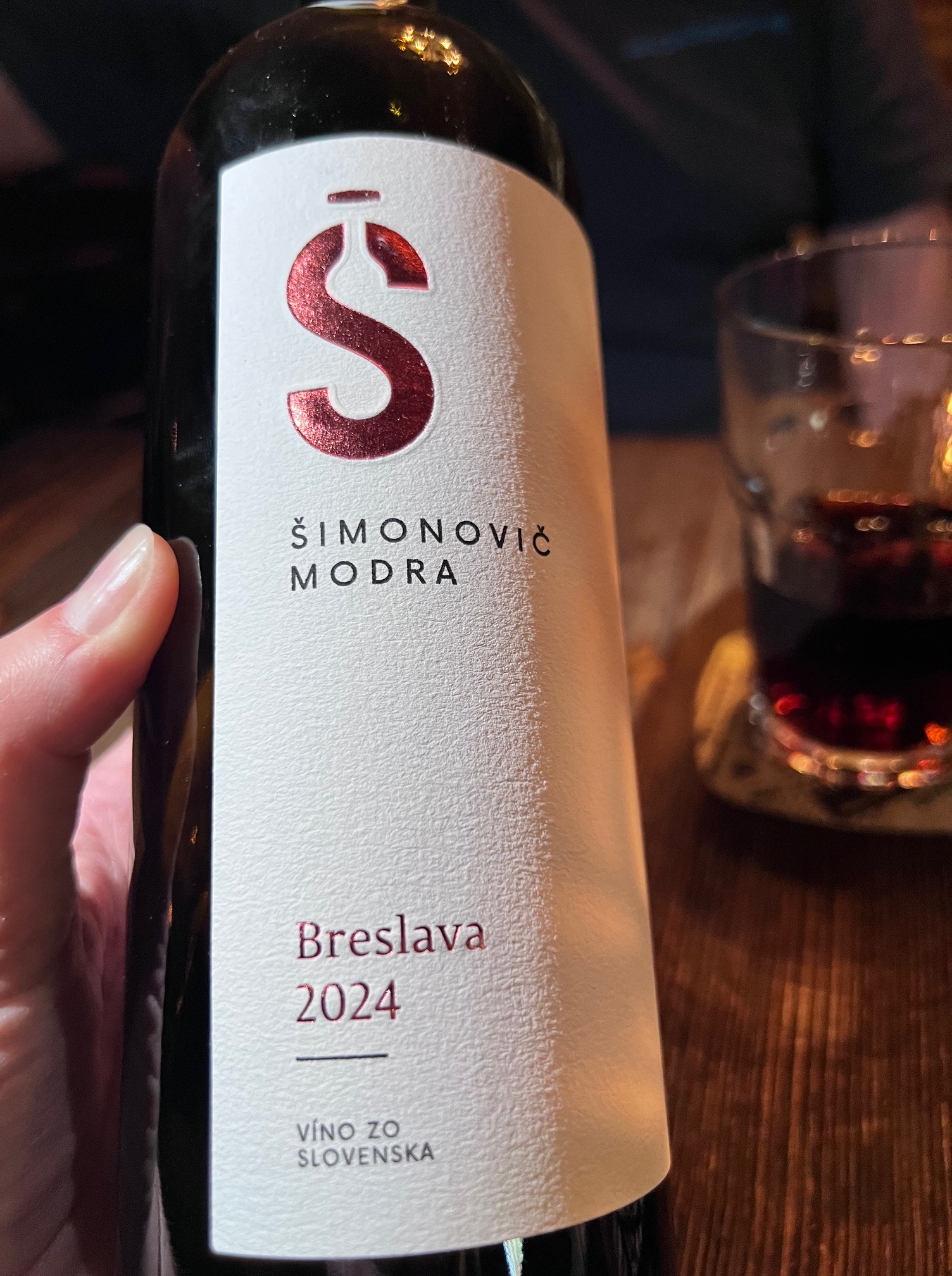 A kindred wine lover, and proud Slovakian, Marek really understood my local wine tasting goals, and brought several options to the table made by Vino Šimonovič winery, located north of Bratislava in Modra’s Little Carpathians region.
There’s a common naming convention for many modern indigenous Slovakian-bred grape varieties; red grapes are named for rivers, and white grapes are named for castles and 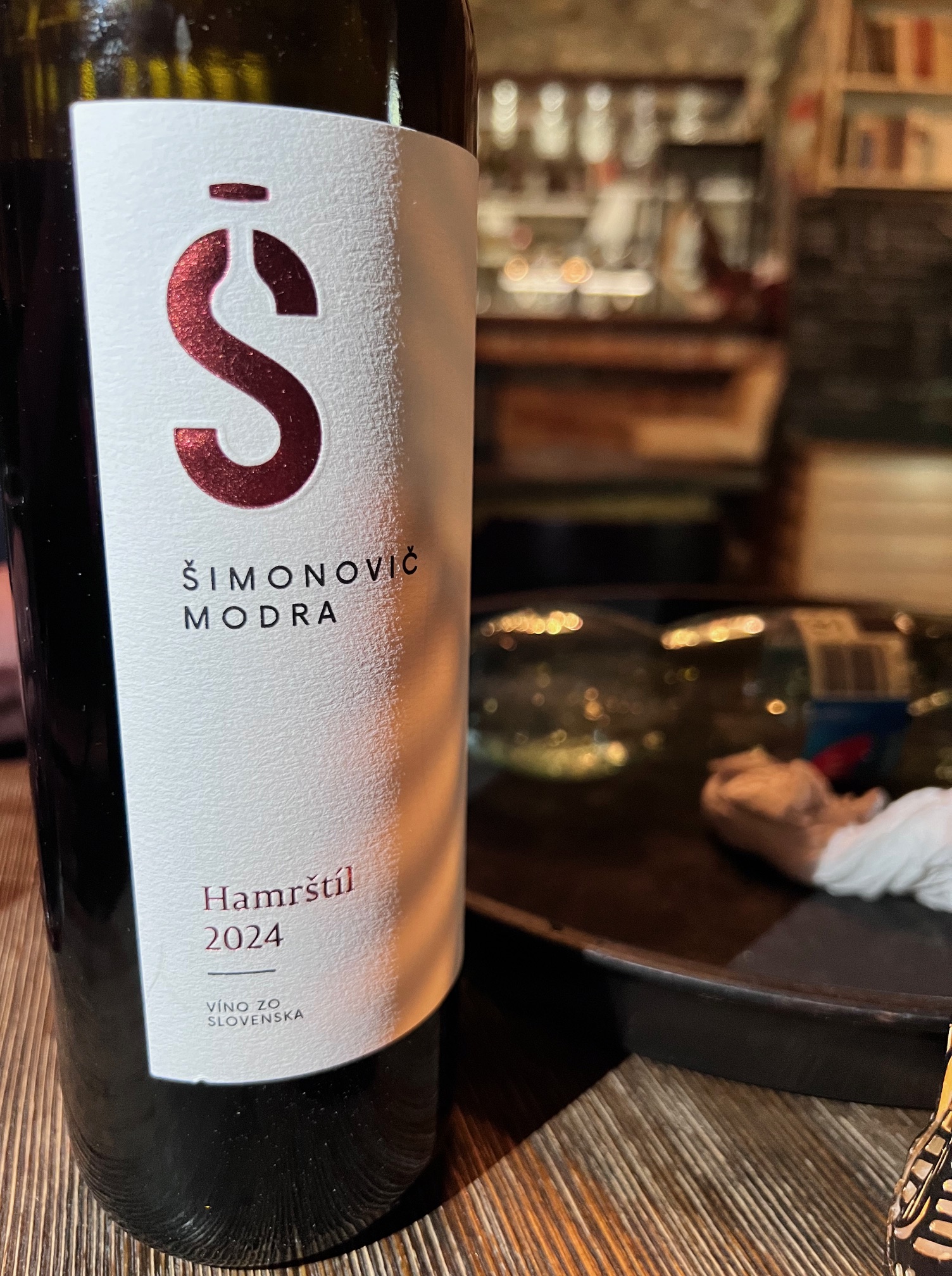 castle ruins, of which Slovakia has the highest number per capita in the world.
This naming convention only applies to new hybrids though; the most commonly planted varietals in Slovakia are still traditional European varieties such as Grüner Veltliner (Veltlinske) and Rizling Vlašský (Welschriesling). 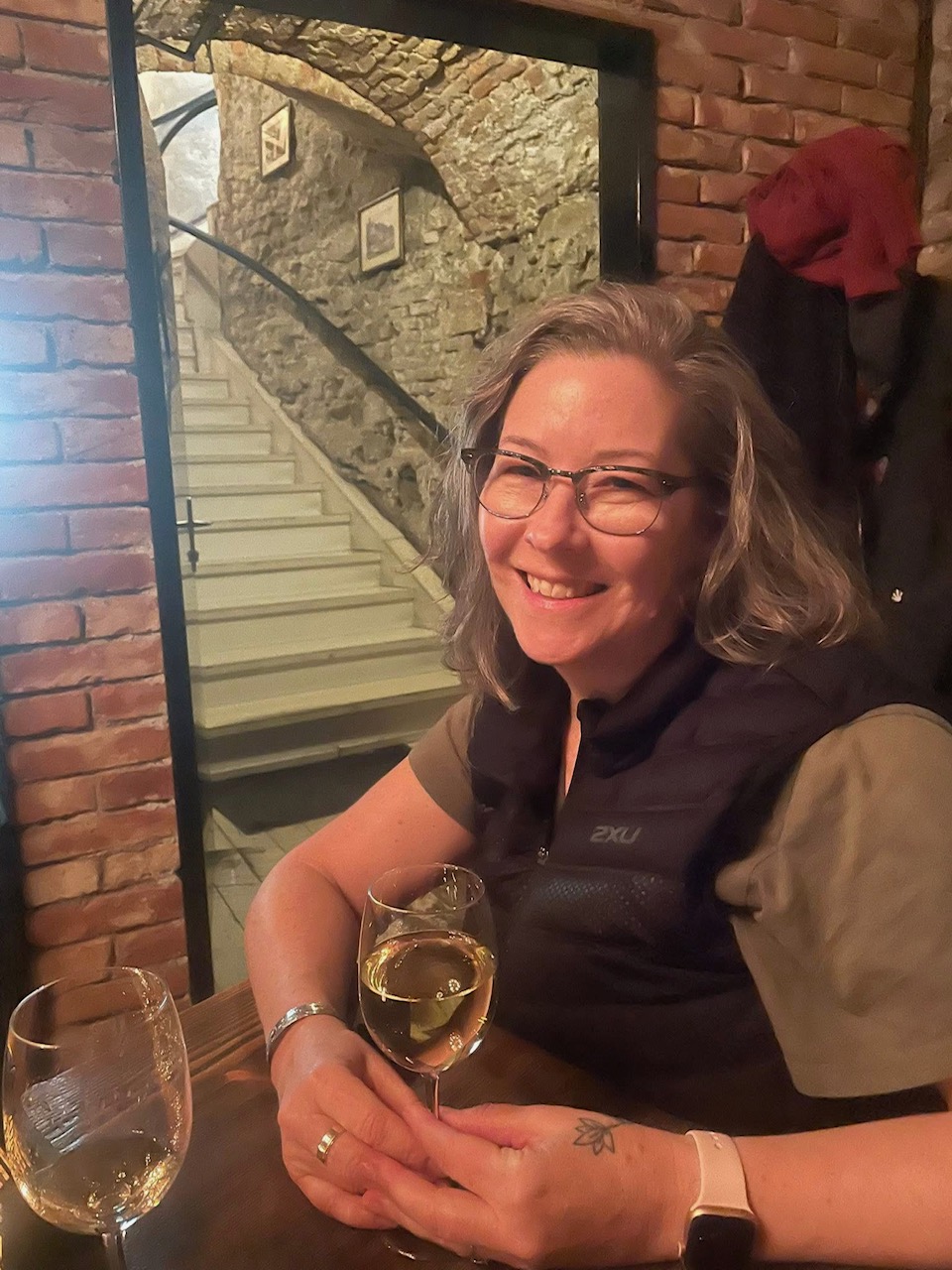
Eighty percent of Slovakian wines produced are white – and there are some excellent ones. With my zander, I enjoyed Šimonovič’s Devín (Traminer x Veltlinske, named after that town’s castle at the former Iron Curtain) – pale lemon colour and intense aromatics of white peach, apricot, honey and white flowers, with strong minerality and good acidity. I finished with some Dunaj (named after the Danube) with fresh and crunchy raspberry, black and sour cherry, and red twizzler on the nose and palate.
Dessert for me was a delicious Slovakian digestif – Višňovica, a cherry spirit, hot at 42% 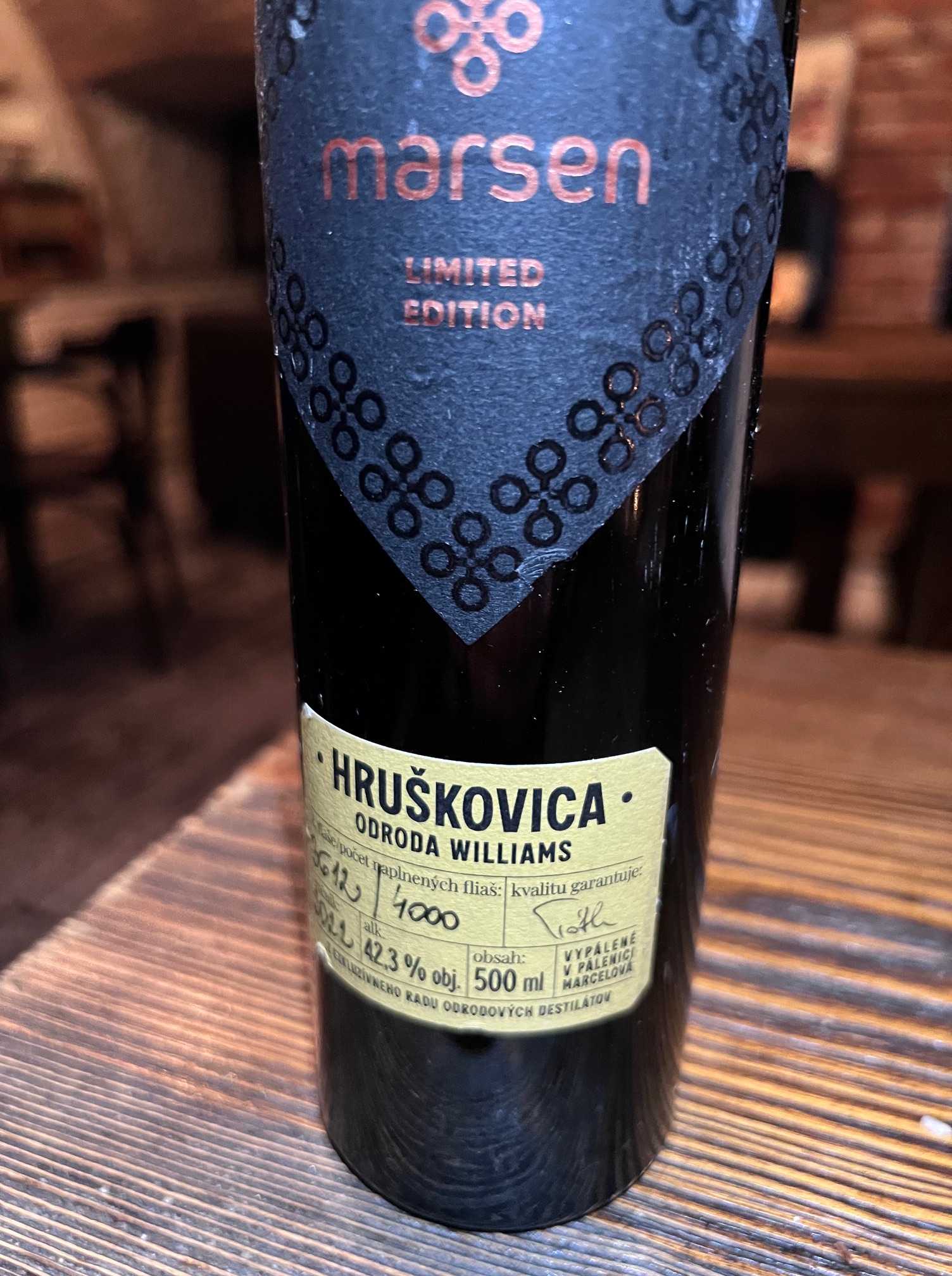 abv and reminiscent of sour cherries and marzipan.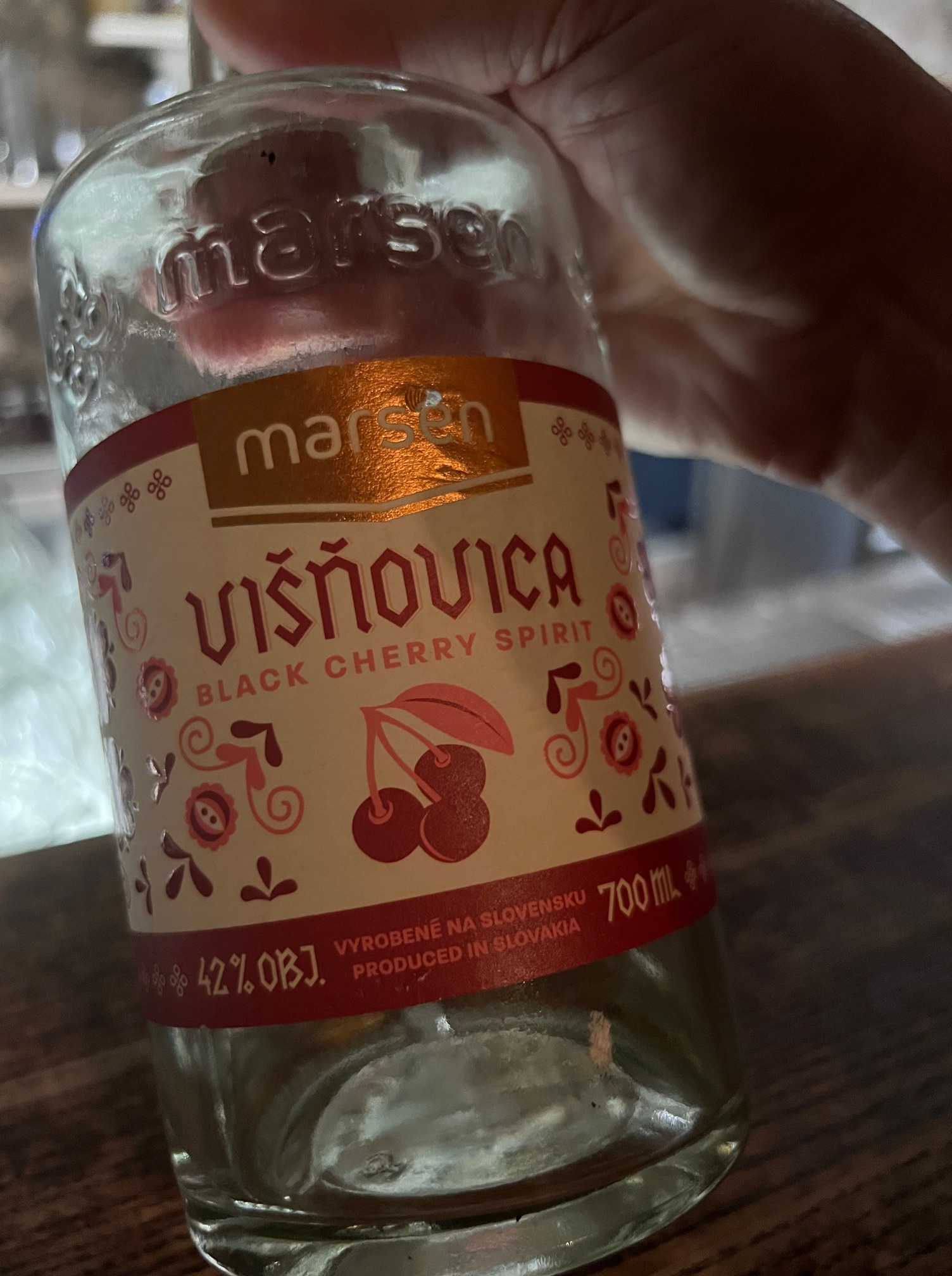
We loved this lunch and Marek so much, we came back the next day prior to leaving for Vienna for more fish (carp this time), pirogis, wine, and Hruškovica (pear brandy).
You cannot go wrong if you choose to meet Marek and enjoy his food and genuine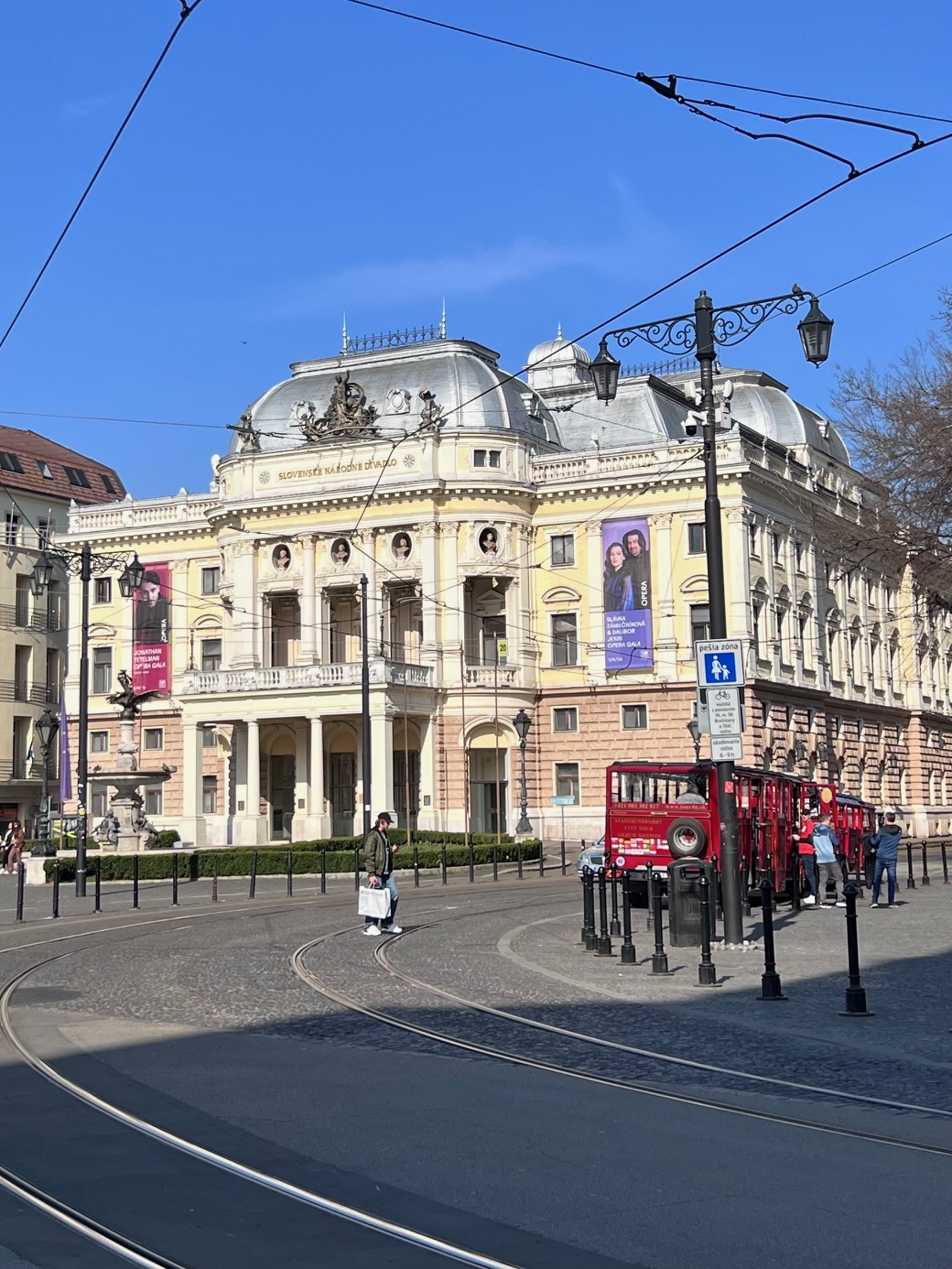 hospitality. He will recount stories of growing up in Slovakia under the Communists and his first trip to the West as a teenager, how his grandparents endured (like many of their generation, they were born, lived and died under as many as 6 different regimes), and how rough it has been to operate his restaurant through Covid and other challenges.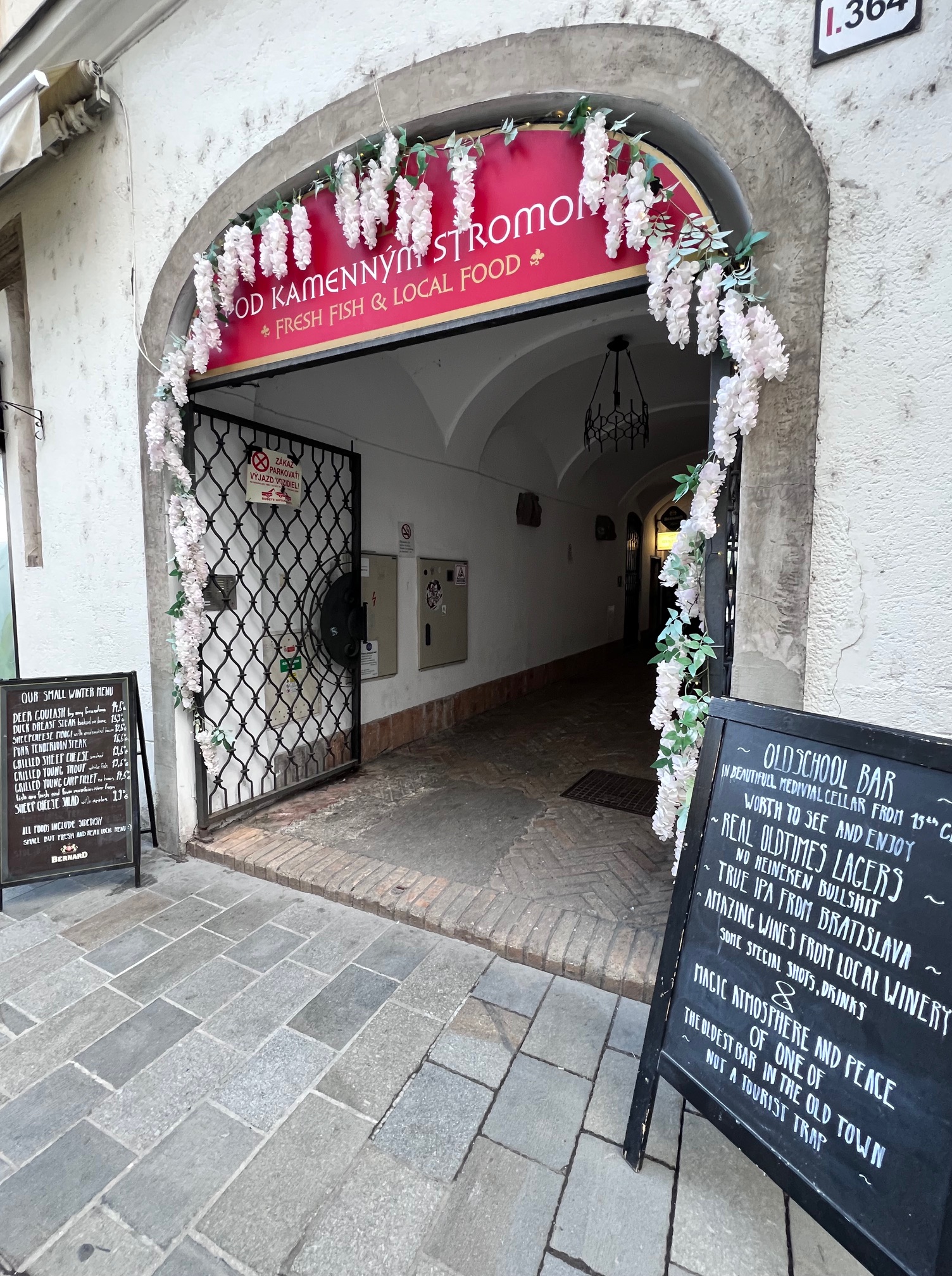
Yet he has endured. This was no ‘tourist trap’ – only the best hospitality, food and wine Bratislava has to offer.




 winellama